Winter Olympics 2026 key notes –
- The News: As the Milano Cortina 2026 Winter Games enter their final days, 17-year-old Ami Nakai holds a surprise lead heading into the women’s single skating free skating final, while Norway and host nation Italy dominate the overall medal table.
- The Hidden Link: The International Skating Union’s (ISU) decision to raise the minimum age to 17 has fundamentally altered the economics of the sport replacing the fleeting “child prodigy” era with a model that promotes longer, more sustainable athletic careers that global sponsors crave.
- The Outlook: Expect a surge in post-Olympic corporate endorsements for veteran athletes, while Italy’s unprecedented top-two medal performance will trigger a multi-billion dollar winter tourism boom across the Alps in the coming seasons.
The tension inside the Milan arena this Thursday is palpable. We are hours away from the 2026 winter olympics women’s single skating free skating final, and the script has completely flipped. The established heavyweights are chasing a 17-year-old debutant.
But why does this specific event matter beyond the ice? Because this is the first Winter Olympics operating under a sweeping new set of international rules designed to protect athletes and ensure fair, mature competition. What we are watching is not just a battle for gold; it is the real-time stress test of a modernized Olympic ecosystem.
The Core Analysis: The Free Skate Showdown
The mechanics of women’s figure skating have quietly undergone a revolution. Following the controversies of the previous Olympic cycle, the ISU raised the minimum competition age from 15 to 17. Skeptics wondered if this would lower the technical ceiling of the sport. Tuesday’s short program proved them wrong.
Japan’s Ami Nakai, the youngest skater in the field at exactly 17, stunned the arena. Starting 18th out of 29 competitors due to her lower senior world ranking, she executed a flawless triple Axel and a triple Lutz-triple toe loop combination. This high-risk, high-reward technical baseline puts her in the lead.
But the narrative weight of the free skate lies with her veteran challengers.
- The Swansong: Kaori Sakamoto (Japan), the 25-year-old three-time world champion, is skating her final Olympic routine. Her components score (artistry and skating skills) remains unmatched.
- The Comeback: Team USA’s Alysa Liu sits in third place, perfectly positioned to strike if the leaders falter.
This dynamic—a rising star battling seasoned veterans in their mid-20s—is exactly what the new age rules intended to create. It builds compelling, multi-year rivalries rather than one-and-done appearances.
The Historical Parallel
We have seen this specific pressure cooker before. Nakai’s sudden rise from the middle of the pack mirrors the legendary performance of American Sarah Hughes at the 2002 Salt Lake City Games. Hughes entered the free skate in fourth place, entirely out of the media spotlight, but landed two triple-triple combinations to leapfrog the heavy favorites for gold. The difference today? Nakai must defend a lead, not chase it, under the glare of a global audience.
Soft Power & Economic Ripple Effects
Beyond the ice rink, the 2026 Games are generating massive geopolitical and economic ripples. The “decentralized” hosting model of Milano Cortina—spreading events across multiple existing alpine venues rather than building a single expensive Olympic park—is proving highly successful.
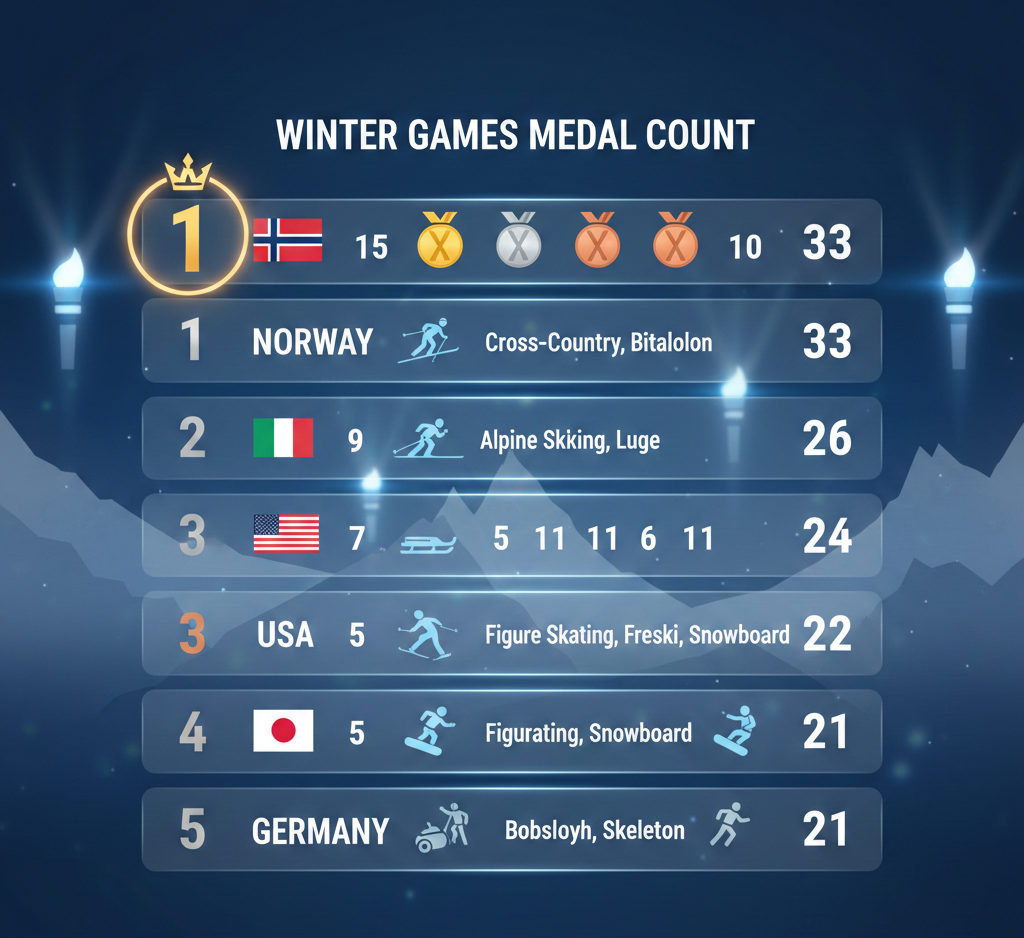
- The Host Nation Bump: Italy is currently experiencing its greatest Winter Olympics in history. Powered by athletes like biathlete Lisa Vittozzi, Italy sits in second place overall. This athletic success is a massive soft-power victory, effectively acting as a global billboard for Northern Italy’s ski resorts.
- The Norwegian Machine: Norway continues to defy its population size, leading the world with 33 medals. Johannes Høsflot Klæbo recently anchored the cross-country sprint team to victory, securing his record-breaking 9th career Olympic gold. Norway’s state-sponsored, high-participation sports model remains the gold standard for athletic infrastructure.
- The American Resilience: Team USA has leaned on its icons. Mikaela Shiffrin’s emotional gold in the slalom erased her struggles from Beijing, providing US broadcasters with the triumphant redemption arc necessary to secure premium ad rates.
Future Outlook: The Next 6 Months
When the Olympic flame goes out on February 22, watch the corporate sponsorships.
Brands have historically hesitated to sign long-term deals with figure skaters due to unpredictable career longevities. However, the new age rules guarantee that athletes who medal here will likely be eligible and active for the 2030 French Alps Games. Expect a flurry of multi-year, high-value brand ambassadorships to be announced for the medalists by Q3 of 2026. Furthermore, Italy’s tourism board will likely report record-breaking advance bookings for the 2026-2027 winter season, fully monetizing their home-snow advantage.
Final Verdict: The 2026 Winter Games are proving that sustainable regulations and decentralized infrastructure don’t dilute the Olympic magic—they protect it. The athletes on the ice today are competing in a healthier, more competitive environment than ever before.
Frequently Asked Questions
Why did the age limit for Olympic figure skating change?
The International Skating Union (ISU) voted to gradually raise the minimum age for senior competitions from 15 to 17. This was implemented to protect the physical and mental health of the athletes, allowing their bodies to mature before undergoing the intense training loads required for senior Olympic-level quadruple jumps.
Who is currently leading the 2026 Winter Olympics medal table?
As of February 19, 2026, Norway holds a commanding lead in the medal count with 33 total medals, including 15 golds. Host nation Italy is in second place with 26 medals, and the United States is in third with 24.
ALSO READ: Gemini chat vanished bug Feb 19: Fixing Bug & Slowness Crisis
ALSO READ: India AI Impact Summit Day 2 Summary: The Day the “AI Hype” Broke the Doors Down
The End of “Free Leverage”: How RBI’s 2026 Guidelines Are Reshaping the Broking Industry
Executive Summary (The “Global Angle”) The News: The Reserve Bank of India (RBI) has issued…
The Thermal Masterstroke: Why the 2026 F1 Championship Could Be Decided in Court
F1 vs Mercedes key takeaways – The News: The FIA has launched an emergency e-vote…
Winter Olympics 2026 “A New Era”: How Milano Cortina Rewrote the Olympic Playbook
Winter Olympics 2026 key notes – The News: As the Milano Cortina 2026 Winter Games…
Andrew Mountbatten-Windsor arrest 2026: Why This Redefines Royal Immunity
Executive Summary Andrew Mountbatten-Windsor arrest 2026 The News: On his 66th birthday (February 19, 2026),…
Yoon Suk Yeol life sentence: The Dec 2024 Insurrection & The “Pardon Cycle”
Executive Summary Yoon Suk Yeol life sentence The News: A Seoul court has sentenced former…
India AI Impact Summit Day 2 Summary: The Day the “AI Hype” Broke the Doors Down
Executive Summary India AI Impact Summit Day 2 Summary The News: Day 2 of the…