The News: On January 27, 2026, after two decades of stalled talks, India-EU Free Trade Agreement was signed, effectively combining two markets that represent 2 billion people and 25% of global GDP.
The Hidden Link: While the headline numbers are staggering, the deal has a massive “green loophole.” The EU’s newly implemented Carbon Border Adjustment Mechanism (CBAM) remains fully active, acting as a backdoor tariff on India’s heavy industries like steel and aluminum.
The Outlook: Slated for full implementation by early 2027, this agreement will permanently restructure global supply chains. It offers European manufacturers a lucrative alternative to China, while aggressively boosting India’s labor-intensive export sectors.
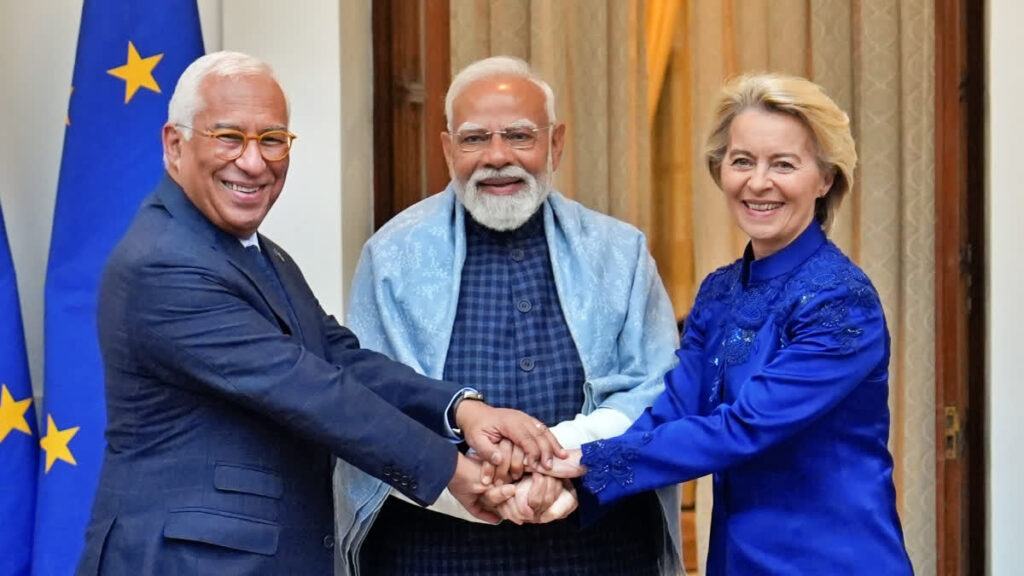
On a brisk January morning in New Delhi, the geopolitical center of gravity shifted. When Prime Minister Narendra Modi and European Commission President Ursula von der Leyen finalized the India-EU Free Trade Agreement, they didn’t just sign a trade document. They engineered a massive economic bridge between the world’s most populous democracy and the world’s largest single market.
But what exactly does this 2026 agreement state? How much new business will it actually generate, and who holds the upper hand? Beyond the celebratory handshakes, the mechanics of this FTA reveal a calculated exchange of market access, strategic hedging, and a few critical compromises.
What the Agreement Actually States
At its core, the India-EU FTA is a comprehensive dismantling of historic trade barriers. For decades, European companies complained about India’s notoriously high import duties, while Indian exporters struggled to compete with nations that enjoyed preferential EU access. This deal resets the board.
Here are the exact points and market shifts mandated by the agreement:
Unprecedented Indian Access: The EU has agreed to drop tariffs on 99.5% of all items India exports to the region (by trade value). More than 90% of these will go down to zero immediately upon the deal taking effect.
The European Automotive Victory: India is slashing its massive import duties on European cars. Tariffs that previously sat at a staggering 110% will be phased down to as low as 10% for specified volumes, opening the floodgates for brands like Mercedes-Benz, BMW, and Volkswagen.
Premium Goods & Spirits: European wines, spirits, and olive oils are the big winners. Indian import duties on wines will plummet from 150% down to 20–30%, making premium European agricultural products vastly more affordable for the rising Indian middle class.
The Service Sector & Mobility: The FTA is paired with a distinct migration and mobility pact. The EU has committed to opening 144 service subsectors, creating streamlined, legal pathways for Indian IT professionals, engineers, and students to enter the European labor market.
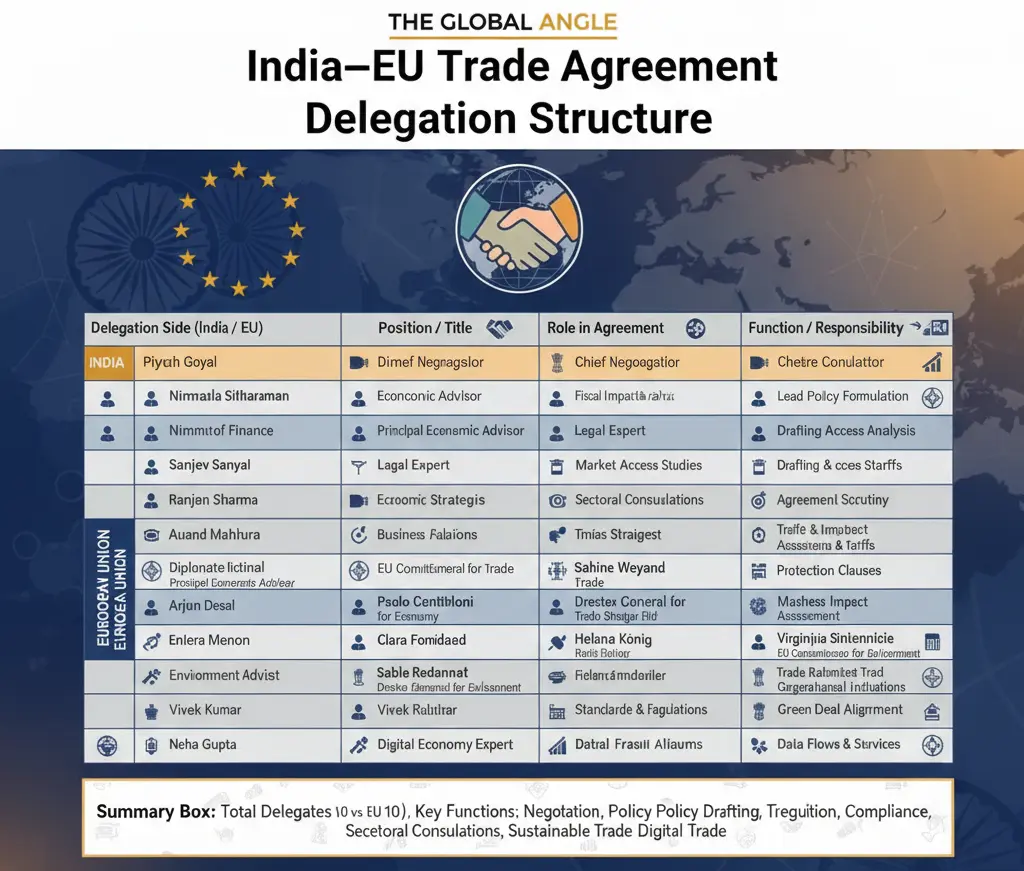
Also here is the list of delegates that were present at the conference –
The Loophole: The Carbon Tax Trap
No trade agreement is perfect. For India, the biggest loophole is hidden in plain sight: The EU’s Carbon Border Adjustment Mechanism (CBAM).
Indian negotiators fought hard to get exemptions from this controversial carbon tax, which penalizes imported goods manufactured with high carbon emissions. They failed. The EU refused to grant any country-specific exemptions.
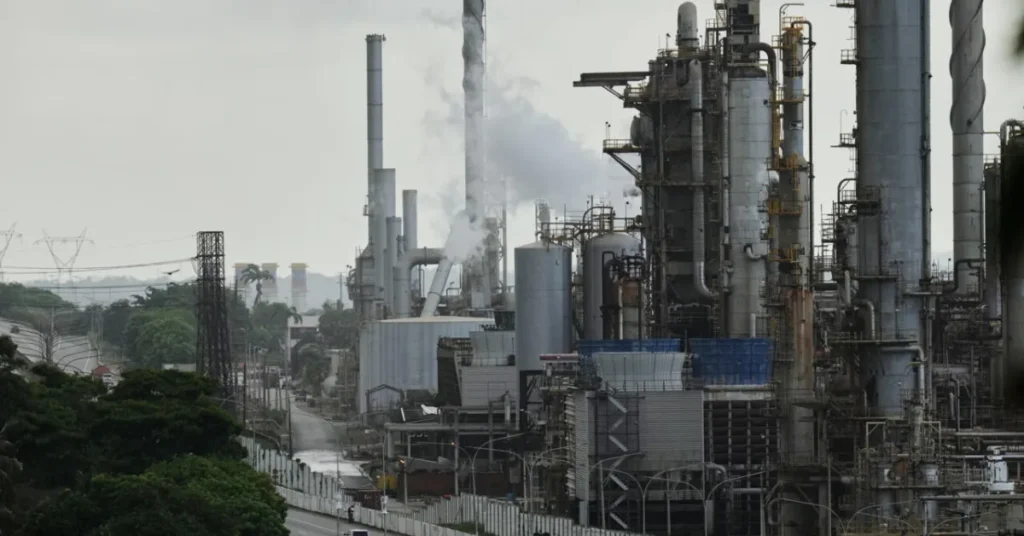
Why does this matter? Because even though the FTA eliminates traditional import tariffs, the CBAM acts as a severe non-tariff barrier. India’s iron, steel, cement, and aluminum sectors will still face heavy financial penalties when entering Europe. In fact, just the anticipation of CBAM caused India’s steel and aluminum exports to the EU to drop by over 24% in the previous fiscal year.
The Plus Points for Both Sides
How much business can we develop? The European Commission projects that EU exports to India will double by 2032, saving European businesses up to €4 billion annually in duties. But the structural advantages go far beyond simple cost savings.
The Advantages for Europe (The “De-Risking” Strategy):
Europe learned a harsh lesson about supply chain reliance during recent geopolitical crises. This FTA is the ultimate “China+1” strategy. It grants EU companies privileged access to a massive consumer market of 1.45 billion people, providing a safe, democratic manufacturing base to hedge against volatile trade relations elsewhere.
The Benefits for Indians:
This deal is pure adrenaline for India’s labor-intensive sectors.
The Textile Boom: Indian garments, leather, and footwear will finally have zero-duty access to Europe. This places Indian factories on equal footing with competitors in Bangladesh and Vietnam, who previously dominated the EU market due to legacy preferential treaties.
Job Creation: By prioritizing sectors like marine products and apparel, the deal directly supports millions of blue-collar and MSME (Micro, Small, and Medium Enterprises) jobs across India.
Tech Expansion: The easing of digital trade and mobility laws will allow Indian tech firms to rapidly scale their European operations.
Sector
Impact on India
Impact on Europe
Automobiles
Increased domestic competition; access to better EV tech.
Massive new market access as 110% tariffs drop to 10%.
Textiles & Apparel
Huge win. Gains parity with Vietnam/Bangladesh.
Access to cheaper, high-quality diversified garment sourcing.
Heavy Industry (Steel)
Negative. Hurt by the EU’s CBAM carbon tax loophole.
Protects domestic green steel producers from cheaper imports.
Wines & Spirits
Cheaper premium goods for consumers.
Eliminates 150% tariffs; major boost for French/Italian agriculture.
The Next 12 Months
While the champagne has been poured, the deal is not active yet.
Over the next 12 to 14 months, the agreement must go through intensive legal vetting, translation into all EU official languages, and formal ratification by the European Parliament and the Indian government. Expect full implementation by early 2027.
Watch the regional fallout closely. Pakistan’s commerce sector has already sounded the alarm, warning that the India-EU FTA could decimate their $9 billion export industry, as their historical “zero-tariff honeymoon” in Europe is neutralized by India’s new access.
Final Verdict: The India-EU Free Trade Agreement is a masterpiece of pragmatic diplomacy. It is not a flawless deal—the carbon tax loophole will sting—but it successfully aligns the economic ambitions of a rapidly ascending India with the strategic security needs of a transitioning Europe.*
When will the India-EU Free Trade Agreement come into effect?
While negotiations concluded on January 27, 2026, the agreement requires legal vetting and ratification by the European Parliament and Indian lawmakers. It is expected to enter into force by early 2027.
What sensitive sectors were left out of the agreement?
To protect domestic livelihoods, both sides agreed to exclude highly sensitive agricultural sectors. India protected its dairy, poultry, and cereal markets from European competition, maintaining its internal regulatory standards.
How does this deal affect Indian professionals?
Alongside the FTA, a mobility and migration agreement was signed. This establishes legal, streamlined pathways for Indian students, IT professionals, and skilled workers to access the European labor market much more easily.
Kausar CY Global Leadership | Europe & Gulf Expertise
Driving strategic growth and operational excellence at Global Angle, with extensive experience across the European and Gulf Political and Global sectors.