Executive Summary
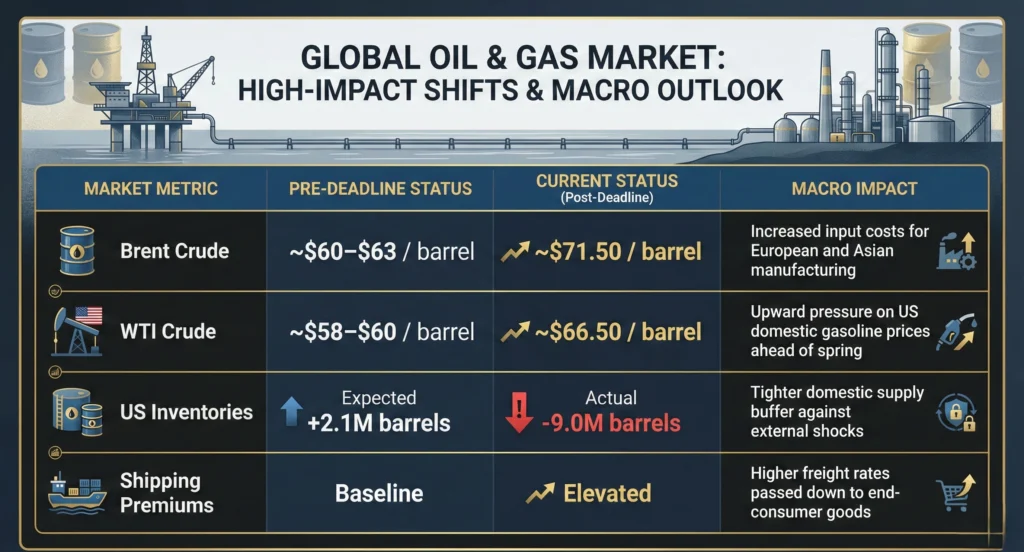
- The News: Crude oil prices surged to a six-month high—with Brent crossing $71 and WTI nearing $67 per barrel—following a 10-15 day deadline for a new nuclear agreement.
- The Hidden Link: The price spike is not solely driven by diplomatic rhetoric; it coincides with a massive, unexpected 9-million-barrel drop in U.S. crude inventories and aggressive stockpiling by Asian markets.
- The Outlook: If transit routes face even temporary disruptions, the resulting supply shock could stall planned interest rate cuts by major central banks globally.
The financial markets rarely react to political rhetoric alone, but when that rhetoric intersects with the world’s most critical energy chokepoint, the math changes instantly. Brent crude recently breached $71.80, while West Texas Intermediate (WTI) pushed past $66.60, marking the highest valuations since August of last year.
But why does this specific 10-15 day deadline matter so much to commodities traders? The answer lies in the fragile balance of global supply chains. We are witnessing a classic geopolitical risk premium being priced into physical assets. This is not just a diplomatic standoff. It is a fundamental stress test of the global energy grid.
Fundamentals Meet Geopolitics
To understand the current $66–$70 threshold, we have to strip away the political theater and look at the underlying market mechanics. The recent price rally is fueled by a convergence of three distinct pressures.
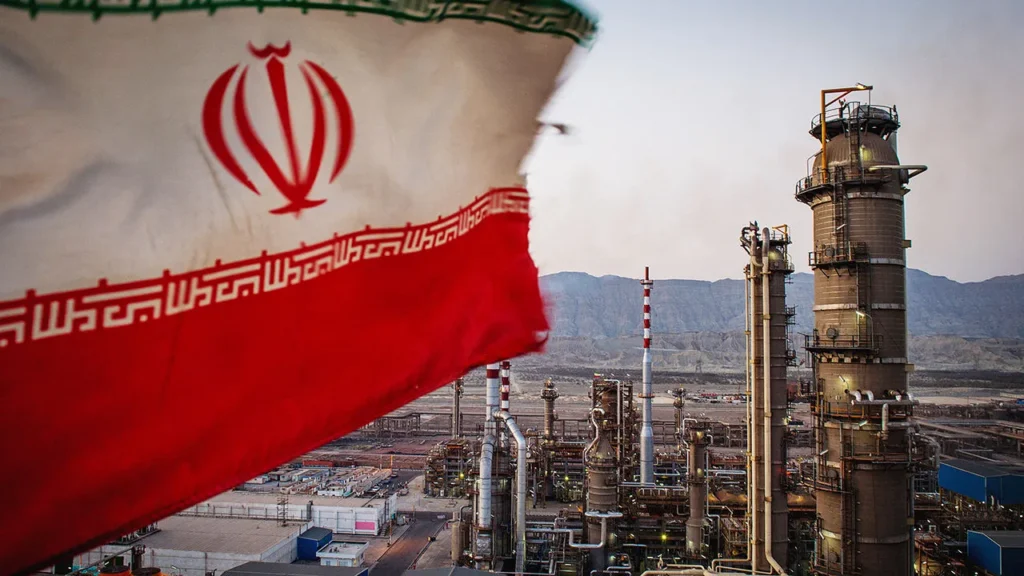
First is the obvious transit risk. Roughly 20% of global oil consumption passes through the Strait of Hormuz. Any military posturing in this corridor forces shipping insurers to hike premiums, which immediately translates to higher costs per barrel. Second, the Energy Information Administration (EIA) just reported a staggering 9-million-barrel drawdown in U.S. crude stockpiles. This was the steepest drop since early September, catching analysts who predicted a 2.1-million-barrel build completely off guard. Finally, there is the quiet but massive accumulation of physical oil by Chinese state buyers for strategic stockpiling. When you combine a sudden drop in Western reserves with aggressive Eastern buying, the market is primed for a price shock.
The Inflation Question
The immediate concern for global markets is not just the cost of gasoline, but the secondary impact on inflation. Central banks have spent the last two years carefully trying to engineer a soft landing. A sustained period of high energy costs could undo that progress, as oil remains a primary input cost for virtually every sector of the modern economy.
Next 6 Months
Over the next two quarters, energy markets will be defined by volatility. Watch for two specific milestones. First, track the shipping container rates and insurance premiums for vessels entering the Gulf of Oman; a sustained 15% increase here will signal that the maritime industry expects prolonged instability, regardless of diplomatic outcomes. Second, monitor the upcoming central bank policy meetings. If Brent crude stabilizes above $75 for more than 30 days, expect major institutions to formally revise their inflation targets, potentially halting the anticipated cycle of interest rate cuts.
The reality of the current energy landscape is that physical supply chains are tighter than they appear on paper. Until a definitive, long-term diplomatic framework is established, the “geopolitical premium” on every barrel of oil will remain the new normal.
Frequently Asked Questions
How does a nuclear deadline directly impact oil prices?
A deadline introduces a fixed timeline for potential escalation. Commodities markets abhor uncertainty, so traders immediately begin buying oil futures to hedge against the risk that a failure to reach a deal could result in military action, which might disrupt physical oil extraction or shipping routes.
Why did U.S. oil inventories drop so drastically at the same time?
The unexpected 9-million-barrel drawdown was largely attributed to severe winter storms that disrupted domestic production and logistics, temporarily preventing crude from reaching storage facilities. This fundamental supply issue amplified the price jump caused by international news.
Also read – The 2026 India-EU Free Trade Agreement :”Mother of all deals or A Loophole to enter India”
Also read – Trump 15% global tariff: Why the Supreme Court Couldn’t Stop the Global Tariff War

Kausar CY
Global Leadership | Europe & Gulf Expertise
Driving strategic growth and operational excellence at Global Angle, with extensive experience across the European and Gulf Political and Global sectors.