Executive Summary
- The News: On February 22, 2026, a Mexican military operation in Jalisco resulted in the death of Nemesio Oseguera Cervantes (“El Mencho”), the leader of the CJNG, triggering immediate logistical disruptions across 20 states.
- The Hidden Link: This operation was not just a domestic security measure; it was a high-stakes diplomatic signal to Washington designed to prevent unilateral US military intervention in Mexican territory.
- The Outlook: The removal of the central command will likely fracture the organization, creating short-term regional instability that threatens commercial supply chains and forces a security recalculation for the 2026 FIFA World Cup.
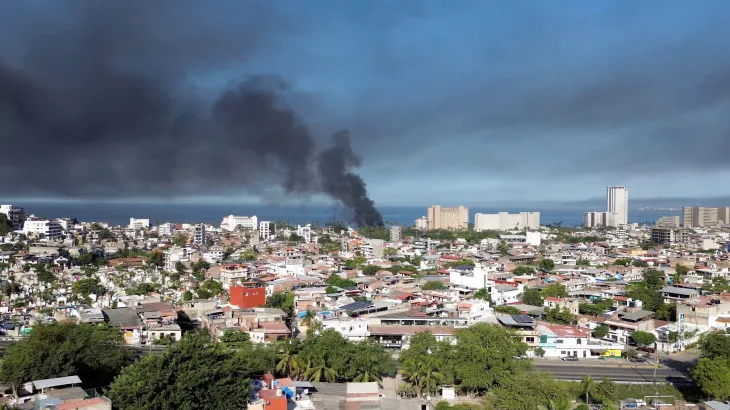
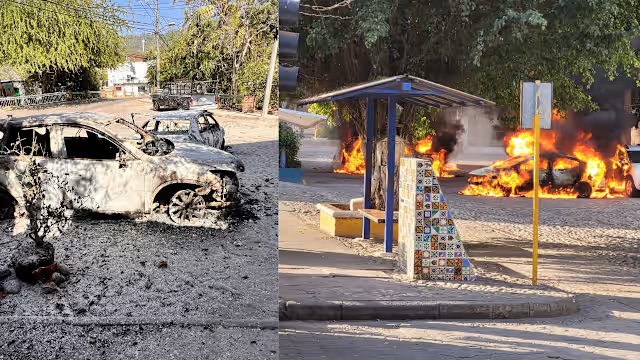
The smoke rising over Guadalajara’s international airport is more than a localized security incident. It is a stark visual of the complex ecosystem that governs North American stability. When Mexican Special Forces, aided by US intelligence, intercepted the leadership of the Jalisco New Generation Cartel (CJNG) in the town of Tapalpa, they neutralized a massive criminal enterprise. But neutralizing a leader does not instantly neutralize an infrastructure.
Why does this matter to global markets? The immediate aftermath—over 250 roadblocks, torched commercial vehicles, and suspended aviation routes—paralyzed one of Mexico’s critical economic hubs for 24 hours. This event forces a recalculation of risk for multinational corporations operating in the region. It also fundamentally reshapes the diplomatic posture between President Claudia Sheinbaum and the US administration.
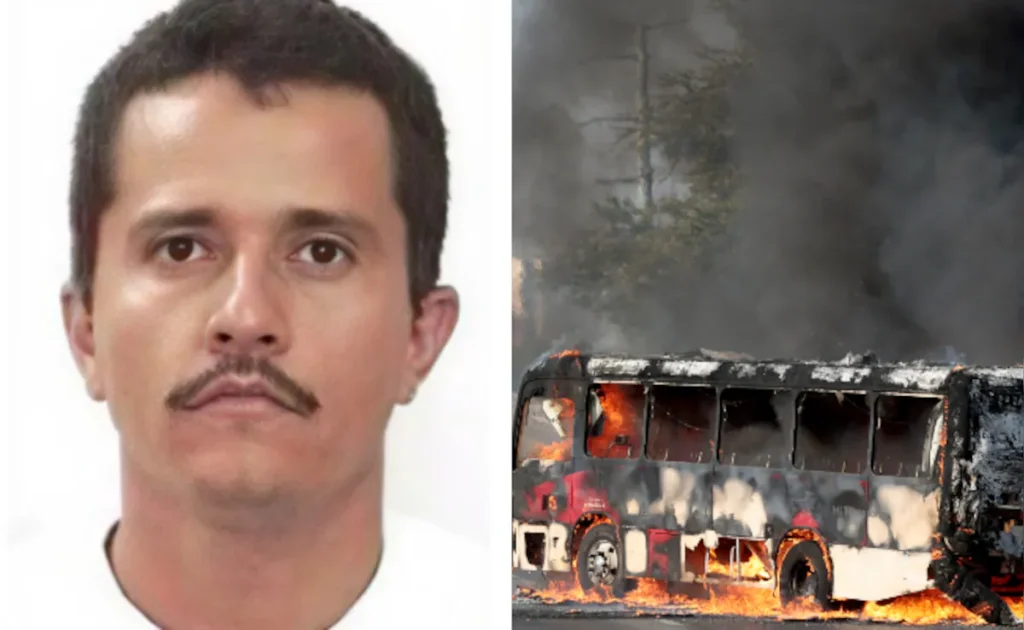
El Mencho Strategy and Retaliation
To understand the scale of the disruption, one must look at the operational capacity of the targeted organization. They operate less like a traditional street syndicate and more like a heavily armed insurgency with deep logistical networks.
The military’s objective was clear. By targeting the apex leadership, the state aimed to dismantle the command-and-control structure. However, the subsequent response was equally calculated. The coordinated establishment of blockades across Jalisco, Michoacan, and Guanajuato was not random panic. It was a standardized tactical protocol designed to impede military reinforcements and project territorial dominance.
The government successfully cleared the majority of these physical barriers by late Sunday. Yet, the economic friction remains. Supply chains heavily reliant on the western logistics corridor experienced immediate bottlenecks. This highlights the severe vulnerability of regional commerce to sudden security shocks.
The Kingpin Dilemma
This operational fallout perfectly mirrors the “Kingpin Strategy” era of the mid-2010s, most notably the capture of Sinaloa leader Joaquín “El Chapo” Guzmán.
When a dominant leader is removed, the resulting power vacuum rarely leads to immediate stability. Instead, it mirrors corporate hostile takeovers, albeit with kinetic consequences. Just as past organizations splintered into competing factions, the current network is now highly susceptible to internal fragmentation. The crucial difference today is the technological landscape. The targeted group pioneered the use of weaponized commercial drones and improvised explosive devices, elevating the tactical baseline for whatever splinter groups emerge next.
Global Impact
The secondary effects of the Tapalpa operation extend far beyond domestic security policy. They directly intersect with international commerce and global sports diplomacy.
First, consider the aviation and tourism sector. The immediate grounding of flights by major carriers like Air Canada and United Airlines at the Puerto Vallarta and Guadalajara airports represents millions in lost daily revenue. Second, the operation carries immense diplomatic weight. Washington had recently placed a $15 million bounty on the target, designating the group a foreign terrorist organization in 2025. By executing this operation, the Sheinbaum administration effectively answered intense US pressure. Mexico signaled that its military retains the capacity to handle high-value targets effectively, negating the political argument for US troops on Mexican soil.
Finally, there is the looming shadow of the 2026 FIFA World Cup.
Current Impact vs. Projected Risk Profiles
| Sector | Immediate Disruption (Feb 2026) | Projected 6-Month Risk |
| Aviation / Tourism | Flight suspensions; local “Shelter in Place” advisories. | Gradual recovery; increased insurance premiums for operators. |
| US-Mexico Diplomacy | White House praise for bilateral intelligence sharing. | Eased diplomatic pressure regarding unilateral border enforcement. |
| Commercial Logistics | Highway closures delaying manufacturing exports. | Supply chain diversification away from the Michoacan transit corridor. |
| 2026 World Cup | Heightened FIFA concern over Guadalajara host city status. | Massive influx of federal security budgets to secure venues and transit. |
What’s Next?
The security landscape in western Mexico is entering a phase of rapid realignment. Over the next two quarters, monitor two specific indicators.
First, watch the internal cohesion of the affected network. If regional lieutenants begin contesting the succession, expect localized friction to concentrate around key transit routes, specifically the commercial ports in Colima. Second, observe the logistical planning for the 2026 World Cup. FIFA regulations allow for the relocation of matches due to force majeure or security concerns. To prevent Guadalajara from losing its 13 scheduled matches, the Mexican federal government will likely announce an unprecedented, military-led security perimeter for the host cities by early summer.
This operation was a definitive tactical success for the state. But managing the structural aftershocks will dictate the economic stability of the region for the remainder of the year.
Frequently Asked Questions
Why were international flights suspended in response to the operation?
Aviation authorities and international carriers temporarily suspend operations during large-scale security events to ensure passenger safety. The presence of roadblocks and the network’s known access to heavy weaponry prompted a standard risk-mitigation protocol until the military secured the airspace and surrounding infrastructure.
How does this event influence US-Mexico bilateral relations?
It serves as a critical stabilizing factor. The U.S. had increasingly pressured Mexico to deliver tangible results regarding transnational trafficking. By successfully neutralizing a top-tier target through joint intelligence sharing, Mexico demonstrated operational competence. This reduces political calls from Washington for unilateral cross-border military interventions.
Also read – China FTA loopholes 2026: How China Outsmart’s Global Tariffs With The “Made in Anywhere” Strategy
Also read – US-IRAN Tension Makes A Big Impact On Global Energy Sector : The $70 Oil Barrel Hike

Kausar is a geopolitical analyst and key contributor at The Global Angle, specializing in global markets, energy economics, and international trade networks. Based in Dubai—one of the world’s primary financial and logistics hubs—he leverages an engineering background to analyze complex supply chains, infrastructure developments, and macroeconomic shifts. Kausar’s reporting focuses on the intersection of Middle Eastern geopolitics and global commerce, breaking down how regional policies and resource conflicts impact the broader global economy.