India New Zealand Free Trade Agreement and a New Phase in Economic Ties
Introduction
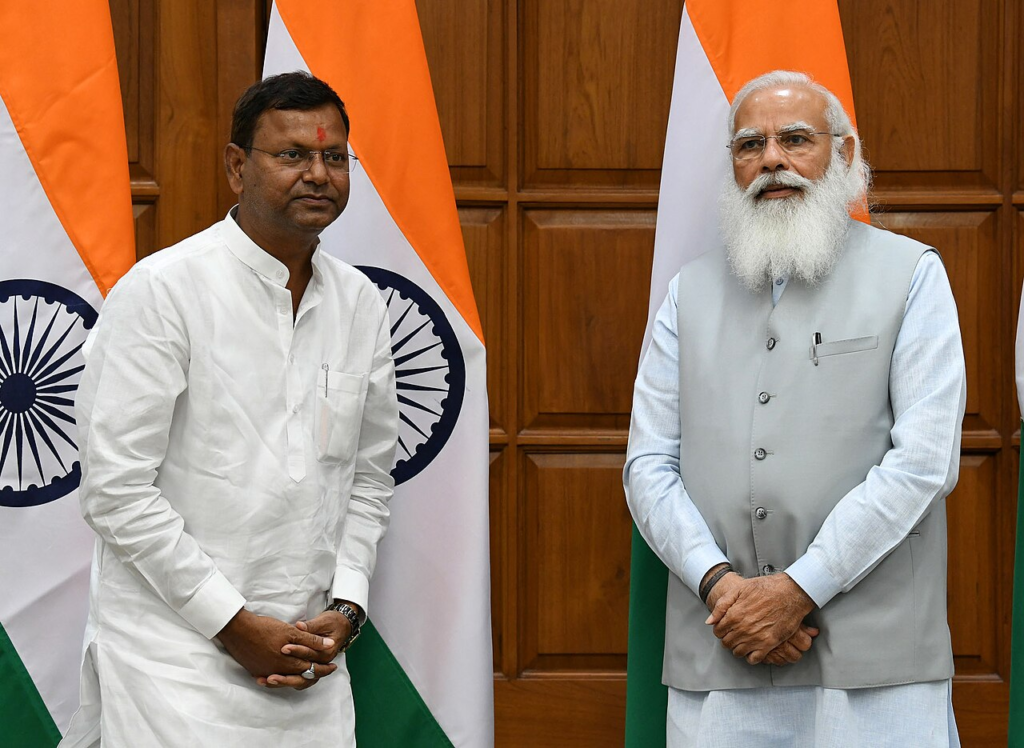
India New Zealand free trade agreement marks a major milestone in India’s evolving trade strategy. Prime Minister Narendra Modi and New Zealand Prime Minister Christopher Luxon announced the finalisation of the agreement following a telephonic conversation, signalling the end of negotiations that began earlier this year.
The agreement matters because it combines full tariff elimination for Indian exports with commitments on investment, services, and mobility. Unlike earlier trade pacts, this deal directly links market access with jobs, skills, and long-term economic cooperation.
How the Agreement Took Shape
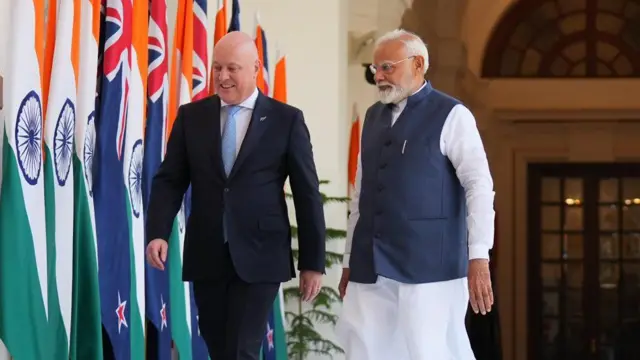
Negotiations for the India New Zealand free trade agreement began during Prime Minister Luxon’s visit to India in March 2025. From the outset, both governments framed the talks as a strategic partnership rather than a narrow tariff arrangement.
The final agreement aims to double bilateral trade within five years. It seeks to deepen cooperation across goods, services, investment, innovation, and trade facilitation while maintaining safeguards for sensitive sectors.
Zero Duty Access for Indian Exports
A central feature of the India New Zealand free trade agreement is zero-duty access for 100 percent of Indian exports to New Zealand. Tariffs will be eliminated across all tariff lines once the agreement comes into force.
This provides Indian exporters with predictability and cost competitiveness in a developed market.
Sectors Expected to Gain
| Segment | Key Beneficiaries |
|---|---|
| Labour-intensive | Textiles, apparel, leather, footwear |
| Manufacturing | Engineering, automobiles, electronics |
| Industrial | Machinery, plastics, chemicals |
| Health | Pharmaceuticals |
For MSMEs, the removal of tariffs lowers entry barriers and improves scale opportunities.
Manufacturing and MSME Impact
The India New Zealand free trade agreement places strong emphasis on manufacturing-led growth. Engineering goods, automobiles, electronics, machinery, pharmaceuticals, and chemicals are expected to benefit from improved market access.
For MSMEs, the deal reduces dependency on intermediaries. Direct access to the New Zealand market improves margins and supports job creation, particularly in labour-intensive clusters.
Women-led enterprises, artisans, and youth-driven businesses are among the targeted beneficiaries.
Agriculture: Access With Safeguards
Agriculture occupies a carefully balanced position in the agreement. Indian farmers gain improved access to New Zealand’s market for fruits, vegetables, cereals, coffee, spices, and processed foods.
At the same time, India has protected sensitive domestic sectors to prevent market disruption.
Protected Indian Sectors
| Safeguarded Products |
|---|
| Dairy |
| Sugar |
| Edible oils |
| Coffee and spices |
| Gold and silver |
| Copper cathodes |
| Rubber-based products |
This structure reflects India’s approach of export promotion without compromising food security or rural livelihoods.
Investment Commitments and Long-Term Capital
A major pillar of the India New Zealand free trade agreement is New Zealand’s commitment to invest $20 billion in India over a 15-year period.
Investment Focus Areas
| Area | Expected Outcome |
|---|---|
| Manufacturing | Capacity and jobs |
| Infrastructure | Long-term growth |
| Services | Skill-intensive employment |
| Innovation | Technology development |
The investment framework mirrors long-term partnership models rather than short-term capital inflows.
Services Trade and Market Access
Services form a core component of the India New Zealand free trade agreement. Both countries have exchanged extensive market access commitments across multiple sectors.
Services Commitments Overview
| Country | Market Access | MFN Treatment |
|---|---|---|
| New Zealand | 118 sectors | 139 sectors |
| India | 106 sectors | 45 sectors |
An annex on health and traditional medicine services marks the first time New Zealand has included such provisions in a trade agreement.
Mobility: A Breakthrough for Students and Workers
Mobility provisions are among the most consequential aspects of the India New Zealand free trade agreement.
For the first time, New Zealand has signed an Annex on Student Mobility and Post-Study Work Visas with another country.
Mobility Provisions
| Category | Provision |
|---|---|
| Student work rights | 20 hours per week |
| Post-study work (STEM bachelor’s) | Up to 3 years |
| Post-study work (Master’s) | Up to 3 years |
| Post-study work (PhD) | Up to 4 years |
| Skilled professionals | 5,000 visas |
| Working holiday visas | 1,000 annually |
Eligible professionals include IT specialists, engineers, healthcare workers, educators, AYUSH practitioners, yoga instructors, chefs, and music teachers.
Why This Matters for Indian Workers and Youth
The India New Zealand free trade agreement links trade liberalisation with employment outcomes. Export growth in labour-intensive sectors directly supports job creation.
Mobility pathways offer Indian youth global exposure without numerical caps on student movement. Post-study work rights improve skill returns and income prospects.
For skilled professionals, the agreement creates structured, legal migration channels rather than ad-hoc pathways.
Current Trade Context
The agreement builds on a modest but growing trade base.
India–New Zealand Trade Snapshot
| Indicator | Value |
|---|---|
| Merchandise trade (FY 2024–25) | $1.3 billion |
| Total trade (2024) | $2.4 billion |
| Services trade | $1.24 billion |
The target of doubling trade within five years reflects ambition rather than guaranteed outcomes.
New Zealand’s Economic Calculus
New Zealand has highlighted that tariffs on 95 percent of its exports to India will be reduced or removed. The agreement provides New Zealand businesses access to a large and expanding consumer market.
The deal is framed domestically as a tool for job creation, wage growth, and long-term economic resilience.
What Comes Next
Implementation will determine the agreement’s success. Businesses will need clarity on rules of origin, certification procedures, and timelines.
For India, the challenge lies in enabling MSMEs to utilise zero-duty access through logistics support, credit availability, and export readiness.
Conclusion
The India New Zealand free trade agreement reflects a more mature phase of India’s trade policy. It balances ambition with caution and openness with protection.
Its real impact will depend on execution. Can exporters scale? Can students convert mobility into skills? Can investment commitments translate into jobs?
The answers will shape how this agreement is ultimately judged.
Frequently Asked Questions
What is the India New Zealand free trade agreement?
It is a comprehensive trade pact covering goods, services, investment, and mobility.
Will Indian exports face zero duty?
Yes. All Indian exports to New Zealand will receive zero-duty access.
Does the agreement help Indian students?
Yes. It guarantees work rights during study and extended post-study work visas.
Are Indian farmers protected?
Yes. Sensitive agricultural and allied sectors are safeguarded.
ALSO READ: Impact Venezuela Tanker Seizures on Oil Prices Shows Market Sensitivity
ALSO READ: US Oil Tanker Seizure Venezuela Enters New Phase With Third Pursuit
ALSO READ: Elon Musk Net Worth 700 Billion After Court Restores Tesla Pay Package