
US War With Venezuela Has Already Begun
US war with Venezuela is not a looming threat or a speculative future conflict. It is already underway fought without congressional declarations, battlefield footage, or troop deployments, but no less real in its consequences.
Modern wars are no longer announced. They are implemented through sanctions regimes, financial blockades, intelligence operations, and selective enforcement of international norms. Venezuela has been subjected to all of these simultaneously.
The recent interception of a Venezuelan oil tanker merely made visible what has long been true: pressure has crossed the threshold from diplomacy into direct confrontation.
1. Oil Tanker Seizures as Open Aggression
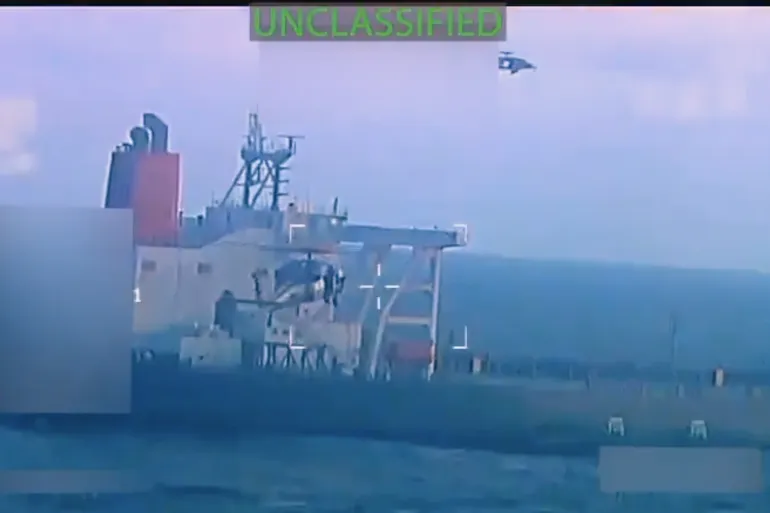
The seizure of a Venezuelan oil tanker off the country’s coast marks a significant escalation.
Oil is not just another commodity for Venezuela it is the backbone of the state’s economy and its primary source of foreign revenue. Interfering with oil transport directly undermines national survival.
Public remarks suggesting that seized oil would be retained blur the line between enforcement and expropriation. Such actions weaken claims that the objective is law enforcement rather than strategic pressure.
In international relations, control over energy flows has long functioned as a tool of coercion.
2. Sanctions as Economic Warfare
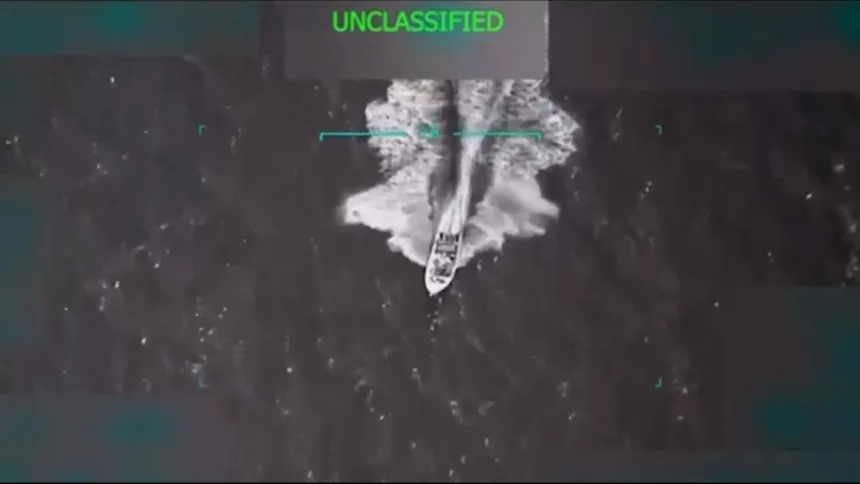
Sanctions form the structural foundation of the US war with Venezuela.
While initial sanctions were imposed years ago, their scope expanded dramatically after 2017 and intensified further in 2019. These measures targeted oil exports, international banking access, and Venezuela’s ability to trade globally.
According to reports by UN experts and independent economic research institutions, the sanctions severely restricted access to essential goods, including medicines, food, fuel, and medical equipment.
Economic warfare may lack explosions, but its effects accumulate silently and relentlessly.
3. Collective Punishment of Civilians
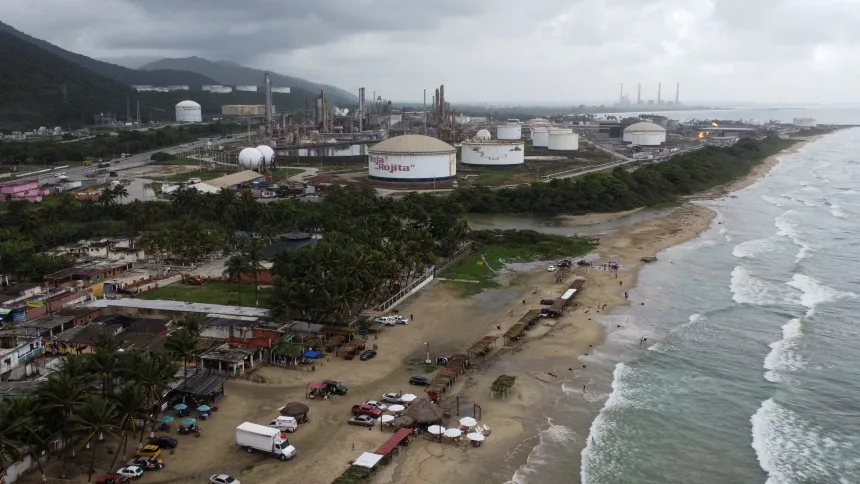
Despite official assertions that sanctions target political leadership, their impact has overwhelmingly fallen on civilians.
Hospitals have struggled to function due to equipment shortages. Preventable diseases have re-emerged. Power outages and water shortages have become routine rather than exceptional.
Children, the elderly, and the chronically ill bear the greatest burden. When harm is widespread, predictable, and sustained, it begins to resemble collective punishment rather than targeted pressure.
This is not an unintended outcome it is a known consequence.
4. Regime Change as Official Policy
The US war with Venezuela has never been ideologically neutral.
From backing a failed coup attempt in 2002 to recognizing an unelected “interim president” in 2019, Washington has openly pursued regime change. These efforts bypassed electoral processes and relied on international pressure to manufacture political outcomes.
While regime change initiatives failed to remove the sitting government, they succeeded in deepening economic instability and political polarization.
The cost of these failures was not paid by policymakers but by citizens.
5. Covert CIA Operations and the Shadow War
The authorization of covert intelligence operations represents another escalation.
Covert actions operate beyond public oversight and outside the framework of diplomatic accountability. History suggests such operations rarely stabilize political systems and often intensify internal divisions.
When combined with sanctions and economic pressure, covert activity becomes part of a broader hybrid warfare strategy—one that blurs the boundary between peace and war.
6. Drug War Narratives and Double Standards
Allegations of narcotics trafficking have become a recurring justification for pressure on Venezuela.
Yet these claims coexist with documented cases in which allied leaders in the region have faced minimal consequences despite proven involvement in drug networks. This selective application undermines the credibility of the “war on drugs” narrative.
When enforcement depends on political alignment rather than evidence, legality becomes secondary to strategy.
7. Forced Migration as a Consequence of War
One of the most visible outcomes of the US war with Venezuela is mass migration.
Millions of Venezuelans have left their homes, not due to ideological loyalty or political ambition, but because basic economic survival became impossible. Journeys across jungles, deserts, and militarized borders reflect desperation rather than choice.
Migration here is not a cause of crisis it is a symptom of prolonged economic warfare.
Conclusion: Understanding Modern Warfare
The United States may never formally declare war on Venezuela. It does not need to.
Through sanctions, asset seizures, covert operations, and political interference, the infrastructure of war is already in place. The absence of bombs does not negate the presence of suffering.
To understand today’s conflicts, one must look beyond the narrative beyond official rhetoric and into the mechanisms of power that define modern warfare.
Also Read – What It Means to See Beyond the Narrative
Pingback: What It Means to See Beyond the Narrative
Pingback: Modi Jordan visit Crown Prince gesture
Pingback: New Epstein Photos Released: What 70 Images Reveal Now
Pingback: Trump Oil Price Policy Saudi Arabia - TheGlobalAngle