Executive Summary
- Andrew Mountbatten-Windsor arrest 2026 The News: On his 66th birthday (February 19, 2026), Andrew Mountbatten-Windsor, brother to King Charles III, was arrested at the Sandringham estate by Thames Valley Police on suspicion of Misconduct in Public Office (MiPO).
- The Hidden Link: The media is focused on the scandal’s characters, but the real story is constitutional. The charge targets his tenure as the UK’s Special Representative for International Trade, testing the unprecedented legal question of whether a “voluntary” Royal envoy is subject to the same criminal standards as a sworn civil servant.
- The Outlook: Expect a protracted legal battle over the definition of a “Public Officer.” If the Crown Prosecution Service (CPS) proceeds, it will fundamentally alter how the British monarchy handles state secrets and soft-power diplomacy.
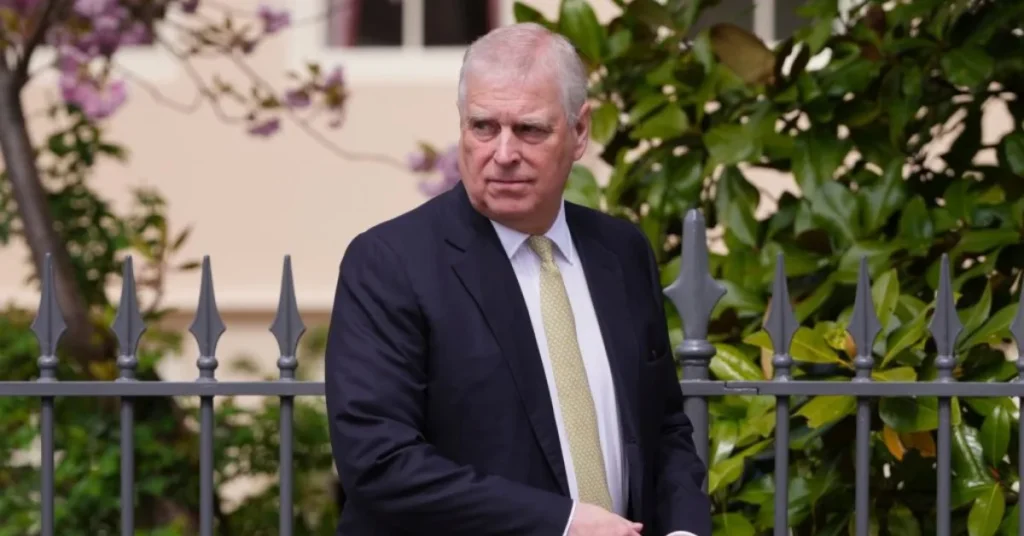
Early Thursday morning, unmarked police cars quietly breached the perimeter of the Sandringham estate in Norfolk. The arrest of Andrew Mountbatten-Windsor—formerly Prince Andrew, Duke of York—marks an unprecedented moment in modern British history.
But why does this matter to global observers, legal scholars, and foreign investors? Because the specific charge—Misconduct in Public Office—moves this story out of the realm of tabloid gossip and directly into the mechanics of state security, trade diplomacy, and constitutional law.
The allegations center on claims that in 2010, while serving as the UK’s Special Representative for International Trade and Investment, Mountbatten-Windsor shared highly sensitive government trade reports with a disgraced billionaire financier. This isn’t just a breach of protocol. It is a potential breach of the state’s economic armor.
The Core Analysis: The “Trade Envoy” Legal Trap
To understand the gravity of the situation, we have to look at the mechanics of the law.
Misconduct in Public Office (MiPO) is an ancient common-law offense in England and Wales. It carries a maximum sentence of life imprisonment. But there is a catch. To secure a conviction, the prosecution must prove four incredibly strict pillars:
- The suspect was a public officer.
- They were acting in that capacity.
- They wilfully neglected their duty or misconducted themselves to a degree that abused the public’s trust.
- There was no reasonable excuse.
Here is the legal tension. From 2001 to 2011, Mountbatten-Windsor served as a Trade Envoy. However, Trade Envoys are essentially unpaid, voluntary parliamentarians or royals appointed by the Prime Minister. They are not employees of the Department for Business and Trade. They do not hold policy responsibility.
The core defence will likely argue that Mountbatten-Windsor was acting informally as a member of the Royal Family utilizing “soft power,” not as a sworn, legally bound “public officer.” If the courts rule that a Royal Trade Envoy is a public officer, it shatters the unwritten shield of royal diplomatic immunity.
The Historical Parallel
This legal tightrope mirrors the UK Parliamentary expenses scandal of 2009.
When numerous Members of Parliament (MPs) were caught abusing public funds, the public demanded they be charged with Misconduct in Public Office. However, prosecutors quickly realized how difficult it is to clearly define “public office” under this archaic law. Instead, the Crown Prosecution Service opted for simpler charges under the Theft Act (False Accounting) to secure convictions.
With Mountbatten-Windsor, there is no “Theft Act” to fall back on. It is MiPO or nothing. This is a high-wire legal act for the Thames Valley Police.
Geopolitical & Constitutional Ripple Effects
The fallout from this arrest extends far beyond the walls of Sandringham. It directly impacts how the UK conducts international business.
The British Monarchy is the ultimate diplomatic icebreaker. Foreign Direct Investment (FDI) into the UK often relies on the prestige of royal networking. If the line between “royal conversation” and “state secrecy” is blurred, it creates a massive liability for the UK government.
[The Legal Burden: Royal Reality vs. Criminal Threshold]
| The MiPO Requirement | The Prosecution’s Argument | The Likely Defense Strategy |
| “A Public Officer” | He was officially appointed by the Prime Minister as a Trade Envoy. | The role was voluntary, unpaid, and constitutionally distinct from civil service. |
| “Acting as Such” | He possessed the 2010 trade reports specifically due to his government clearance. | The sharing of information (if any) occurred in a private, personal capacity. |
| “Without Justification” | Sharing state economic data with unauthorized foreign financiers compromises UK trade. | The parameters of what a Royal can discuss internationally are legally undefined. |
Andrew Mountbatten-Windsor arrest 2026 Future Outlook: The Next 6 Months
What happens now that he is in custody? Do not expect an immediate trial.
- The Assessment Phase: Over the next 90 days, Thames Valley Police will execute search warrants across addresses in Norfolk and Berkshire, looking for digital footprints from 2010.
- The CPS Threshold Test: The police do not decide to charge; the Crown Prosecution Service does. By late summer 2026, the Director of Public Prosecutions will have to apply the “Full Code Test”—determining if there is a realistic prospect of conviction and if a trial is in the public interest.
- The “Hillsborough Law” Factor: Coincidentally, the UK Parliament is currently debating replacing the MiPO common law with new statutory offenses under the Public Office (Accountability) Bill. This high-profile arrest will likely accelerate that legislation, demanding clarity on exactly who counts as a public official.
Final Verdict: The arrest of Andrew Mountbatten-Windsor is a stress test for the British Constitution. It asks a question that the UK has successfully avoided answering for centuries: When a Royal shakes hands on behalf of the state, exactly whose rules are they bound by?
Frequently Asked Questions
Who is Andrew Mountbatten-Windsor?
He is the third child and second son of the late Queen Elizabeth II and Prince Philip, and the younger brother of King Charles III. Formerly known as Prince Andrew, Duke of York, he was stripped of his royal titles and military affiliations following controversies surrounding his private associations.
What exactly is “Misconduct in Public Office”?
It is a serious common-law offense in the UK that targets individuals in positions of public authority who wilfully abuse their power or neglect their duties to a degree that breaks the public’s trust.
Why didn’t the police explicitly name him in their initial statement?
Under UK national policing guidance, law enforcement agencies typically do not publicly name suspects upon arrest until they are formally charged with a crime. They simply confirmed the arrest of a “man in his sixties from Norfolk.”
ALSO READ Yoon Suk Yeol life sentence: The Dec 2024 Insurrection & The “Pardon Cycle”
ALSO READ Gemini chat vanished bug Feb 19: Fixing Bug & Slowness Crisis
The End of “Free Leverage”: How RBI’s 2026 Guidelines Are Reshaping the Broking Industry
Executive Summary (The “Global Angle”) The News: The Reserve Bank of India (RBI) has issued…

The Thermal Masterstroke: Why the 2026 F1 Championship Could Be Decided in Court
F1 vs Mercedes key takeaways – The News: The FIA has launched an emergency e-vote…

Winter Olympics 2026 “A New Era”: How Milano Cortina Rewrote the Olympic Playbook
Winter Olympics 2026 key notes – The News: As the Milano Cortina 2026 Winter Games…
Andrew Mountbatten-Windsor arrest 2026: Why This Redefines Royal Immunity
Executive Summary Andrew Mountbatten-Windsor arrest 2026 The News: On his 66th birthday (February 19, 2026),…
Yoon Suk Yeol life sentence: The Dec 2024 Insurrection & The “Pardon Cycle”
Executive Summary Yoon Suk Yeol life sentence The News: A Seoul court has sentenced former…
India AI Impact Summit Day 2 Summary: The Day the “AI Hype” Broke the Doors Down
Executive Summary India AI Impact Summit Day 2 Summary The News: Day 2 of the…