Key Takeaways
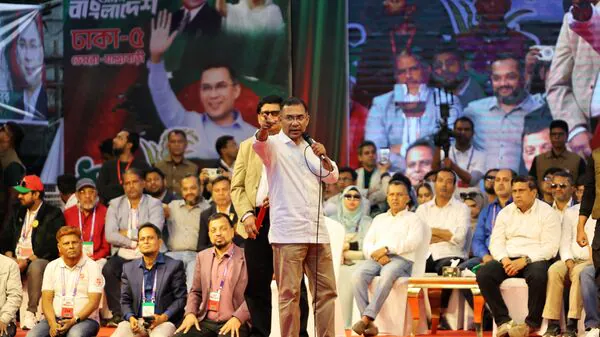
- The 13th Parliamentary Election is scheduled for February 12, 2026, held alongside a historic national referendum on the “July Charter.”
- The election is conducted under an interim government led by Nobel Laureate Muhammad Yunus, following the 2024 ouster of Sheikh Hasina.
- For the first time, the Awami League is suspended from participating, turning the polls into a primary contest between the BNP and a Jamaat-led coalition.
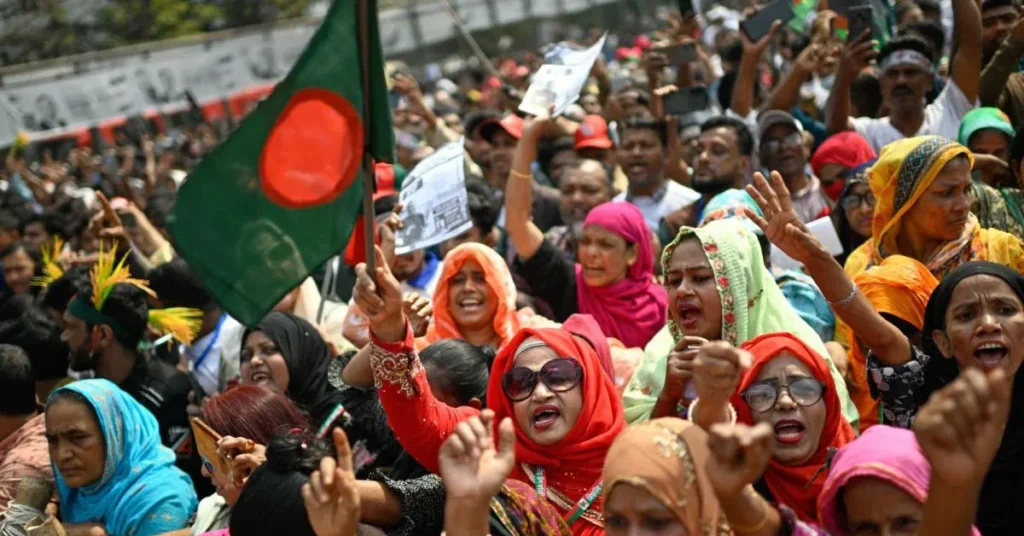
The Bangladesh Election 2026 represents the most significant political reset in the nation’s 54-year history. Following eighteen months of governance by an interim administration, the country heads to the polls to elect 300 members of the Jatiya Sangsad. This election is not merely a change in leadership but a “Gen Z-inspired” overhaul of the state’s constitutional fabric. Voters will cast two ballots: one for their parliamentary representative and another to approve or reject the July Charter, a package of 84 reform proposals aimed at preventing future authoritarianism.
The Election Roadmap: Key Dates and Events
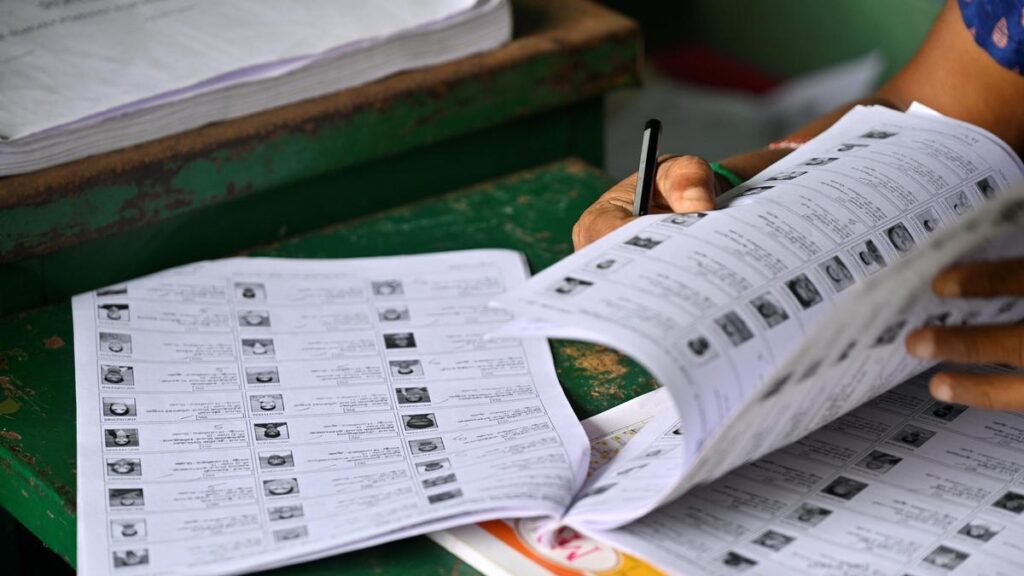
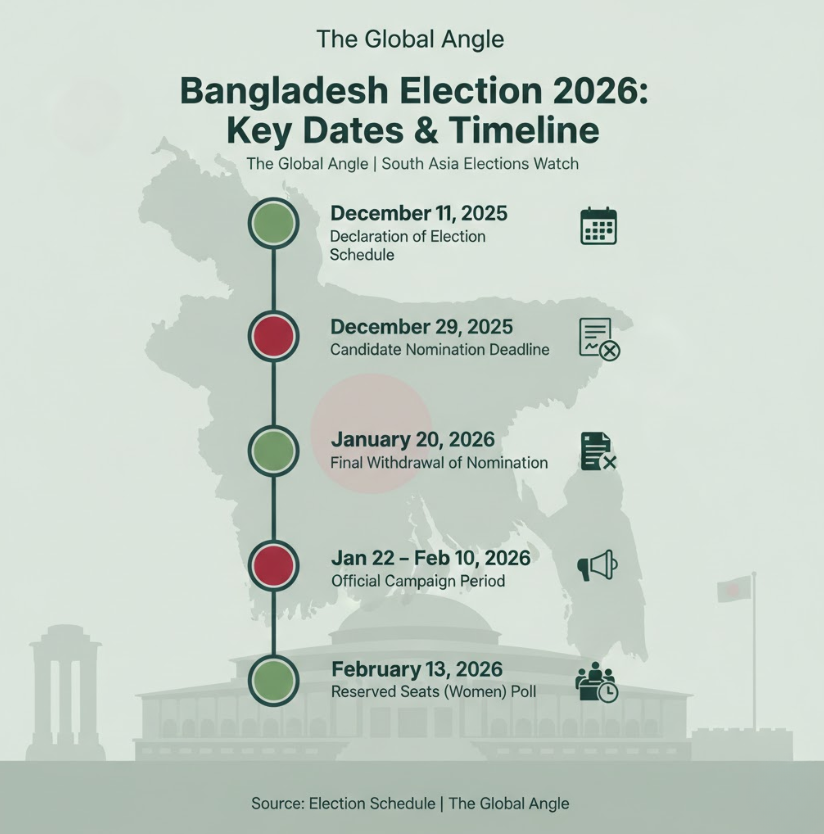
The Bangladesh Election Commission (BEC) has established a rigorous timeline to ensure transparency after years of electoral backsliding. The 2026 cycle also introduces “Out-of-Country” voting, allowing millions of expatriates to participate via postal ballots.
| Event | Official Date |
| Declaration of Election Schedule | December 11, 2025 |
| Candidate Nomination Deadline | December 29, 2025 |
| Final Withdrawal of Nomination | January 20, 2026 |
| Official Campaign Period | Jan 22 – Feb 10, 2026 |
| Polling Day & Vote Counting | February 12, 2026 |
| Reserved Seats (Women) Poll | February 13, 2026 |
The Political Landscape: Who is Contesting?
With the Awami League (AL) officially suspended following its ouster in August 2024, the traditional “two-party” dominance has shifted. The 2026 race is characterized by fragmented alliances and the rise of student-led political groups.
The Major Frontrunners
- Bangladesh Nationalist Party (BNP): Led by Tarique Rahman (in exile), the BNP has emerged as the clear frontrunner. They have fielded 288 candidates and are campaigning on a platform of “restoring democracy” and reversing Hasina-era policies.
- 11-Party Alliance: A formidable coalition spearheaded by Bangladesh Jamaat-e-Islami and the National Citizen Party (NCP). The NCP, born from the 2024 student protests, partnered with Jamaat to leverage their massive organizational footprint.
- National Democratic Front: An alliance led by the Jatiya Party (Ershad), contesting over 200 seats, positioning themselves as a centrist alternative.
Historical Context: The 2024 Uprising
The 2026 election is the direct result of the “July Revolution” of 2024. Mass protests led by students against a controversial quota system escalated into a total non-cooperation movement, forcing Prime Minister Sheikh Hasina to resign and flee to India on August 5, 2024. The subsequent interim government, led by Muhammad Yunus, was tasked with “cleaning” the state institutions—including the judiciary and the police—before handing power back to an elected body.
The India Factor: Impact on Bilateral Relations
India finds itself at a delicate diplomatic crossroads. Historically, New Delhi maintained a “special relationship” with the Awami League, which prioritized Indian security interests and regional connectivity.
Key Impacts on India
- The “Security Vacuum”: New Delhi fears that a government dominated by Islamist hardliners could lead to a resurgence of anti-India insurgent groups in the Northeast.
- Extradition Dilemma: A new government in Dhaka, particularly if led by the BNP, is expected to officially request the extradition of Sheikh Hasina from India to face trial for war crimes. India’s refusal could permanently chill relations.
- Connectivity & Trade: Major trans-shipment and energy projects (like the Maitree Super Thermal Power Project) are currently in limbo. A hostile government could pivot closer to China and Pakistan, undermining India’s “Neighbourhood First” policy.
The Global Perspective & Future Outlook
In the next five years, Bangladesh’s stability will dictate the geopolitical balance of the Bay of Bengal. The international community, including the EU and the UN, has deployed over 400 observers to ensure the 2026 polls are “procedurally perfect.” However, the exclusion of the Awami League remains a point of contention, with some analysts warning that a “managed” election without the largest historical party could lead to future cycles of unrest.
Will the “July Charter” successfully act as a guardrail for democracy, or will the new government revert to the winner-take-all politics of the past?
Frequently Asked Questions
Is the Awami League allowed to participate in the 2026 election?
No. The party’s activities were suspended in 2025, and its top leadership, including Sheikh Hasina, faces war crimes charges. While individual former members may run as independents, they cannot use the party’s “Boat” symbol.
What is the ‘July Charter’ being voted on in the referendum?
The July Charter is a reform document containing over 80 proposals, including prime ministerial term limits, the creation of an Upper House of Parliament, and increased judicial independence.
ALSO READ: COVID-19 Death Toll Fact Check: The Gap Between Reported and Actual Data
ALSO READ: Russian vs Venezuelan Crude Oil: Comparing Oil Quality and Prices for India
The End of “Free Leverage”: How RBI’s 2026 Guidelines Are Reshaping the Broking Industry
Executive Summary (The “Global Angle”) The News: The Reserve Bank of India (RBI) has issued…

The Thermal Masterstroke: Why the 2026 F1 Championship Could Be Decided in Court
F1 vs Mercedes key takeaways – The News: The FIA has launched an emergency e-vote…

Winter Olympics 2026 “A New Era”: How Milano Cortina Rewrote the Olympic Playbook
Winter Olympics 2026 key notes – The News: As the Milano Cortina 2026 Winter Games…
Andrew Mountbatten-Windsor arrest 2026: Why This Redefines Royal Immunity
Executive Summary Andrew Mountbatten-Windsor arrest 2026 The News: On his 66th birthday (February 19, 2026),…
Yoon Suk Yeol life sentence: The Dec 2024 Insurrection & The “Pardon Cycle”
Executive Summary Yoon Suk Yeol life sentence The News: A Seoul court has sentenced former…
India AI Impact Summit Day 2 Summary: The Day the “AI Hype” Broke the Doors Down
Executive Summary India AI Impact Summit Day 2 Summary The News: Day 2 of the…