Key Takeaways
- Voting for the 13th Parliamentary Election commenced on February 12, 2026, with nearly 128 million eligible voters.
- In a historic first, the election is being held simultaneously with a national referendum on the July Charter constitutional reforms.
- Approximately 900,000 security personnel have been deployed to ensure a peaceful and festive polling environment across 299 constituencies.

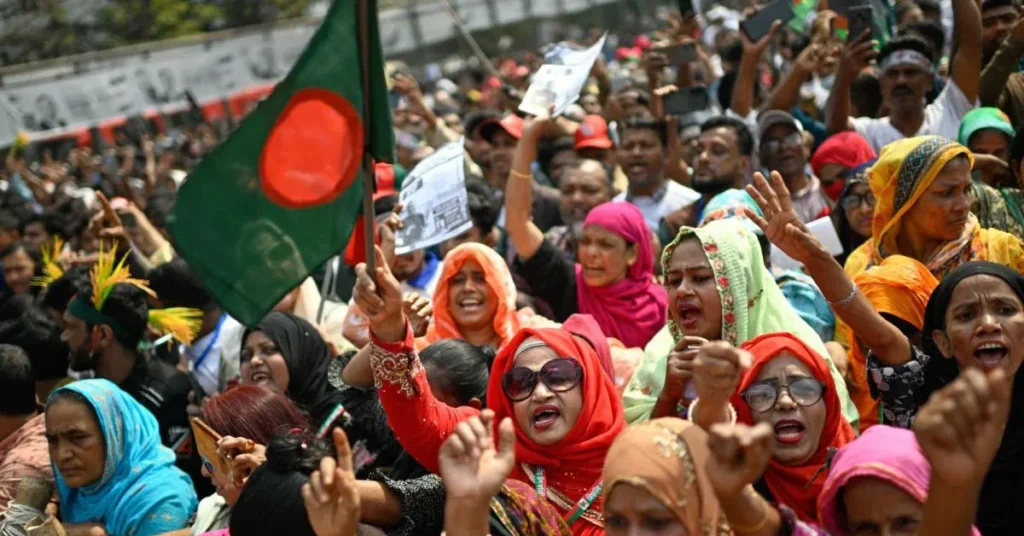
Bangladesh Votes 2026, On Thursday, February 12, 2026, Bangladesh embarked on its most significant democratic exercise in nearly two decades. Following the political transition of 2024, the nation is electing a new government under an interim framework led by Chief Adviser Muhammad Yunus. Long queues formed outside polling stations as early as 7:30 a.m., with many citizens expressing a sense of renewed hope.
This election is uniquely characterized as the world’s first “Gen Z-inspired” vote, following the youth-led movement that reshaped the country’s political landscape.
Polling at a Glance: The 13th General Election
The Bangladesh Election Commission (BEC) has overseen an extensive logistical operation to facilitate voting for a record 127.7 million registered voters. For the first time, technology-supported out-of-country voting via postal ballots has allowed the vast Bangladeshi diaspora to participate.
| Metric | Details (February 12, 2026) |
| Total Registered Voters | ~127.7 Million |
| Contesting Candidates | 2,028 |
| Political Parties Involved | 50 |
| Polling Stations | 42,779 |
| Security Personnel Deployed | ~958,000 |
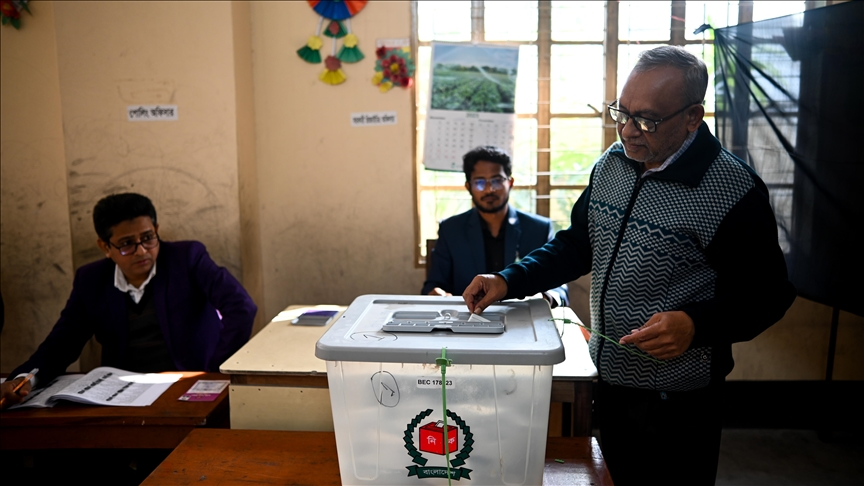
The Twin Ballot: Parliamentary Election and Referendum
Every voter at the booth today is receiving two distinct ballots—a white ballot for their local Member of Parliament and a pink ballot for the July Charter Referendum.
What is the July Charter?
The referendum asks a simple “Yes” or “No” to a package of structural reforms proposed by the National Consensus Commission. Key proposals include:
- Bicameralism: Introducing an Upper House in Parliament.
- Term Limits: A 10-year maximum service for any individual as Prime Minister.
- Judicial Independence: Strengthening the Supreme Judicial Council.
- Caretaker System: Reinstating a neutral administration during election periods.
If the “Yes” vote prevails, the newly elected parliament will serve as a Constitutional Reform Council to implement these changes within 180 working days.
The Competitive Landscape
With the Awami League currently suspended from the process, the 2026 polls have transformed into a contest primarily between the Bangladesh Nationalist Party (BNP) and the 11-Party Alliance (led by Jamaat-e-Islami and the student-formed National Citizen Party).
- BNP: Has fielded 291 candidates, the highest of any single party.
- 11-Party Alliance: Focusing heavily on anti-corruption and economic stability.
- Independents: Over 270 independent candidates are also in the fray, often representing local issues or first-time political entrants from the student movement.
Logistics and Security Measures For Bangladesh Votes 2026
To maintain the integrity of the “festive” atmosphere mentioned by voters, the government has utilized unprecedented surveillance technology. For the first time in Bangladesh’s history, unmanned aerial vehicles (UAVs) and body-worn cameras for security personnel are being used to monitor polling stations.
International observers from over 80 organizations are currently on the ground to monitor the process. Early reports suggest that while some minor clashes occurred in isolated pockets of Dhaka, the overall environment remains stable and conducive to voting.
Future Outlook
Polls are scheduled to close at 4:30 p.m. local time, with counting commencing immediately thereafter. While early trends may emerge by midnight, the full, official results for both the parliamentary seats and the referendum are expected to be clear by Friday morning, February 13.
The outcome of today’s vote will not only decide who leads Bangladesh for the next five years but will also define the very rules of how the nation is governed through the proposed constitutional amendments.
Will the historic inclusion of youth and expatriate voters lead to a new era of political stability for Bangladesh?
Frequently Asked Questions
When will the Bangladesh election 2026 results be announced?
The Election Commission is expected to announce the final results by Friday, February 13, 2026, though trends will be available late Thursday night.
Why is there a referendum being held during the election?
The referendum allows citizens to directly approve or reject a major package of constitutional reforms (the July Charter) designed to prevent future political autocracy and strengthen democratic institutions.
What is the ‘July Charter’ being voted on in the referendum?
The July Charter is a historic package of over 80 constitutional and institutional reforms. It seeks to reshape Bangladesh’s governance by introducing a Bicameral Parliament (two houses), imposing Prime Ministerial term limits (maximum 10 years), and restoring a permanent Caretaker Government system to oversee future elections. A “Yes” vote today mandates the new parliament to implement these changes within 180 to 270 days.
How can Bangladeshi expatriates (NRBs) vote in this election?
For the first time, the Bangladesh Election Commission (BEC) has enabled postal voting for expatriates. Over 1.3 million voters registered through the “Postal Vote BD” mobile app. These voters received physical ballot papers by mail, which must be completed and returned to their respective constituencies in Bangladesh via international postal services to be counted alongside in-person votes.
ALSO READ: Bangladesh Election 2026: Navigating a Historic Transition
ALSO READ: COVID-19 Death Toll Fact Check: The Gap Between Reported and Actual Data
The End of “Free Leverage”: How RBI’s 2026 Guidelines Are Reshaping the Broking Industry
Executive Summary (The “Global Angle”) The News: The Reserve Bank of India (RBI) has issued…

The Thermal Masterstroke: Why the 2026 F1 Championship Could Be Decided in Court
F1 vs Mercedes key takeaways – The News: The FIA has launched an emergency e-vote…

Winter Olympics 2026 “A New Era”: How Milano Cortina Rewrote the Olympic Playbook
Winter Olympics 2026 key notes – The News: As the Milano Cortina 2026 Winter Games…
Andrew Mountbatten-Windsor arrest 2026: Why This Redefines Royal Immunity
Executive Summary Andrew Mountbatten-Windsor arrest 2026 The News: On his 66th birthday (February 19, 2026),…
Yoon Suk Yeol life sentence: The Dec 2024 Insurrection & The “Pardon Cycle”
Executive Summary Yoon Suk Yeol life sentence The News: A Seoul court has sentenced former…
India AI Impact Summit Day 2 Summary: The Day the “AI Hype” Broke the Doors Down
Executive Summary India AI Impact Summit Day 2 Summary The News: Day 2 of the…