Executive Briefing
- The Core Event:A Delhi Police vs Himachal Police jurisdictional clash erupted after the former attempted to arrest three Indian Youth Congress (IYC) workers in Rohru without prior local notification.
- The Primary Data Point: The standoff lasted nearly 20 hours, involving approximately 20 personnel from the Delhi Police Special Cell who were intercepted and detained by Himachal authorities in Solan district.
- The Hidden Impact: This incident highlights a growing trend of “jurisdictional warfare” where state-controlled police forces utilize procedural technicalities to shield or seize political activists, challenging the unified framework of the Indian Penal Code.

The recent Delhi vs Himachal Police standoff represents a rare and aggressive breakdown in inter-state law enforcement cooperation. The conflict began at approximately 5:30 AM on Wednesday when a team from the Delhi Police Special Cell apprehended three youths—Saurabh Singh, Arbaaz Khan, and Siddharth Avdhoot—in Rohru, Himachal Pradesh.
The trio was wanted for a high-profile “shirtless protest” held during last week’s AI Summit in the national capital.
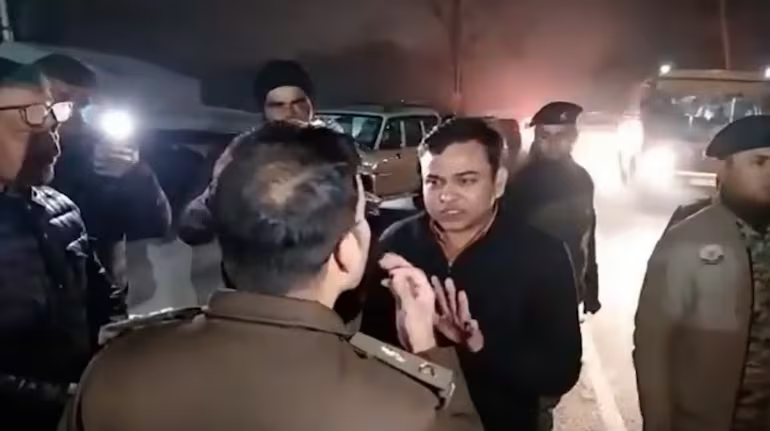
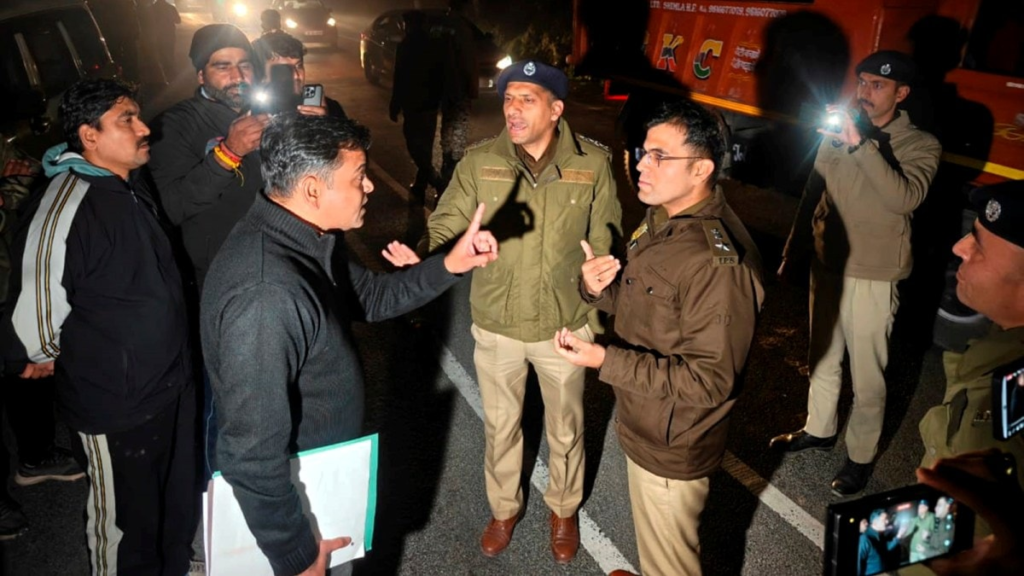
By Wednesday afternoon, the situation spiraled into a tactical confrontation. Himachal Pradesh Police intercepted the Delhi team at Dharampur and Shoghi, effectively detaining the officers and seizing their vehicles.
Delhi Police vs Himachal Police Who Violated the Law?
The legal heart of this conflict lies in the “Inter-State Arrest Protocol.” Under established Indian law, if one state’s police force enters another jurisdiction to make an arrest, they are strictly required to inform the local station and procure a transit remand from a local magistrate.
Himachal authorities accused the Delhi Special Cell of bypassing these mandatory steps.
Naresh Chauhan, media advisor to the Himachal Chief Minister, stated that the action was “illegal and unwarranted.” He pointed out that the Delhi High Court had previously issued specific guidelines for inter-state arrests that the Special Cell seemingly ignored in this operation.
| Jurisdictional Requirement | Delhi Police Status | Legal Consequence |
| Local Police Notification | Allegedly Omitted | Led to interception and detention by HP Police. |
| Transit Remand | Not secured during arrest | Resulted in a kidnapping charge filed in Shimla. |
| Inter-State Protocol | Disputed | Vehicles seized; 20-hour standoff ensued. |
| High Court Guidelines | Allegedly violated | Strengthened the HP Police’s case for illegal detention. |
Kidnapping Charges and Midnight Courtrooms
The standoff reached a peak of absurdity when both forces threatened each other with criminal charges. Himachal Police filed a kidnapping case against the Delhi officers for taking the IYC workers without following due process.
Conversely, the Delhi team alleged they were being “illegally detained” by the Himachal cops.
The deadlock only broke in the early hours of Thursday. At approximately 1:00 AM, the parties appeared before Additional Chief Judicial Magistrate-II Ekansh Kapil in Shimla.
The court eventually allowed the Delhi Police’s plea for transit remand. This decision permitted the Delhi team to finally proceed toward the national capital with the three accused individuals.
Political Symbolism vs. Procedural Integrity
The “shirtless protest” that triggered this saga was a symbolic strike against the AI Summit. While the Delhi Police viewed the protestors as security risks, the Himachal government—controlled by the Congress party—framed the police action as a political vendetta.
The three arrested workers hail from different states (Uttar Pradesh and Madhya Pradesh), making the Rohru hideout a strategic choice.
| Accused Individual | Home State | Alleged Offense |
| Saurabh Singh | Uttar Pradesh | Shirtless protest at AI Summit |
| Arbaaz Khan | Uttar Pradesh | Violation of security protocols in Delhi |
| Siddharth Avdhoot | Madhya Pradesh | Coordination of the IYC protest |
This incident sets a dangerous precedent for future inter-state operations. If police forces begin detaining one another over procedural lapses, the efficiency of federal investigative agencies could collapse.
Evaluating the “Legally Right” Position
Legally, the Himachal Pradesh Police were on solid ground regarding the procedural failure. The Supreme Court of India has repeatedly emphasized that the dignity of the local police must be maintained during foreign-state operations.
Failing to inform the local station often results in “kidnapping” interpretations by the court.
However, once the Delhi Police secured the transit remand in the midnight hearing, their custody became legitimate.
The primary lesson of the Delhi vs Himachal Police standoff is that procedural shortcuts often lead to prolonged tactical delays. The Special Cell’s attempt to save time by bypassing local protocols resulted in a 20-hour delay and a massive public relations embarrassment for both departments.
Frequently Asked Questions
Why did the Himachal Police stop the Delhi Police Special Cell?
The Himachal Police intercepted the Delhi team because they failed to follow mandatory inter-state arrest protocols. This included failing to inform local authorities before the arrest and attempting to transport the accused without a transit remand.
What was the legal outcome of the Shimla court hearing?
After an intense legal battle, the Shimla court granted the Delhi Police the transit remand they required. This allowed the Delhi Police to legally take the three IYC workers back to the national capital for further investigation into the AI Summit protest.
ALSO READ: NCERT Book Controversy: Why the Supreme Court is Angry
ALSO READ: PM Modi Israel visit 2026 Defence Deal: Masterstroke or Geopolitical Gamble?
The Complete History of Iran Israel Relations: From Secret Allies to Arch-Rivals
Executive Briefing The Dramatic Shift: Today, Iran and Israel are engaged in a sprawling, multi-front…

Russian vs Gulf Crude Oil: Price, Refining, and Efficiency Compared
Executive Briefing Two of the most heavily traded categories in the world are Russian vs…
Who is Winning the US Iran War 2026? Casualties, Costs, and the 2026 Timeline
Executive Briefing (Update: March 12, 2026) As the 2026 Middle East conflict reshapes the global…

Global Oil Price Hike 2026: Petrol Prices & Strategic Reserves by Country
Executive Briefing Global Oil Price Hike 2026 (Update: March 12, 2026) The Price Shock: Following…
Can Trump Be Impeached In Midterm Elections 2026? Odds, Stats, and the Process Explained
Executive Briefing (Update: March 2026) As the United States gears up for the pivotal 2026…
Who Was Arrested From the Epstein Files in 2026? Photos & Facts
Executive Briefing (Update: March 2026) If you are wondering exactly who was arrested from the…

Ibrahim is the Founder and Lead Analyst at The Global Angle, an independent digital platform dedicated to factual geopolitical analysis and international affairs. Based in India, he combines an engineering background with a deep focus on global markets, diplomacy, and strategic security. Ibrahim leverages a data-driven, analytical approach to break down complex international conflicts and economic shifts, helping readers see beyond standard news narratives. When he isn’t researching global policy, he focuses on digital publishing, search engine optimization, and platform architecture.