Executive Briefing (Update: March 2026)
As the conflict triggered by the assassination of Supreme Leader Ayatollah Ali Khamenei deepens, the primary question shifting global markets is no longer who will win, but How Long Will the US-Israel Iran War Last? To accurately forecast an end date, we must move past political rhetoric and analyse the hard military logistics: interceptor stockpiles, financial burn rates, and domestic political endurance. Here is the operational breakdown of how long each combatant can sustain this war.
- The Current Reality: The joint US-Israeli offensive (“Operation Epic Fury” and “Operation Roaring Lion”) has rapidly evolved into a multi-front regional conflict, directly affecting at least nine countries across the Gulf.
- The Attrition Game: Iran cannot win a conventional air war, but its decentralized IRGC forces and massive drone stockpiles are designed for long-term economic disruption.
- The Burn Rate: The US and Israel possess overwhelming technological superiority, but the financial and logistical costs are staggering, with the US spending nearly $800 million in just the first 24 hours of combat.
How Long Will the US-Israel Iran War Last?
Iran’s military doctrine has never been built on winning a symmetrical, head-to-head war against the United States. It is built entirely on asymmetric endurance.
The Conventional Collapse (Weeks)
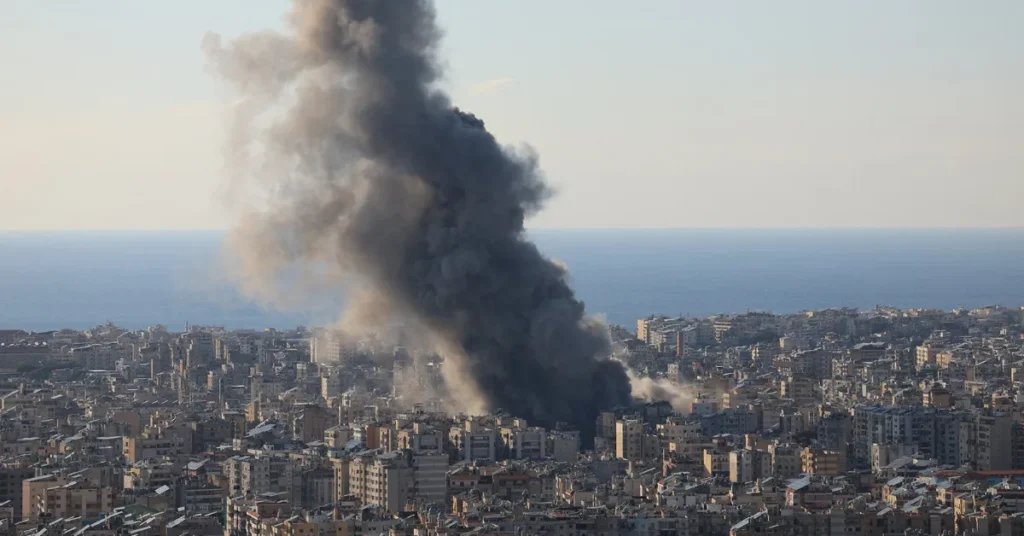
In terms of conventional warfare—maintaining integrated air defense systems, operating naval fleets in the Persian Gulf, and protecting above-ground command centers—Iran’s sustainability is incredibly short. US Central Command (CENTCOM) claims to have largely neutralized Iran’s coastal naval assets and blinded its radar networks within the first 72 hours. Iran cannot sustain a conventional defense for more than a few weeks.
The Asymmetric Endurance (Years)
However, Iran’s true military strength lies underground and across borders.
- The Drone & Missile Stockpile: Iran has spent decades stockpiling thousands of cheap, solid-fuel ballistic missiles and Shahed loitering munitions. Because these are domestically produced and geographically dispersed in deep mountain bunkers (like Fordow), Iran can continue launching daily saturation strikes against Gulf targets (UAE, Saudi Arabia, Bahrain) for months, if not years.
- The Leadership Vacuum: The death of Khamenei has created a chaotic command structure. Rather than forcing a surrender, this power vacuum means hardline elements of the Islamic Revolutionary Guard Corps (IRGC) are now operating autonomously. Without a central political figure to negotiate a ceasefire, the IRGC has no incentive to stop fighting, transitioning the conflict into a prolonged guerrilla campaign.
How Long Can the US and Israel Sustain the War?
For the United States and Israel, the limitation is not military capability; it is political will, economic burn rates, and interceptor math.
The Interceptor Economics
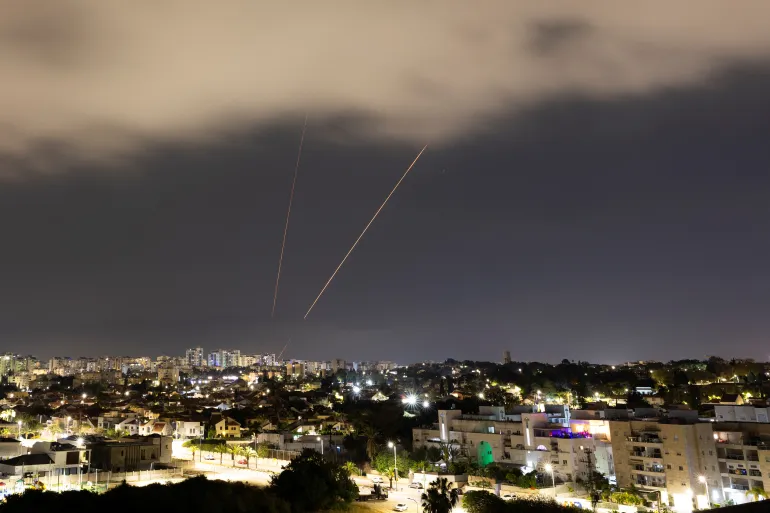
Israel’s Iron Dome, David’s Sling, and Arrow-3 systems are the best in the world, but they are economically vulnerable. Iran is firing drones that cost roughly $20,000 to $50,000. Israel and the US are shooting them down with interceptor missiles that cost between $2 million and $4 million per shot.
While Israel has ramped up domestic production, a sustained, daily barrage of thousands of incoming projectiles will eventually strain both the physical stockpile of interceptors and the defense budgets required to replenish them. Israel cannot sustain a “high-alert” defensive posture across all its borders (Lebanon, Syria, Iran) indefinitely without exhausting its reserve forces.
The US Financial and Political Burn Rate
The US military can technically sustain operations in the Middle East forever, but the current administration has explicitly stated they do not want an “endless war.”
- The Cost: Early estimates indicate the US spent roughly $779 million in the first 24 hours of Operation Epic Fury alone, largely driven by the deployment of B-2 stealth bombers, F-35s, and Tomahawk missile salvos.
- The Doctrine: US Defense Secretary Pete Hegseth recently noted that this is not a “democracy-building exercise.” The US objective is purely destructive: annihilate the nuclear program, destroy the navy, and degrade missile production.
Because the US strategy is focused on rapid degradation rather than occupation, the Pentagon’s timeline is built for a short, violent campaign.
When Will the War End? (An Estimated Timeline)
Geopolitical analysts and military strategists generally separate the conclusion of this conflict into two distinct phases.
Phase 1: The High-Intensity Campaign (Ends in 4 to 6 Weeks)
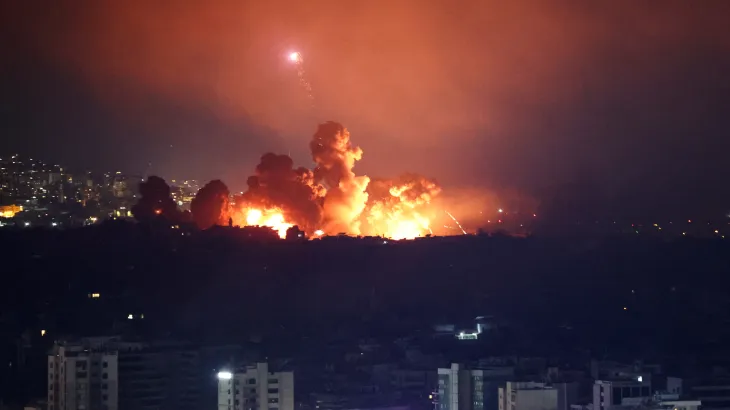
President Donald Trump has publicly suggested the primary operation will last “four to five weeks.” During this window, the US and Israel will maintain total air superiority over Iran, systematically dismantling its nuclear infrastructure, missile factories, and command-and-control hubs. Once the target list is exhausted and Iran’s ability to project immediate strategic threats is degraded, the US will likely declare the primary objectives of “Operation Epic Fury” achieved and scale back massive airstrikes.
Phase 2: The Regional War of Attrition (Ongoing)
While the heavy bombing will stop, the war itself will not end neatly.
Without a stable Iranian government to sign a peace treaty, the Middle East will enter a dangerous new era of prolonged attrition. The surviving IRGC factions and Iranian proxy networks (Hezbollah, Houthi rebels) will continue a low-level insurgency. We can expect sporadic drone strikes on Gulf oil infrastructure, continued disruption in the Strait of Hormuz, and border skirmishes in Israel to drag on for 12 to 24 months.
Ultimately, the high-tech, multi-billion dollar air war will conclude within weeks, but the geopolitical fallout and the shadow war it leaves behind will define the region for the rest of the decade.
ALSO READ: Iran vs Israel military power comparison 2026 Full Breakdown (Land, Air, Sea & Tech)
ALSOO READ: 2026 Middle East War Affected Countries: Every Country Involved & Why the Conflict is Spreading

Ibrahim is the Founder and Lead Analyst at The Global Angle, an independent digital platform dedicated to factual geopolitical analysis and international affairs. Based in India, he combines an engineering background with a deep focus on global markets, diplomacy, and strategic security. Ibrahim leverages a data-driven, analytical approach to break down complex international conflicts and economic shifts, helping readers see beyond standard news narratives. When he isn’t researching global policy, he focuses on digital publishing, search engine optimization, and platform architecture.