Executive Briefing (Update: March 2026)
- The Asymmetric Grind: While the U.S. and Israel maintain total conventional air superiority through Operation Epic Fury, Iran is utilizing “precise mass”—deploying thousands of low-cost Shahed drones to rapidly deplete multi-million-dollar Western interceptor stockpiles. So we analyse Iran’s Current Position In U.S. Iran War
- The Hormuz Chokehold: Commercial shipping through the Strait of Hormuz has plummeted by 95%. Iran has established a de facto blockade, utilizing GPS spoofing and localized naval dominance to weaponize global energy supply chains and force cost-push inflation on the West.
- The Strategic Reality: Iran does not hold a stronger military position, but it currently holds a stronger strategic position. Tehran has successfully decentralized its command structure, absorbing heavy airstrikes while shifting the conflict into a war of economic attrition that Washington is desperate to end
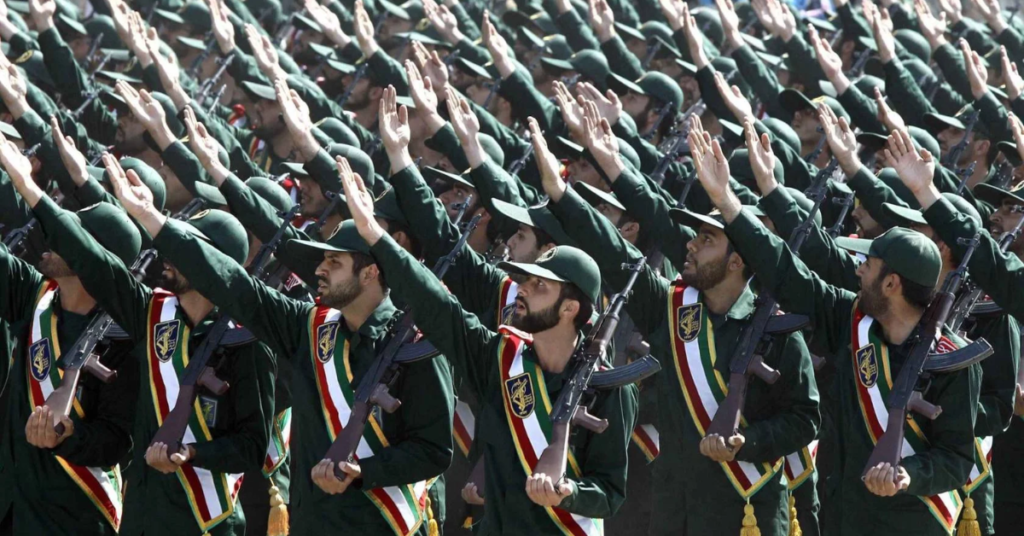
As the US-Israel-Iran conflict enters its fourth week in late March 2026, the battlefield narrative has fundamentally shifted. The initial shock-and-awe of Western airstrikes has given way to a grueling, high-tech war of attrition.
For geopolitical observers, the critical question is no longer who controls the skies, but who can sustain the economic and logistical burn rate. Here is The Global Angle’s definitive analysis of the current statistics, the U.S. and Israeli tactical posture, and why Iran’s asymmetric warfare is currently dictating the pace of the conflict.
The Current Stats: The Economics of Asymmetric Warfare
The defining characteristic of this conflict is the massive disparity in the cost of warfare. The U.S. and Israel are fighting a high-end, conventional war against a decentralized adversary utilizing cheap, mass-produced technology.
Under Operation Epic Fury, the Israel Defense Forces (IDF) and U.S. Central Command have launched over 600 precision strikes targeting Iran’s ballistic missile infrastructure and Islamic Revolutionary Guard Corps (IRGC) leadership. However, Iran has responded with “precise mass”—launching waves of one-way attack drones to overwhelm point defenses.
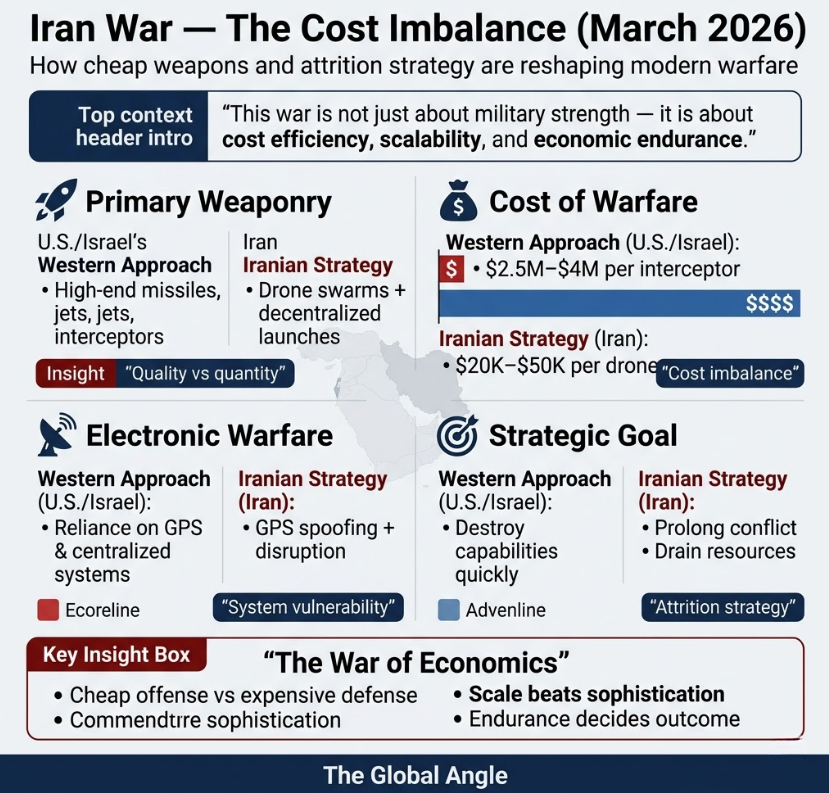
The Tactical & Economic Imbalance Of Iran War (March 2026)
| Metric | U.S. & Israel Reality | Iranian Strategy |
| Primary Weaponry | Tomahawk Cruise Missiles, F-35 sorties, Patriot/SM-6 Interceptors. | Shahed-136 / Shahed-131 one-way attack drones; decentralized ballistic launches. |
| Unit Cost of Warfare | ~$2.5M to $4M per interceptor/missile. | ~$30,000 to $50,000 per attack drone. |
| Electronic Warfare | Relying on highly vulnerable, centralized GPS and satellite communications. | Conducting massive GPS spoofing in the Gulf; over 1,100 commercial ships affected. |
| Strategic Goal | Regime decapitation; degrading missile launch capabilities. | Attrition; draining Western air-defense stockpiles and inflicting economic pain. |
Does Iran Hold a Stronger Position Right Now?
Militarily, Iran is taking severe damage. Its ballistic missile silos are being systematically degraded, and its conventional naval assets are highly vulnerable. However, strategically and economically, Iran currently holds the stronger position.
Iran’s dominance is rooted in its ability to dictate the economic fallout of the war via the Strait of Hormuz. Roughly 20% of global liquefied natural gas (LNG) and 25% of the world’s seaborne oil trade passes through this narrow maritime chokepoint.
By late March 2026, commercial crossings through the Strait dropped by a staggering 95%. Iran has effectively closed the strait to Western shipping, only allowing a trickle of vessels (mostly Chinese and Iranian “shadow fleet” tankers) to navigate through a tightly controlled, Tehran-approved corridor near Larak Island. This blockade has caused Brent crude prices to spike, unleashing inflationary pressures on the U.S. economy just months ahead of the mid-term elections.
Furthermore, by decentralizing the IRGC into 31 autonomous operational commands, Iran ensured that the U.S. strategy of targeting top leadership did not stop the daily barrage of drone swarms hitting U.S. bases in the Gulf.
The U.S. and Israel’s Position: Superiority vs. Sustainability
The United States and Israel possess absolute control of the electromagnetic spectrum and the airspace over Iran. Israeli Military Intelligence recently reported that constant airstrikes are causing “burnout and absenteeism” among Iranian missile crews, with some refusing to approach launch sites.
However, the U.S. position is incredibly fragile due to interceptor depletion.
The U.S. defense industrial base is currently stretched across three theaters: supplying Ukraine, defending Israel, and protecting its own Gulf bases. Firing $4 million Patriot missiles to shoot down $35,000 drones is mathematically unsustainable. This logistical crisis has forced Washington into an uncomfortable diplomatic corner.
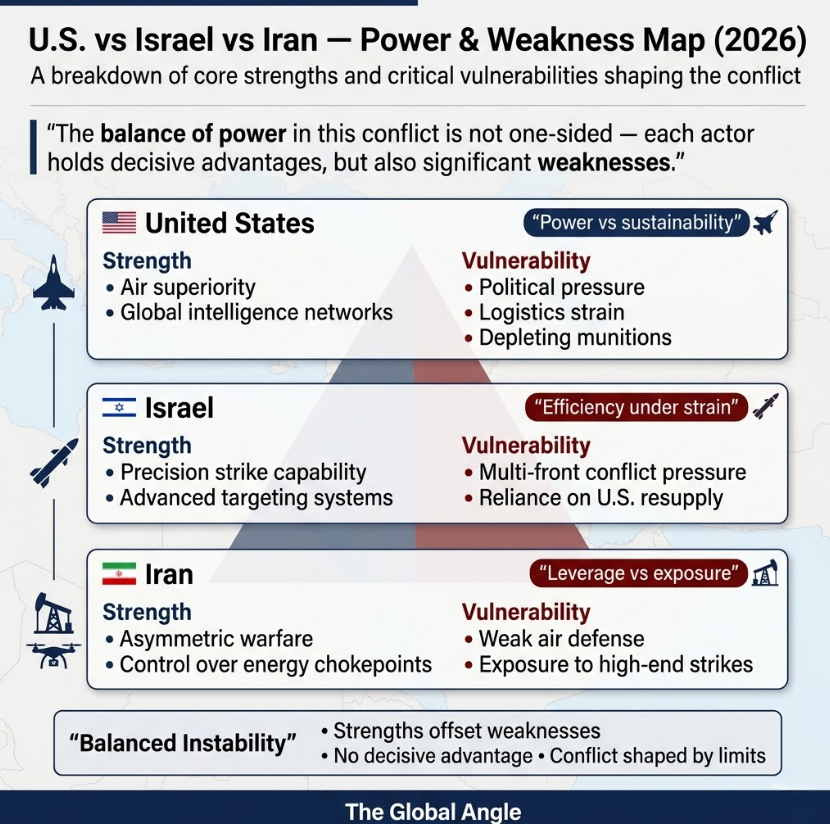
U.S Israel Iran Strategic Positions and Vulnerabilities
| Faction | Core Strength | Critical Vulnerability |
| United States | Absolute conventional air superiority and global intelligence networks. | Political & Logistical: Severe war fatigue among voters, spiking domestic gas prices, and rapidly depleting air-defense munitions. |
| Israel | Precision strike capabilities; successfully degrading Iran’s high-end ballistic infrastructure. | Multi-Front Strain: Fighting simultaneous proxy wars (Hezbollah/Hamas) while relying heavily on U.S. resupply. |
| Iran | Asymmetric area-denial; total leverage over global energy markets via the Strait of Hormuz. | Kinetic Dominance: Completely blind in the air; unable to stop U.S./Israeli bunker-buster munitions from destroying high-value targets. |
The Diplomatic Standoff
The pressure to conserve munitions and stabilize oil prices recently prompted U.S. President Donald Trump to order a five-day pause on military strikes targeting Iranian power plants and energy infrastructure. The White House claimed this was due to “very good and productive conversations” happening via backchannels.
However, Iran’s position remains uncompromising. Knowing they hold the economic leverage, Iranian state media and IRGC officials have vehemently denied that any negotiations are taking place, refusing to formally negotiate until all U.S. and Israeli airstrikes permanently cease.
Conclusion
The 2026 US-Iran war is redefining modern conflict. It proves that total air superiority does not guarantee strategic victory if the adversary can weaponize global supply chains. Until the U.S. finds a highly cost-effective way to neutralize drone swarms, or Iran’s domestic infrastructure collapses under the weight of Israeli airstrikes, Tehran will continue to use the Strait of Hormuz to hold the global economy hostage.
Frequently Asked Questions (Iran’s Current Position In U.S. Iran War)
Who is winning the US-Iran war?
The U.S. and Israel are winning the conventional military and air war, successfully destroying Iranian missile bases. However, Iran is winning the strategic and economic war by restricting the Strait of Hormuz, spiking global oil prices, and draining U.S. financial resources with cheap drone swarms.
What is happening in the Strait of Hormuz right now?
Commercial shipping through the Strait has dropped by roughly 95%. Iran is utilizing GPS spoofing and naval threats to block Western vessels, only allowing a select few “shadow fleet” and Asian-bound tankers to cross through a highly restricted corridor.
Why doesn’t the U.S. just shoot down all of Iran’s drones?
The U.S. is shooting them down, but it faces a severe cost imbalance. Iran is firing thousands of drones that cost roughly $35,000 each. The U.S. must shoot them down using advanced interceptor missiles that cost millions of dollars each, rapidly depleting U.S. defense stockpiles.
ALSO READ: Is U.S. Deploying Troops in Iran? The Reality of a Ground War in 2026 & Global Impact
ALSO READ: Is the U.S. Losing the Iran War? What are Iran’s Demands For Peace Talks
Iran’s Current Position In U.S. Iran War: Does Iran Hold the Strategic Edge?
Executive Briefing (Update: March 2026) The Asymmetric Grind: While the U.S. and Israel maintain total…
Is U.S. Deploying Troops in Iran? The Reality of a Ground War in 2026 & Global Impact
Executive Briefing (Update: March 2026) As of March 25, 2026, the intensifying conflict between the…

Denmark Election Results 2026: The “Greenland Gamble” Fails to Secure a Majority
Executive Briefing (Update: March 2026) The Electoral Paradox: As the Denmark Election Results 2026 Show…
Russia Ukraine War 2026: Analysis of Drone and Missile Strikes
Executive Summary of Russia Ukraine War 2026 (25 March 2026) The News: A coordinated Russian…
Is the U.S. Losing the Iran War? What are Iran’s Demands For Peace Talks
Executive Briefing (Update: March 2026) The Asymmetric Advantage: Despite weeks of heavy U.S. and Israeli…
EU Australia Free Trade Agreement: Tariffs, Critical Minerals, and Global Impact
Executive Briefing (Update: March 2026) The A$10 Billion Milestone: Following eight years of complex negotiations,…

Ibrahim is the Founder and Lead Analyst at The Global Angle, an independent digital platform dedicated to factual geopolitical analysis and international affairs. Based in India, he combines an engineering background with a deep focus on global markets, diplomacy, and strategic security. Ibrahim leverages a data-driven, analytical approach to break down complex international conflicts and economic shifts, helping readers see beyond standard news narratives. When he isn’t researching global policy, he focuses on digital publishing, search engine optimization, and platform architecture.