
Israel Pushing US Into Iran War Signals a Deepening Strategic Rift
Introduction
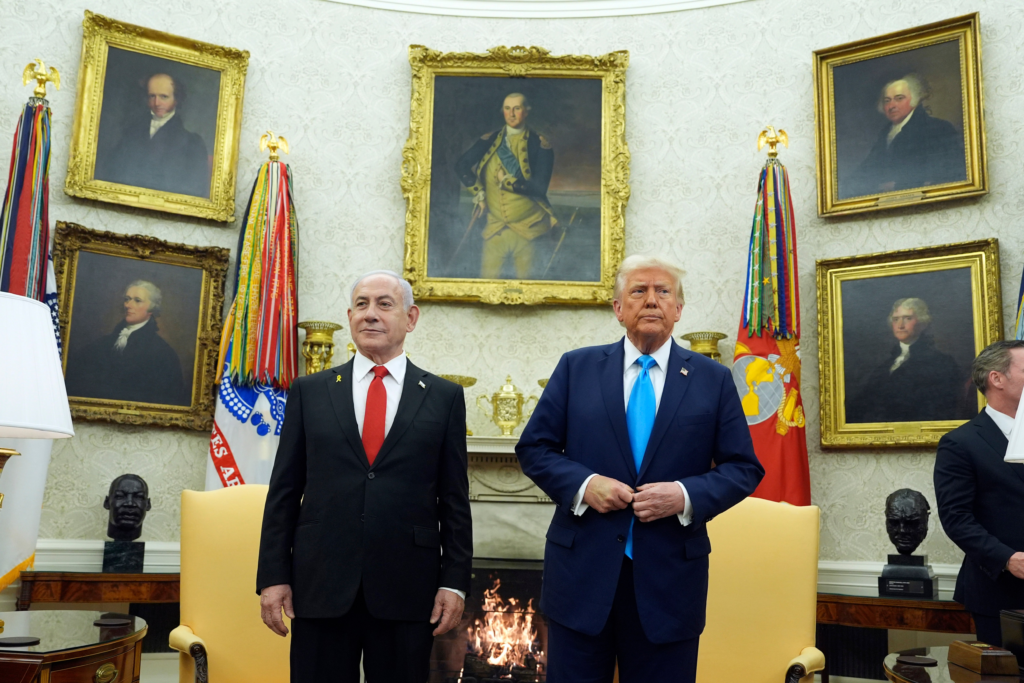
Israel pushing US into Iran war has emerged as a defining fault line in Washington’s Middle East policy. As Israeli Prime Minister Benjamin Netanyahu renews calls for action against Iran’s missile programme, the push comes at a moment when the United States is trying to step back from prolonged regional conflicts.
The tension is no longer subtle. Netanyahu’s approach increasingly clashes with President Donald Trump’s stated goal of reducing American military entanglements. This divergence raises questions about alliance dynamics, domestic political pressures, and the future trajectory of US-Iran-Israel relations.
A Shift From Nuclear Fear to Missile Alarm
For decades, Israel framed Iran’s nuclear programme as the central existential threat. That narrative shaped global diplomacy and justified repeated warnings of imminent danger.
After US strikes on Iranian nuclear facilities earlier this year, Trump declared the issue resolved. Whether accurate or not, this declaration forced a strategic pivot. Analysts now see Israel pushing US into Iran war by shifting focus toward Tehran’s missile capabilities rather than nuclear enrichment.
The recalibration allows Israel to sustain pressure on Iran without publicly contradicting the US president’s claims of success.
Why Israel Wants Continued Confrontation
Israeli officials argue that Iran’s missile programme poses an immediate danger, particularly after Iranian strikes during the recent conflict penetrated Israeli air defences.
Supporters of Israel emphasise that missiles are harder to deter and easier to proliferate. Statements from Israeli defence leaders underline a doctrine that rejects tolerating any future threat near Israel’s borders.
Critics, however, interpret the strategy differently. They argue Israel pushing US into Iran war reflects a broader ambition to maintain regional military dominance rather than simply neutralising threats.
Trump’s Middle East Balancing Act
Trump presents himself as a peacemaker who ended hostilities quickly and avoided a prolonged war. His administration’s latest National Security Strategy describes the Middle East as a region transitioning toward economic cooperation rather than constant conflict.
This vision directly conflicts with a renewed push for military escalation. Another war with Iran risks undermining Trump’s credibility with his political base, many of whom oppose foreign interventions.
Israel pushing US into Iran war therefore places Trump in a politically awkward position, forcing him to choose between alliance loyalty and domestic sentiment.
The Role of US Domestic Politics
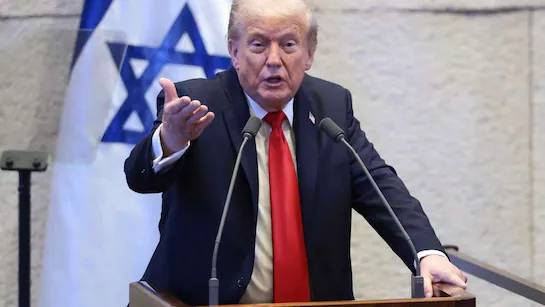
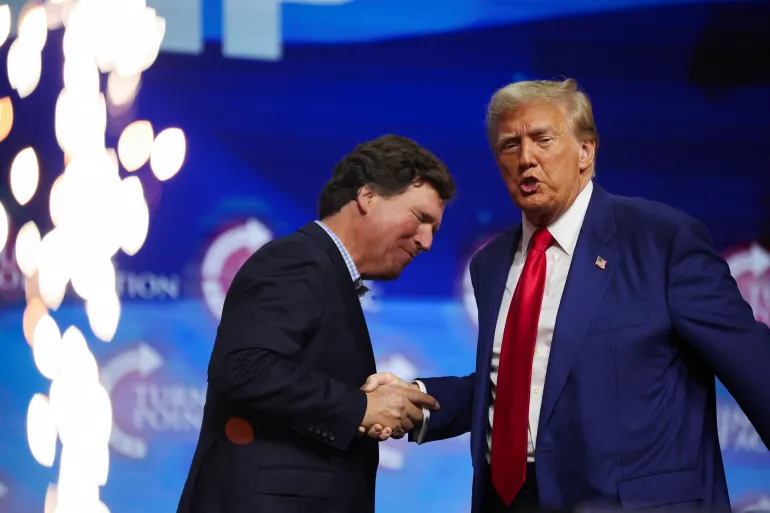
The divide inside the United States is growing. Influential figures aligned with the “America First” movement oppose renewed conflict and warn against being drawn into regional wars.
At the same time, powerful pro-Israel donors, lobbying groups, and congressional allies continue to support Israel’s security demands. This internal split means decisions on Iran are shaped as much by US electoral politics as by foreign policy calculations.
With midterm elections approaching, the political cost of escalation has increased significantly.
Iran’s Calculated Response So Far
Iran’s response during the recent conflict remained limited compared to its capabilities. Analysts interpret this restraint as strategic rather than submissive.
There is concern that further Israeli strikes could provoke a much stronger Iranian reaction. Unlike previous episodes, Tehran may feel compelled to respond decisively to deter recurring attacks.
This dynamic raises the risk that Israel pushing US into Iran war could spiral into a broader regional confrontation that becomes difficult to contain.
Risk of a Slow-Burn Escalation
One of the most significant dangers is gradual escalation rather than sudden war. Analysts warn that Israel may act unilaterally, expecting US defensive systems in the region to provide indirect support.
Such a scenario could entangle Washington incrementally, even if it initially resists direct involvement. Over time, defensive commitments could evolve into active participation.
This pathway undermines Trump’s stated objective of reducing US military exposure abroad.
What Comes Next
Netanyahu’s upcoming engagement with US leadership is expected to keep Iran firmly on the agenda. Missile production, regional security guarantees, and deterrence mechanisms will dominate discussions.
Whether Trump draws a firm line or leaves room for future military coordination will determine the next phase of US-Israel-Iran relations.
The decision will signal whether the United States intends to prioritise strategic restraint or continue acting as the ultimate backstop for regional military actions.
Bigger Implications for the Region
Israel pushing US into Iran war carries consequences beyond bilateral relations. Gulf states, already navigating fragile security balances, are watching closely.
Any renewed conflict could destabilise energy markets, undermine emerging diplomatic frameworks, and reverse tentative regional de-escalation.
The outcome will shape not just Middle Eastern geopolitics, but perceptions of US reliability and restraint worldwide.
Conclusion
Israel pushing US into Iran war highlights a rare moment of visible divergence between two close allies. It exposes competing visions of security, power, and responsibility in a region long defined by conflict.
Whether Washington resists or yields to renewed pressure will determine if this chapter becomes another short crisis or the opening act of a prolonged confrontation.
The question now is not only what Israel wants, but how far the United States is willing to go — and at what cost.
Frequently Asked Questions
1. Why is Israel pushing the US toward confrontation with Iran now?
Israel has shifted focus from Iran’s nuclear programme to missile capabilities after US strikes and changing diplomatic narratives.
2. Does Trump support another war with Iran?
Trump has publicly emphasised avoiding prolonged conflicts, though internal political pressures complicate the stance.
3. Could Israel act without US approval?
Analysts warn Israel could act independently, potentially drawing the US in indirectly through defence commitments.
4. What is the biggest risk of escalation?
A gradual slide into conflict, rather than a single decision for war, poses the greatest danger.
ALSO READ: China Sanctions US Defence Firms as Taiwan Arms Tensions Rise
ALSO READ: US Strike on ISIS in Nigeria Raises New Questions on Security and Sovereignty

Pingback: Critical Shift: Trump Says Venezuela Will Give Oil to U.S. 5 Signals
Pingback: Trump Wants Greenland Analysis: The Strategic Imperatives Driving the U.S. Interest in Greenland