Executive Briefing (March 10, 2026)
- The Immediate Crisis: A severe LPG Crisis in India has hit major cities, forcing thousands of hotels and restaurants to warn of imminent closures.
- The Geopolitical Trigger: The ongoing US-Iran war and the disruption of oil shipping lanes through the Strait of Hormuz have choked global energy supplies, directly impacting India’s LPG imports.
- The Government Response: The Ministry of Petroleum and Natural Gas has ordered refineries to prioritize domestic household LPG over commercial supply, implementing a strict 25-day inter-booking period to prevent hoarding.

What started as a geopolitical flashpoint thousands of miles away in the Middle East has rapidly arrived on the dinner plates of millions of Indians. Following nationwide price hikes for both commercial and domestic gas cylinders, a severe supply shock is now sweeping the country.
Hotel and restaurant associations across major metropolitan hubs have raised the alarm: commercial LPG deliveries have effectively stopped. If supply is not restored immediately, the local food service industry faces a “catastrophic closure.”
Here is a complete breakdown of why the US-Iran war is causing an LPG shortage in India, the city-by-city impact, and what this means for the common man.
The Geopolitical Chokepoint: Why is India Running Out of LPG?
India is heavily dependent on energy imports, sourcing a vast majority of its crude oil and LPG from the Middle East. The current crisis is a direct consequence of the escalating military conflict between the United States and Iran.
As the war intensifies, Iran has targeted the Strait of Hormuz—a narrow maritime chokepoint through which roughly 20% of the world’s oil and a significant portion of liquid gas is transported. With shipping lines pausing transit due to drone strikes and military blockades, the global supply chain has bottlenecked.
This supply crunch translates immediately to price spikes and physical shortages at Indian ports and distribution centers, forcing the government to make hard choices about who gets gas and who does not.
City-by-City Impact: The Restaurant Industry Paralyzed
The National Restaurant Association of India (NRAI) and various regional bodies have warned that because the industry relies entirely on commercial LPG, the disruptions are pushing businesses to the brink.
Here is how the crisis is unfolding across India’s major economic hubs:
| City | Current Status & Action Taken | Impact on Consumers |
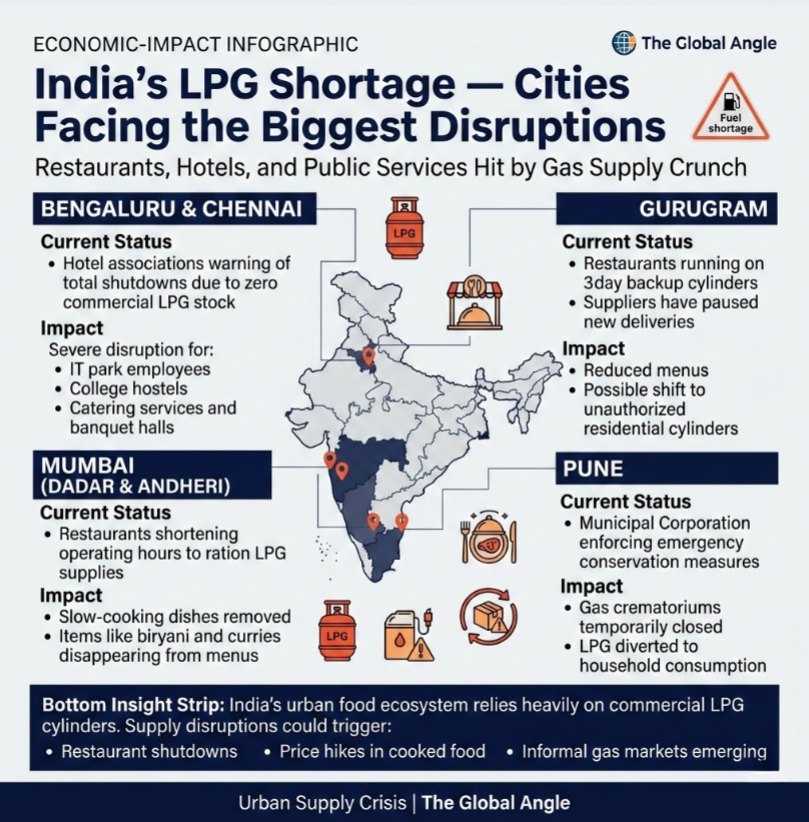
| Bengaluru & Chennai | Hotel associations issued an ultimatum, warning of total operational shutdowns starting Tuesday, March 10, due to zero commercial stock. | Severe disruption for IT park employees, college hostel residents, and banquet bookings relying on daily catering. |
| Gurugram | Restaurants running on 3-day backup cylinders; vendors have paused new deliveries. | Menus are being reduced; high probability of shifting to unauthorized residential cylinders if the crisis persists. |
| Mumbai (Dadar, Andheri) | Eateries have preemptively shortened operating hours to ration existing fuel. | “Slow-cooking” menu items (like certain curries and biryanis) are being dropped entirely to save gas. |
| Pune | Municipal Corporation (PMC) has taken extreme conservation measures. | Gas crematoriums have been temporarily closed to divert all available propane and butane for household use. |
What Will the Common Man Face? Will LPG Price Hike
While the government is actively trying to shield households from the worst of the crisis, the secondary effects of this shortage will inevitably hit the common man’s wallet and daily routine.
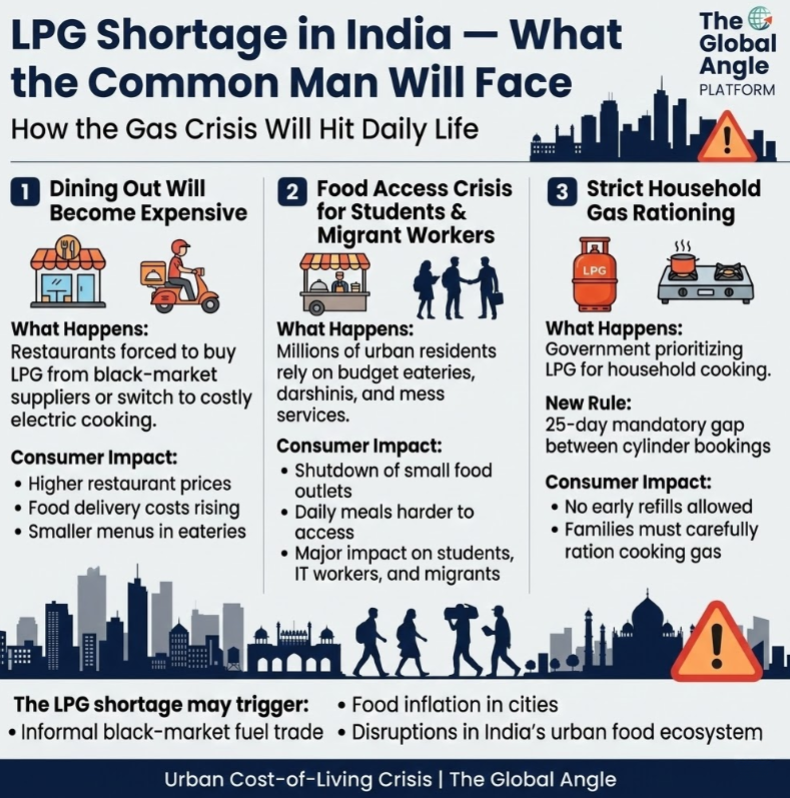
1. The Cost of Dining Out Will Skyrocket
If restaurants are forced to procure commercial LPG at massive black-market premiums or rely on expensive electrical alternatives, those costs will be passed directly to the consumer. Expect an immediate surge in food delivery prices and restaurant bills.
2. Food Insecurity for Migrant Workers and Students
In cities like Bengaluru and Chennai, millions of students, bachelor IT professionals, and migrant workers do not cook at home. They rely entirely on small local eateries, “darshinis,” and messes for their daily meals. A mass shutdown of these budget-friendly food sources creates an immediate urban food access crisis.
3. Strict Household Rationing
To ensure households do not run out of gas, the Ministry of Petroleum and Natural Gas has intervened. They have mandated that oil refineries maximize LPG production specifically for domestic use. However, to prevent panic buying and black-market hoarding, the government has introduced a mandatory 25-day inter-booking period for domestic cylinders. Families will need to strictly manage their home cooking fuel, as emergency or early refills will be blocked by the system.
Conclusion
The 2026 LPG crisis is a stark reminder of India’s vulnerability to Middle Eastern geopolitical shocks. Until the maritime routes through the Strait of Hormuz are secured and the U.S.-Iran conflict de-escalates, the Indian hospitality sector remains on life support. The government’s prioritization of household kitchens is a necessary triage, but it leaves the nation’s massive restaurant economy bracing for a devastating blow.
Frequently Asked Questions (India LPG Shortage 2026)
Why is there an LPG Crisis in India right now?
The current commercial LPG shortage is driven by the global energy supply chain disruption caused by the U.S.-Iran war. Military targeting of the Strait of Hormuz has drastically reduced the flow of oil and liquid gas exports from the Middle East to Indian ports.
Are domestic (household) LPG cylinders affected by the shortage?
The Indian government has prioritized domestic LPG supplies over commercial supplies to ensure household kitchens keep running. However, to prevent hoarding, a strict 25-day waiting period between domestic cylinder bookings has been implemented nationwide.
Will restaurants close permanently due to the gas shortage?
While permanent closures depend on the duration of the conflict, hotel associations in cities like Chennai and Bengaluru have warned of immediate, temporary shutdowns starting March 10, 2026, due to a complete halt in commercial gas deliveries.
ALSO READ: US-Iran War Day 10: Who is Winning & How Many Have Been Killed?
ALSO READ: Countries Currently at War 2026: The Complete Global Conflict Tracker
The Complete History of Iran Israel Relations: From Secret Allies to Arch-Rivals
Executive Briefing The Dramatic Shift: Today, Iran and Israel are engaged in a sprawling, multi-front…
Russian vs Gulf Crude Oil: Price, Refining, and Efficiency Compared
Executive Briefing Two of the most heavily traded categories in the world are Russian vs…
Who is Winning the US Iran War 2026? Casualties, Costs, and the 2026 Timeline
Executive Briefing (Update: March 12, 2026) As the 2026 Middle East conflict reshapes the global…
Global Oil Price Hike 2026: Petrol Prices & Strategic Reserves by Country
Executive Briefing Global Oil Price Hike 2026 (Update: March 12, 2026) The Price Shock: Following…
Can Trump Be Impeached In Midterm Elections 2026? Odds, Stats, and the Process Explained
Executive Briefing (Update: March 2026) As the United States gears up for the pivotal 2026…

Who Was Arrested From the Epstein Files in 2026? Photos & Facts
Executive Briefing (Update: March 2026) If you are wondering exactly who was arrested from the…

Ibrahim is the Founder and Lead Analyst at The Global Angle, an independent digital platform dedicated to factual geopolitical analysis and international affairs. Based in India, he combines an engineering background with a deep focus on global markets, diplomacy, and strategic security. Ibrahim leverages a data-driven, analytical approach to break down complex international conflicts and economic shifts, helping readers see beyond standard news narratives. When he isn’t researching global policy, he focuses on digital publishing, search engine optimization, and platform architecture.