Mamata Banerjee ED Raid Controversy: A Direct Confrontation Over Power and Process
Introduction
Mamata Banerjee ED raid controversy erupted dramatically in Kolkata when the West Bengal Chief Minister personally arrived at the residence of political strategist Pratik Jain during an ongoing Enforcement Directorate search. The moment marked a rare and highly charged confrontation between a sitting chief minister and a central investigative agency.
What could have remained a routine legal operation quickly escalated into a constitutional and political flashpoint, raising questions about federal authority, electoral timing, and the limits of executive intervention.
What Triggered the ED Raids
The Enforcement Directorate conducted searches at multiple locations linked to Indian Political Action Committee (I-PAC), including Pratik Jain’s residence and office premises. According to the agency, the searches were part of an ongoing money laundering investigation connected to illegal coal smuggling.
The ED maintained that the operation was evidence-based, legally sanctioned, and not directed at any political party or election process. It also stated that no party office was searched during the operation.
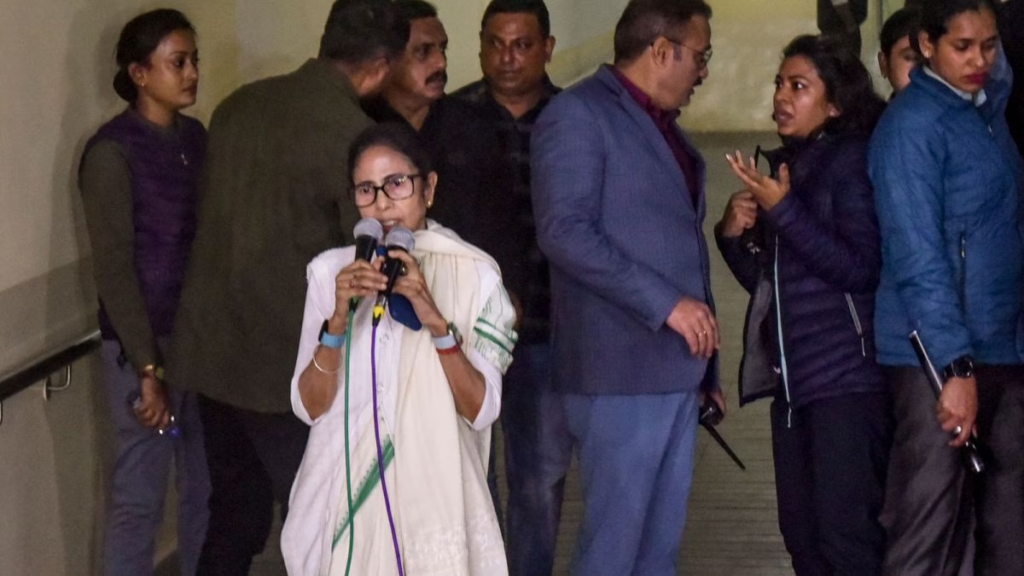
Why Mamata Banerjee Stepped In Personally
Mamata Banerjee described the raid as politically motivated and unconstitutional. She alleged that ED officials attempted to seize Trinamool Congress internal documents, hard disks, and sensitive electoral data related to upcoming assembly elections.
Her decision to personally intervene was framed as an act of resistance against what she called misuse of central agencies to weaken an elected state government. She claimed that party materials were being unlawfully taken and said she retrieved them herself.
This direct involvement blurred the line between political protest and administrative interference, making the episode unusually consequential.
Political Messaging and Electoral Undercurrents
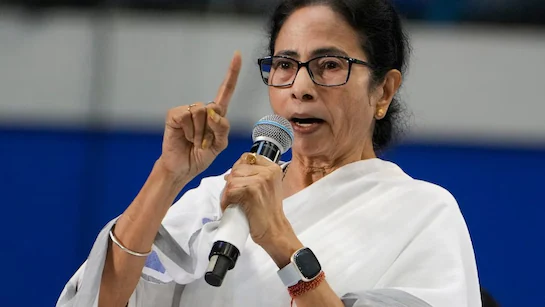
The chief minister linked the timing of the raids to elections, alleging voter list deletions and coordinated pressure tactics. She accused the Union Home Ministry of using investigative agencies to access political strategy and voter data.
Her remarks framed the episode not as an isolated legal matter but as part of a broader contest over democratic fairness and federal balance. The announcement of statewide protests further signalled that the issue would be escalated politically.

BJP’s Counterattack and Allegations
The Bharatiya Janata Party responded sharply. Opposition leaders in West Bengal accused Mamata Banerjee of interfering with a central investigation and misusing state machinery, including the presence of the Kolkata Police Commissioner at the raid site.
They argued that her actions undermined institutional independence and demanded accountability. BJP leaders also alleged that I-PAC was being used as a front to mask illegal financial flows linked to the ruling party.
What the ED Claimed in Its Official Statement
In a formal statement, the ED said the searches were conducted at ten locations across West Bengal and Delhi. The agency asserted that the operation followed all legal safeguards and was unrelated to elections.
It also alleged that certain individuals, including constitutional authorities, illegally intruded into two premises during the search and removed documents, raising serious procedural concerns.
This counter-accusation turned the narrative into a two-way institutional conflict.
Why This Matters Beyond Bengal
The Mamata Banerjee ED raid controversy reflects a deeper national pattern where investigative agencies and elected governments increasingly collide in public view. The episode highlights unresolved tensions between central authority and state autonomy.
It also raises uncomfortable questions about how political consultancy firms, data ownership, and campaign infrastructure intersect with legal scrutiny during election cycles.
What Comes Next
Legally, the ED investigation will continue. Politically, the fallout is likely to intensify as protests, counter-allegations, and public messaging escalate.
The incident may also sharpen debates on safeguards for political data, the role of central agencies, and the conduct expected from constitutional officeholders during active investigations.
Conclusion
This episode was not just about a raid or a strategist. It was about who controls power, information, and institutions in India’s federal democracy.
As elections approach, will legal processes remain insulated from political battles—or will they increasingly become arenas of open confrontation?
Frequently Asked Questions
1. Why did the ED raid I-PAC-linked premises?
The ED said the searches were linked to a money laundering probe related to illegal coal smuggling.
2. Why did Mamata Banerjee visit the raid site?
She claimed ED officials were seizing TMC party documents and sensitive data unlawfully.
3. Did the ED search any party office?
According to the ED, no political party office was searched.
4. What is the political impact of this controversy?
It has intensified the confrontation between the Bengal government and the Centre ahead of elections.
ALSO READ: ICE Shooting Minneapolis: Woman Killed as Trump, City Clash Over Truth
ALSO READ: Trump Says Venezuela Will Give Oil to U.S: What Changes for Energy and Diplomacy