Executive Summary
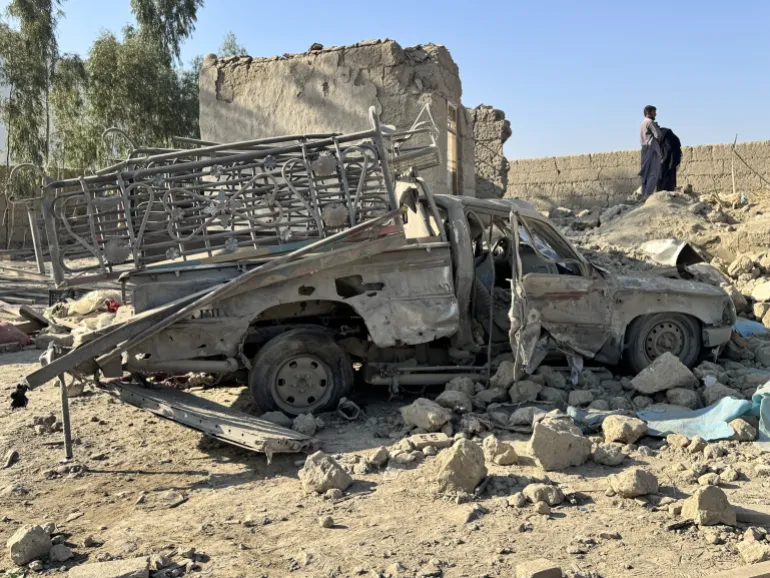
- The News: Pakistan launched unprecedented overnight airstrikes deep into Afghanistan’s eastern provinces of Nangarhar and Paktika, targeting militant networks following a wave of deadly domestic bombings.
- The Hidden Link: This is not just a counter-terrorism operation. It is a desperate geopolitical pivot signaling Islamabad’s total loss of faith in the Afghan Taliban’s ability to secure the region, directly threatening Chinese infrastructure investments.
- The Outlook: Expect a rapid weaponization of regional trade corridors, with rolling border closures likely stranding billions in cross-border commerce over the next six months.

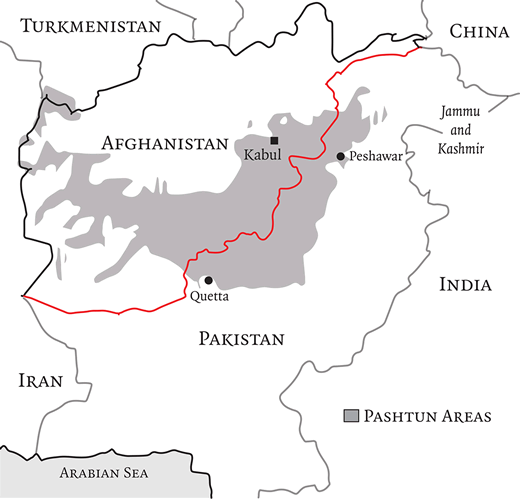
For decades, the 1,600-mile stretch of mountainous terrain separating Pakistan and Afghanistan has been a porous sanctuary for insurgency. Today, it is a volatile flashpoint. When Pakistani fighter jets crossed into Afghan airspace to strike camps in Nangarhar and Paktika on Sunday, they didn’t just bomb suspected hideouts. They obliterated the diplomatic illusion that the Afghan Taliban could act as a stabilizing partner in South Asia.
But why does this escalation matter beyond the immediate tragic loss of life? The answer lies in the shifting tectonic plates of regional economics and militant allegiances.
The Proxy Paradox
Pakistan’s military action follows a brutal surge in domestic terrorism. Recent violence includes a devastating suicide bombing at an Islamabad Shia mosque killing 31 worshippers, and vehicular assaults in Bajaur and Bannu that left over a dozen soldiers dead. Islamabad claims it possesses conclusive evidence that these attacks were orchestrated from Afghan safe havens.
Here is where the strategic calculus gets complicated. Pakistan’s Information Minister Attaullah Tarar confirmed strikes targeted both the Tehreek-e-Taliban Pakistan (TTP)—referred to locally as Fitna al Khwarij—and the Islamic State-Khorasan Province (ISKP).
The TTP is ideologically allied with the Afghan Taliban. ISKP, conversely, is their sworn enemy. By hitting both simultaneously, Islamabad is executing a unilateral ‘clean house’ doctrine. They are treating eastern Afghanistan not as a sovereign neighbor, but as an ungoverned frontier. The Afghan Taliban, facing severe internal economic pressures, simply lacks the capacity—or the political will—to monopolize violence within its own borders. Afghan spokesperson Zabihullah Mujahid’s swift condemnation, citing civilian casualties in Behsud and Barmal districts and warning of a “calculated response,” confirms the collapse of the fragile October ceasefire, plunging the Pakistan Afghanistan border conflict into a dangerous new phase.
Geopolitical Effects
A Pakistan Afghanistan border conflict is rarely contained to military outposts. The immediate casualty is regional connectivity.
When these border crossings close, over 8,000 transport trucks are routinely paralyzed. This friction chokes off a bilateral trade network historically valued at nearly $3 billion. Furthermore, this instability severely jeopardizes China’s Belt and Road Initiative (BRI). Beijing relies heavily on a stable Af-Pak corridor to extend the China-Pakistan Economic Corridor (CPEC) into Central Asian markets.
| Metric | Status Quo (Pre-Strike) | Post-Strike Reality |
| Border Trade | Sporadic delays, manageable tariff friction. | Immediate suspension threats; thousands of transport trucks stranded. |
| CPEC Expansion | Beijing actively negotiating Afghan integration. | Chinese investments likely paused due to elevated security risks. |
| Kabul’s Trade Pivot | Heavily reliant on Pakistani seaports (Karachi). | Accelerated pivot toward Iran (Chabahar) and Central Asia. |
Pakistan Airstrikes on Afghanistan: The Future Outlook
Watch the Torkham and Chaman border crossings closely. Over the next six months, we anticipate rolling closures that will effectively weaponize transit trade. This will force Kabul to aggressively accelerate its economic pivot toward Iran and India to bypass Pakistani leverage.
Militarily, the Afghan Taliban is backed into a dangerous corner. If they launch a genuine crackdown on the TTP to appease Islamabad, they risk fracturing their own ranks. Disgruntled fighters will likely defect straight into the arms of ISKP. Because of this, Kabul will likely choose inaction. Expect a distinct increase in asymmetric retaliatory attacks within Pakistan’s Khyber Pakhtunkhwa province as militants actively exploit the diplomatic vacuum.
Frequently Asked Questions
Why doesn’t the Afghan Taliban simply expel the TTP?
Ideological loyalty and tribal ties make it nearly impossible. The TTP and Afghan Taliban fought alongside each other against NATO forces for two decades. Turning on the TTP now risks triggering a severe internal mutiny within the Afghan Taliban’s own ranks.
What exactly is the Durand Line?
It is the 1,600-mile colonial-era border established in 1893 between Afghanistan and British India (which is now Pakistan). Afghanistan has historically rejected its legitimacy, making it a permanent source of bilateral friction and territorial dispute at the heart of the Pakistan Afghanistan border conflict.
ALSO READ: Trump 15% global tariff: Why the Supreme Court Couldn’t Stop the Global Tariff War
The Complete History of Iran Israel Relations: From Secret Allies to Arch-Rivals
Executive Briefing The Dramatic Shift: Today, Iran and Israel are engaged in a sprawling, multi-front…
Russian vs Gulf Crude Oil: Price, Refining, and Efficiency Compared
Executive Briefing Two of the most heavily traded categories in the world are Russian vs…
Who is Winning the US Iran War 2026? Casualties, Costs, and the 2026 Timeline
Executive Briefing (Update: March 12, 2026) As the 2026 Middle East conflict reshapes the global…
Global Oil Price Hike 2026: Petrol Prices & Strategic Reserves by Country
Executive Briefing Global Oil Price Hike 2026 (Update: March 12, 2026) The Price Shock: Following…
Can Trump Be Impeached In Midterm Elections 2026? Odds, Stats, and the Process Explained
Executive Briefing (Update: March 2026) As the United States gears up for the pivotal 2026…
Who Was Arrested From the Epstein Files in 2026? Photos & Facts
Executive Briefing (Update: March 2026) If you are wondering exactly who was arrested from the…

Ibrahim is the Founder and Lead Analyst at The Global Angle, an independent digital platform dedicated to factual geopolitical analysis and international affairs. Based in India, he combines an engineering background with a deep focus on global markets, diplomacy, and strategic security. Ibrahim leverages a data-driven, analytical approach to break down complex international conflicts and economic shifts, helping readers see beyond standard news narratives. When he isn’t researching global policy, he focuses on digital publishing, search engine optimization, and platform architecture.