Analysis: PM Modi Singur Rally 2026 and Bengal Election Strategy
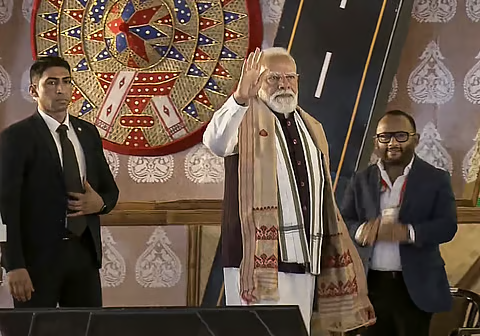
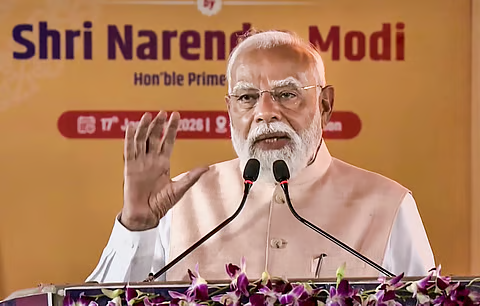
The battle lines for the 2026 West Bengal Legislative Assembly election were sharply drawn this Sunday as Prime Minister Narendra Modi addressed a massive gathering in Singur. The choice of venue was heavily symbolic. Singur, once the epicenter of the anti-land acquisition movement that catapulted Mamata Banerjee to power in 2011, served as the backdrop for the Prime Minister’s blistering attack on the Trinamool Congress (TMC).
In his address at the PM Modi Singur Rally 2026, the Prime Minister framed the upcoming election as a binary choice between the “Maha Jungle Raj” of the TMC and the “Sushasan” (good governance) of the BJP. Notably absent from his speech was any mention of the Tata Nano factory, a deliberate pivot that suggests the BJP is focusing on future industrialization through law and order rather than revisiting the wounds of the past.

The “Maha Jungle Raj” Narrative
The central theme of the Prime Minister’s speech was the breakdown of law and order, which he termed “Maha Jungle Raj.” By invoking this phrase—historically used to describe the RJD era in Bihar—Modi aimed to consolidate the anti-incumbency vote. He argued that the flight of capital from West Bengal is not due to a lack of resources but a lack of safety.
“Industry and investment will come to Bengal only when there is proper law and order,” Modi stated, explicitly linking the state’s economic stagnation to the prevalence of “syndicate tax” and “mafia rule.” He promised that a BJP government would dismantle these extortion networks, a message tailored to appeal to the state’s struggling MSME sector and the business community in Kolkata.
Key Accusations vs. BJP Promises
| Issue | TMC Governance (Accusation) | BJP Promise (2026) |
| Law & Order | “Maha Jungle Raj” & Mafia Rule | “Sushasan” (Good Governance) |
| Industry | Syndicate Tax & Extortion | Investor Confidence & Security |
| Border | Protecting Infiltrators | Identification & Deportation |
| Welfare | Blocking Central Schemes | Direct Benefit Transfer (DBT) |
Infrastructure Push: Port-Led Development
While the political rhetoric was sharp, the PM Modi Singur Rally 2026 was also a platform for launching significant infrastructure projects. The Prime Minister inaugurated and laid foundation stones for projects worth ₹830 crore, including an “extended port gate system” at Balagarh, located just 60km north of Kolkata along the Hooghly River.
This project is strategically designed to ease pressure on the Kolkata Port and transform the Hooghly district into a major warehousing and trading hub. By focusing on logistics and the jute industry—Hooghly anchors Bengal’s jute belt with nearly 60 mills—the Prime Minister attempted to offer a concrete economic roadmap. He promised a “one-district-one-product” push and a special plastic policy to revitalize the local economy, signaling a shift from agrarian populism to industrial pragmatism.
National Security and Infiltration
A significant portion of the speech was dedicated to national security, a core plank of the BJP’s ideology. Modi accused the TMC government of “playing with national security” by facilitating infiltration to secure vote banks. He alleged that the state government has deliberately denied land for barbed-wire fencing along the Bangladesh border for the past 11 years.
“Infiltrators who have settled using forged documents must be identified and sent back,” Modi declared. This rhetoric serves two purposes: it energizes the BJP’s core Hindu voter base in border districts and frames the TMC as a party that prioritizes political survival over national integrity.
Conclusion: The “Double Engine” Pitch
The PM Modi Singur Rally 2026 has set the tone for the next three months. By ignoring the Tata Nano history and focusing on current lawlessness, Modi is attempting to strip the TMC of its “pro-farmer” armor and expose its “anti-industry” underbelly. The invocation of cultural pride—citing UNESCO tags for Durga Puja and Santiniketan—was a final attempt to counter the TMC’s “outsider” branding of the BJP.
As the state heads to the polls, the contest will likely hinge on whether the electorate prioritizes the tangible benefits of central schemes like Ayushman Bharat (which Modi promised to implement) over the regional welfare programs of the TMC.
FAQ
Why did PM Modi choose Singur for his rally?
Singur is symbolic as the site of the movement that brought TMC to power. Modi used it to highlight the lack of industrial progress in the 15 years since the Tata Nano exit.
What is the “Maha Jungle Raj” Modi referred to?
It is a political term used by the PM to describe the alleged lawlessness, syndicate rule, and corruption under the current Trinamool Congress government in West Bengal.
Did PM Modi mention the Tata Nano project?
No, the Prime Minister avoided direct references to the Tata Nano or the past land acquisition protests, focusing instead on future industrialization and law and order.
What projects were inaugurated during the visit?
PM Modi inaugurated projects worth ₹830 crore, including a new extended port gate system at Balagarh to boost logistics and trade in the region.
ALSO READ: BJP’s 2026 blueprint for West Bengal: The Slogan War Begins by PM Modi’s “Paltano Darkar”