Executive Summary of Russia Ukraine War 2026 (25 March 2026)
- The News: A coordinated Russian drone and missile barrage swept across Ukraine on March 24, 2026, resulting in three civilian fatalities and localized infrastructure damage.
- The Hidden Link: These strikes are less about capturing territory and more about economic attrition. Moscow is deliberately forcing Kyiv to expend multi-million-dollar interceptors on cheap drones to bankrupt Western defense logistics.
- The Outlook: As the spring mud season (Rasputitsa) stalls ground maneuvers, expect the air war to intensify. By June 2026, a critical shortage of Patriot and NASAMS interceptors could force Ukraine to leave secondary cities unprotected.
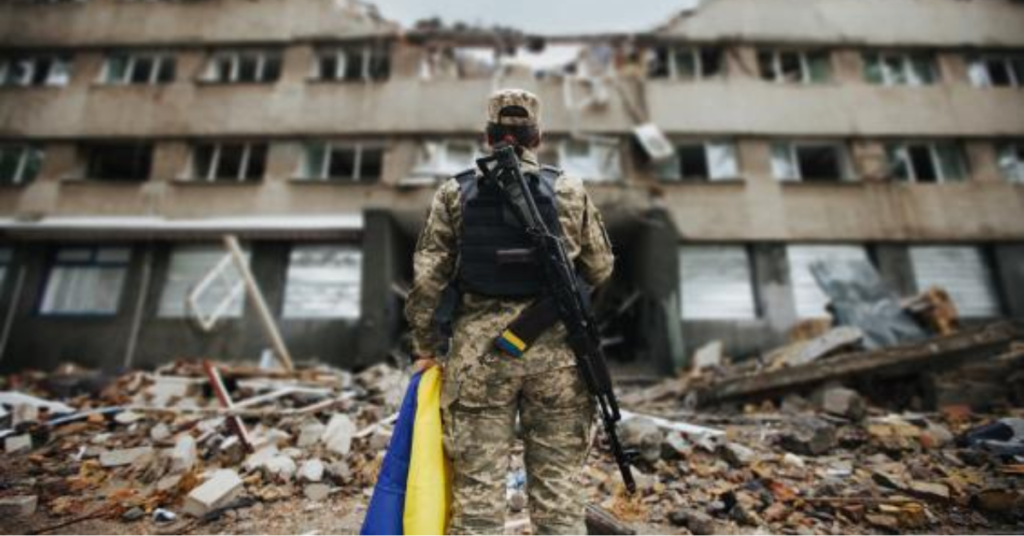
Three lives were lost on March 24. While daily casualty reports from Eastern Europe have become a grim routine for international observers, the specific mechanics of this latest barrage demand close attention.
Russia did not just fire missiles; it orchestrated a multi-layered aerospace operation. The attack utilized waves of slow-moving, low-cost unmanned aerial vehicles (UAVs) synchronized with precision-guided cruise missiles. Why this specific mix? Because the Kremlin is no longer just fighting the Ukrainian military. It is fighting the defense industrial base of the entire NATO alliance.
The Asymmetric Cost of Defense
In modern warfare, the winner is often the one who goes bankrupt last.
When a swarm of Iranian-designed Shahed drones crosses the border, Ukrainian air defense commanders face a brutal dilemma. Do you let the drone hit a power substation, plunging thousands into darkness? Or do you shoot it down? If you choose to shoot it down, you might be forced to fire a Western-supplied interceptor missile.
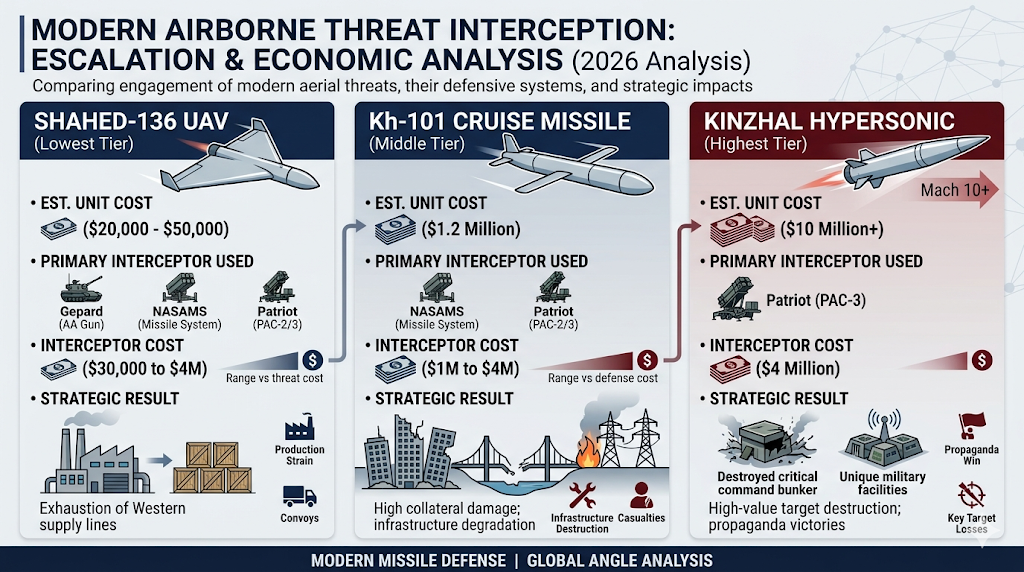
This is the exact trap Moscow is setting. A single Shahed drone costs roughly $20,000 to $50,000 to manufacture. A single PAC-3 Patriot interceptor used to destroy it costs approximately $4 million.
The March 24 Russia Ukraine drone missile attack was a textbook execution of this strategy. Drones are sent in first to trigger early warning radars and force air defense batteries to reveal their positions. Once the radars are lit and the interceptors are depleted, the heavier, vastly more destructive ballistic and cruise missiles follow.
You can draw a direct historical line from this tactic to the “War of the Cities” during the Iran-Iraq conflict in the 1980s. In that era, Saddam Hussein used modified Scud missiles to terrorize urban centers, not to win tactical battles, but to break the psychological will of the populace and exhaust the adversary’s defensive resources. The technology has evolved into AI-guided drones, but the psychological and economic objectives remain identical.
The Interceptor Bottleneck
The ripple effects of this strategy are tearing through Western capitals. The constraint is no longer political will; it is raw manufacturing capacity.
1. The European Vulnerability Window
Every Patriot missile fired over Kyiv is one that cannot be deployed in Poland, the Baltics, or Taiwan. The US and its European allies are currently burning through their stockpiles of advanced interceptors faster than Lockheed Martin and Raytheon can replenish them. This creates a severe strategic vulnerability. If a crisis erupts in the Indo-Pacific later this year, the US military will find its air defense reserves dangerously thin.
2. The Pivot to Electronic Warfare (EW)
Because the kinetic cost-exchange ratio is unsustainable, we are witnessing a massive, forced evolution in non-kinetic defense. Ukraine is rapidly deploying nationwide acoustic sensor networks and advanced GPS spoofing technologies. If you cannot afford to shoot the drone down, you must scramble its navigation so it crashes harmlessly into an empty field.
The 2026 Air War Cost-Exchange Matrix
| Threat System | Estimated Unit Cost | Primary Interceptor Used | Interceptor Cost | Strategic Result |
| Shahed-136 UAV | $20,000 – $50,000 | Gepard / NASAMS / Patriot | $30,000 to $4M | Exhaustion of Western supply lines. |
| Kh-101 Cruise Missile | $1.2 Million | NASAMS / Patriot | $1M to $4M | High collateral damage; infrastructure degradation. |
| Kinzhal Hypersonic | $10 Million+ | Patriot (PAC-3) | $4 Million | High-value target destruction; propaganda victories. |
The Race to the Summer Offensive
The calendar is currently the most important variable in this conflict.
We are entering the spring thaw. The ground in Eastern Ukraine turns into an impassable quagmire, making large-scale armored offensives practically impossible. Therefore, the war shifts upward.
- April – May 2026: Expect Russia to relentlessly target Ukraine’s remaining energy generation capacity. The goal is to cripple the domestic defense industry that relies on a stable power grid to manufacture indigenous drones and ammunition.
- July 2026: As the ground hardens for potential summer offensives, the interceptor shortage will reach a critical threshold. Kyiv will likely be forced into “triage defense”—protecting only the absolute most vital military-industrial nodes while leaving mid-sized cities exposed to aerial bombardment.
- The F-16 Factor: By late summer, the full integration of European-supplied F-16 fighter jets into the Ukrainian Air Force will be tested. These jets are not just for dropping bombs; they will be tasked with hunting Russian drones and cruise missiles mid-air to relieve the pressure on ground-based air defenses.
The tragedy of the three lives lost on March 24 is a microscopic view of a macroeconomic war. The Kremlin is betting that its factories can build cheap drones faster than the West can fund expensive missiles. Right now, that math is the most dangerous weapon on the battlefield.
Frequently Asked Questions (Russia Ukraine War 2026)
Why does Ukraine use expensive missiles to shoot down cheap drones?
It is a matter of targeting capability. While heavy machine guns and mobile fire teams can shoot down low-flying drones, they have a limited range and cannot cover entire cities. When drones bypass these outer rings at night or in bad weather, sophisticated radar-guided systems (which fire expensive interceptors) are the only reliable last line of defense.
Are sanctions stopping Russia from building more missiles?
No. While Western sanctions initially hampered production, Moscow has successfully bypassed them by importing critical microelectronics through third-party countries like China, Turkey, and Central Asian states. In fact, Russian missile production in 2026 is higher than it was prior to the 2022 invasion.
ALSO READ: Iran War Impact On Russia Ukraine War: Battlefield Updates, Middle East Impact, and Peace Talks
ALSO READ: The Pakistan Afghanistan War 2026 Explained: Why Former Allies Are Now Fighting
Russia Ukraine War 2026: Analysis of Drone and Missile Strikes
Executive Summary of Russia Ukraine War 2026 (25 March 2026) The News: A coordinated Russian…
Is the U.S. Losing the Iran War? What are Iran’s Demands For Peace Talks
Executive Briefing (Update: March 2026) The Asymmetric Advantage: Despite weeks of heavy U.S. and Israeli…
EU Australia Free Trade Agreement: Tariffs, Critical Minerals, and Global Impact
Executive Briefing (Update: March 2026) The A$10 Billion Milestone: Following eight years of complex negotiations,…
Iran War Impact On Russia Ukraine War: Battlefield Updates, Middle East Impact, and Peace Talks
Executive Briefing (Update: March 2026) For observers tracking global geopolitics, the Russia-Ukraine war can no…

Can China Takeover Taiwan in 2026? Why Does China Wants Taiwan
Executive Briefing (Update: March 2026) The Vulnerability: With the United States heavily entrenched in a…

The Pakistan Afghanistan War 2026 Explained: Why Former Allies Are Now Fighting
Executive Briefing (Update: March 2026) The Current Situation: Pakistan Afghanistan War 2026is currently engaged in…