
Tarique Rahman Return Bangladesh and a Political Reset Before Elections
Introduction
Tarique Rahman return Bangladesh after nearly 17 years in exile marks one of the most consequential political moments in the country’s recent history. The acting chairman of the Bangladesh Nationalist Party (BNP) arrived in Dhaka on Thursday to a massive show of support, positioning himself as the leading contender for prime minister ahead of February’s general election.
His return comes at a time of deep political uncertainty. Bangladesh is navigating a fragile transition following the ouster of Sheikh Hasina in 2024, rising security concerns, and growing questions over electoral credibility. Rahman’s homecoming reshapes both domestic politics and regional calculations.
Who Is Tarique Rahman
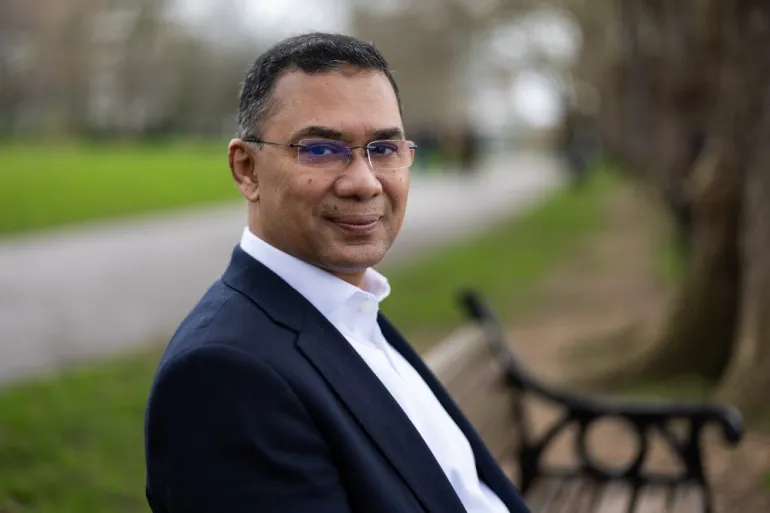
Tarique Rahman, 60, is the son of former Prime Minister Khaleda Zia and the political heir to one of Bangladesh’s most influential families. As acting BNP chairman, he is expected to formally take charge of the party due to his mother’s prolonged illness.
Rahman left Bangladesh in 2008, moving to London after facing multiple criminal cases, which he has long described as politically motivated. During his years in exile, he remained a powerful figure within the BNP, directing strategy from abroad.
Why He Could Return Now
The legal barriers that kept Rahman out of Bangladesh have collapsed following the removal of Sheikh Hasina’s government.
Convictions against Rahman, including money laundering and an alleged assassination plot, were overturned after the student-led uprising that brought down the Awami League administration. These reversals cleared the path for his return.
His homecoming is also driven by personal urgency. Khaleda Zia has been seriously ill for months, and party officials say Rahman plans to spend time with her after public engagements.
A Show of Strength on the Streets
The scale of Rahman’s welcome was striking.
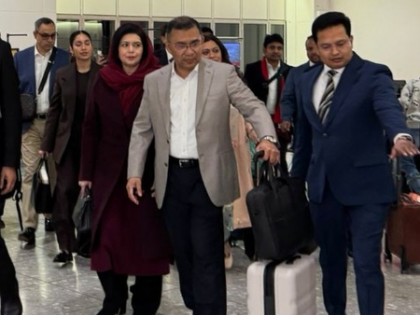
Hundreds of thousands of BNP supporters lined the route from Dhaka’s airport to the reception venue, waving party flags and chanting slogans. The BNP had earlier claimed it hoped to mobilise up to five million supporters in what it described as an unprecedented display of strength.
The turnout underscored the party’s confidence as it regains momentum after years of repression and political marginalisation.
A Leadership Vacuum Filled
Bangladesh’s opposition has lacked a clear centre of gravity for years.
With Khaleda Zia incapacitated and the Awami League barred from participating in the upcoming election, the political field has been unusually open. Analysts say Rahman’s return fills a vacuum at a moment when voters are searching for stability and direction.
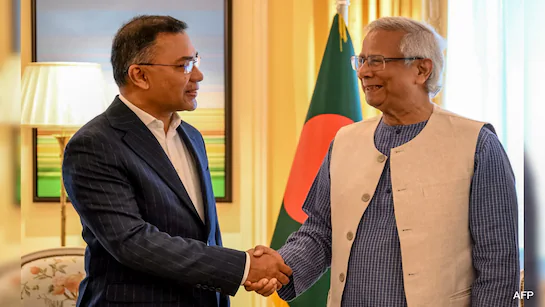
Reporting from Dhaka, observers note that the interim government under Muhammad Yunus has struggled to assert authority amid administrative inertia and security challenges.
A Volatile Political Landscape
Bangladesh is heading into elections under strained conditions.
While Yunus has pledged a free and peaceful vote, recent attacks on media outlets and sporadic violence have raised concerns about law and order. The BNP has gained ground, but the absence of the Awami League from the electoral process has triggered fears of unrest.
Rahman’s ability to unify supporters while containing street-level volatility will be critical to the transition.
What Rahman Represents Politically
Rahman’s appeal lies in both continuity and change.
He represents the legacy of the Zia family, which dominated Bangladeshi politics for decades alongside Sheikh Hasina’s Awami League. At the same time, his long absence has allowed him to position himself as an outsider to recent governance failures.
Supporters see him as a figure capable of restoring political balance. Critics argue his leadership style and past controversies still raise questions.
Implications for India–Bangladesh Relations
The Tarique Rahman return Bangladesh carries significant implications for India.
New Delhi maintained close ties with Sheikh Hasina’s government, particularly on security cooperation, counterterrorism, and border management. Her removal and the rise of a BNP-led dispensation introduce uncertainty into that equation.
Historically, relations between India and BNP governments have been more cautious, especially on issues involving regional security and cross-border sensitivities.
India’s Strategic Concerns
India’s primary concerns include stability along the shared border, the safety of minorities, and continuity in counterterrorism cooperation.
Rahman’s BNP has previously taken positions that appealed more strongly to nationalist sentiment within Bangladesh. How that translates into policy remains unclear.
New Delhi will closely watch whether Rahman adopts a pragmatic approach toward India or seeks to recalibrate Bangladesh’s foreign policy posture.
Economic and Regional Stakes
Bangladesh is one of India’s most important neighbours economically.
Trade, connectivity projects, and energy cooperation expanded significantly in recent years. Any political instability or policy shift in Dhaka could affect these initiatives.
For India, a stable and cooperative Bangladesh is essential to its eastern economic strategy and regional influence.
What Comes Next
Rahman now faces a complex challenge.
He must consolidate leadership within the BNP, reassure voters concerned about stability, and navigate an election environment marked by distrust and tension. At the same time, he will need to send signals to international partners, including India, about his governing intentions.
The coming weeks will test whether his return translates into electoral momentum or deeper polarisation.
Conclusion
Tarique Rahman return Bangladesh is more than a personal homecoming. It is a political reset at a moment when Bangladesh stands at a crossroads.
For Bangladesh, his return could shape the nature of its democratic transition. For India, it marks the beginning of a recalibration in a relationship long anchored to Sheikh Hasina’s leadership.
Whether Rahman emerges as a unifying prime minister or a contested figure will determine not just the election outcome, but the region’s political balance.

Frequently Asked Questions
Why did Tarique Rahman live in exile for 17 years?
He left Bangladesh in 2008 amid criminal cases he said were politically motivated.
Why is his return important now?
Legal cases against him were overturned after Sheikh Hasina’s removal, clearing his path.
Is Tarique Rahman likely to become prime minister?
He is widely viewed as the frontrunner ahead of February’s election.
How does this affect India?
It introduces uncertainty into India–Bangladesh ties, especially on security and diplomacy.
ALSO READ: Unrest in Bangladesh Escalates as Violence, Diplomacy and Fear Collide
ALSO READ: Motaleb Sikder Bangladesh Political Violence Raises Alarm After Osman Hadi
Pingback: Bold Vision Tarique Rahman I Have a Plan Speech in 9 points
Pingback: Kuldeep Sengar Sentence Suspension: What does it show about Judiciary?