Executive Briefing (Update: March 2026)
- The Ground Reality: Cuba’s national power grid has completely collapsed three times in March 2026 alone, plunging 10 million people into total darkness for days at a time. Therefor in this article we have got Cuba Energy Crisis 2026 Explained
- The Root Cause: A combination of decaying Soviet-era infrastructure and a suffocating new U.S. oil blockade has left the island with almost zero fuel to run its thermoelectric plants.
- The Takeover Threat: U.S. President Donald Trump has publicly floated the idea of a “friendly takeover” of Cuba, using the energy crisis to push aggressively for regime change in Havana.
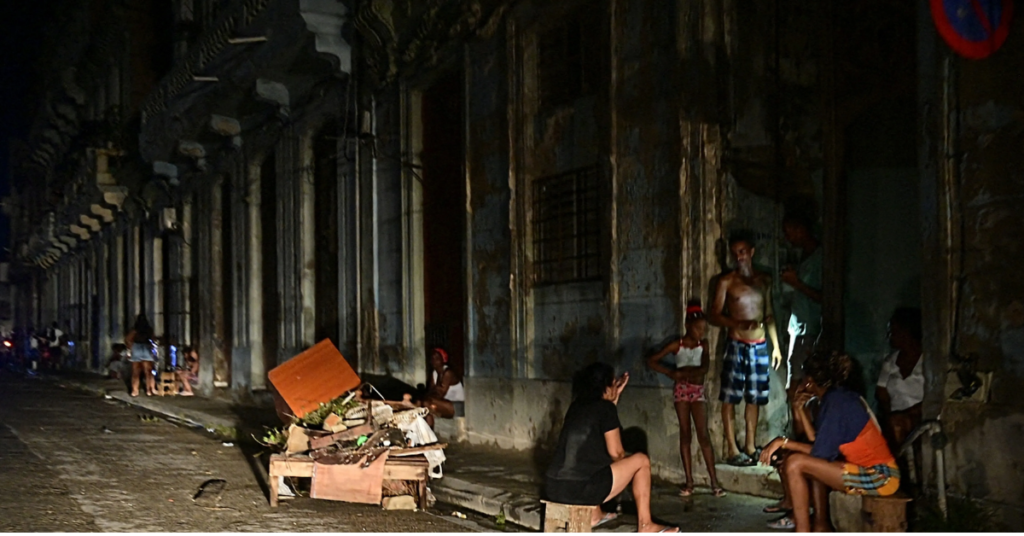
Right now, the nation of Cuba is operating in the dark. Without electricity, water pumps fail, food spoils in warm refrigerators, and hospitals are forced to rely on rationing diesel for backup generators.
As the humanitarian situation deteriorates, the island has become the centerpiece of a massive geopolitical showdown. To separate rumors of a U.S. invasion from the harsh reality on the ground, here is the complete breakdown of the 2026 Cuba energy crisis, the rhetoric from Washington, and how the rest of the world is intervening.
What is Causing the National Blackouts?
Cuba’s power grid relies almost entirely on oil-fired thermoelectric power plants. This system is currently failing due to a “perfect storm” of internal decay and external strangulation.
First, the infrastructure is heavily outdated. Most of Cuba’s power plants were built over 40 years ago with Soviet technology, operating far past their intended lifespans without proper maintenance or spare parts.
Second, the fuel simply isn’t there. Cuba produces heavy, high-sulfur crude oil domestically, but it only covers about 40% of its needs. For years, Cuba relied on heavily subsidized oil from Venezuela. However, following the U.S. abduction of Venezuelan President Nicolas Maduro in January 2026, those shipments halted abruptly.
To make matters worse, the U.S. actively weaponized this vulnerability. President Trump enacted an aggressive fuel blockade (via Executive Order 14380), threatening steep tariffs on any country or shipping company that delivers oil to Cuba. By March 2026, the island essentially ran out of fuel, causing the Antonio Guiteras power plant (the country’s largest) to fail and taking the entire national grid down with it.
The Humanitarian Impact of the Blackouts
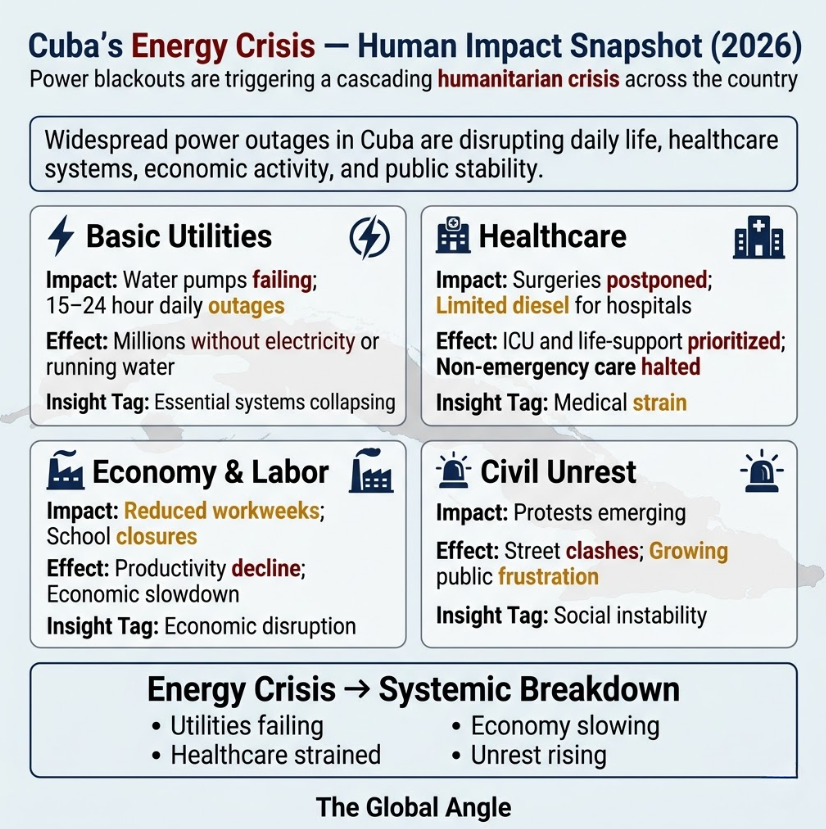
| Sector | Current Impact on Cuban Citizens |
| Basic Utilities | Widespread failure of residential water pumps; millions are without running water or electricity for 15 to 24 hours a day. |
| Healthcare | Tens of thousands of non-emergency surgeries have been postponed as hospitals route limited diesel to keep ICUs and life-support systems running. |
| Economy & Labor | State companies are forced into four-day workweeks. Schools and universities have reduced hours or closed entirely to save power. |
| Civil Unrest | Severe shortages have sparked rare, violent public protests, with citizens taking to the streets in Havana and Morón, banging pots and clashing with security forces. |
Is the U.S. Going to Attack or Take Over Cuba?
With U.S. warships in the Caribbean and recent aggressive military actions in Venezuela, global search trends are dominated by fears of The U.S. Cuba Takeover Threats
Is an invasion happening? Currently, no. The U.S. military is not actively rehearsing a kinetic, boots-on-the-ground invasion of Cuba. Gen. Francis Donovan, head of the U.S. Southern Command, confirmed to Congress that there are no active preparations to militarily conquer the island.
Why the takeover rumors?
The rumors stem directly from President Trump’s rhetoric. In late February and March 2026, Trump escalated his stance, stating that Cuba is “a failing nation” and telling reporters that the U.S. might soon execute a “friendly takeover” of the island. He stated he expects to have the “honor of taking Cuba,” leveraging the humanitarian crisis to force the Communist government to step down.
How has Cuba responded?
Cuban President Miguel Díaz-Canel has condemned the U.S. actions as “energy strangulation” and an extreme form of economic coercion. Cuban Deputy Foreign Minister Carlos Fernandez de Cossio publicly stated that while Cuba does not believe a U.S. military attack is probable, the nation is fully prepared to mobilize and defend its sovereignty if provoked. Despite the hostility, Havana has quietly entered into diplomatic talks with Washington in a desperate bid to ease the blockade.
How the Rest of the World is Responding
The U.S. blockade has forced Cuba’s remaining allies to step up, turning the Caribbean into a proxy battleground for global influence.
The International Stance on the Cuba Crisis
| Country/Entity | Current Stance & Actions |
| Mexico | Initially suspended oil shipments due to U.S. tariff threats, but President Claudia Sheinbaum has recently struck a defiant tone, declaring Mexico “does not kneel” to U.S. pressure regarding sovereign trade. |
| Russia | Defying the U.S. blockade, Russia has dispatched oil tankers (including the Anatoly Kolodkin and Sea Horse) carrying critical diesel supplies across the Atlantic, expected to dock in Cuba by late March. |
| China | Focusing on long-term infrastructure rather than short-term fuel. China has backed a massive $1 billion initiative to build 92 solar parks in Cuba by 2028 to permanently reduce the island’s reliance on imported oil. |
| International Coalitions | European and Latin American socialist groups (including international lawmakers) have organized humanitarian flotillas delivering solar panels, medical supplies, and food directly to Havana. |
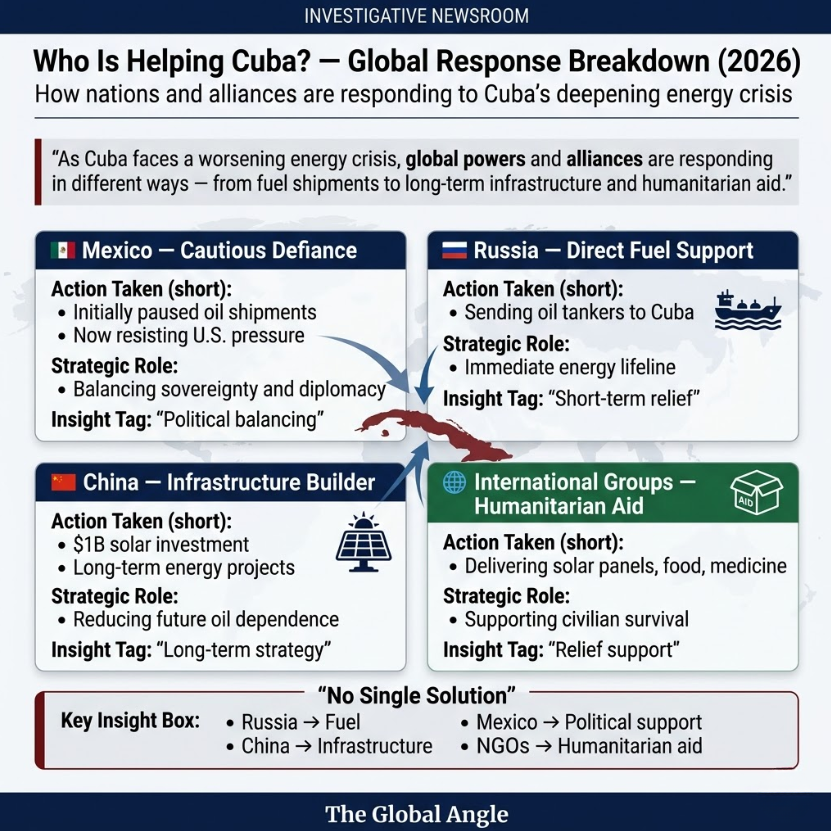
Ultimately, Cuba is caught in a brutal waiting game. The government is holding out for Russian fuel and Chinese solar panels, while the U.S. tightens the vice, hoping the darkness will finally break the regime.
Frequently Asked Questions (Cuba Energy Crisis 2026 Explained)
Why does Cuba have no electricity right now?
Cuba is experiencing total national blackouts because its aging thermoelectric power plants have run out of fuel. A strict U.S. oil blockade and the loss of subsidized shipments from Venezuela have prevented Cuba from importing the oil necessary to keep the grid online.
Is the United States invading Cuba?
There is currently no active U.S. military invasion of Cuba. However, President Donald Trump has heavily escalated rhetoric, using the phrase “friendly takeover” and utilizing an extreme economic blockade to try and force the collapse of the Cuban government.
Is anyone helping Cuba with the energy crisis?
Yes. Despite threats of U.S. tariffs, Russia is actively sending fuel tankers across the Atlantic. China is heavily investing in building new solar power parks across the island, and various international humanitarian flotillas are delivering emergency supplies like solar panels and medicine.
ALSO READ: Why Does Trump Want Cuba? The Cuban Crisis 2026 Analysis & US Oil Blockade Explained
ALSO READ: How Russia and China Are Helping Iran 2026 Middle East Conflict
Russia Ukraine War 2026: Analysis of Drone and Missile Strikes
Executive Summary of Russia Ukraine War 2026 (25 March 2026) The News: A coordinated Russian…
Is the U.S. Losing the Iran War? What are Iran’s Demands For Peace Talks
Executive Briefing (Update: March 2026) The Asymmetric Advantage: Despite weeks of heavy U.S. and Israeli…
EU Australia Free Trade Agreement: Tariffs, Critical Minerals, and Global Impact
Executive Briefing (Update: March 2026) The A$10 Billion Milestone: Following eight years of complex negotiations,…
Iran War Impact On Russia Ukraine War: Battlefield Updates, Middle East Impact, and Peace Talks
Executive Briefing (Update: March 2026) For observers tracking global geopolitics, the Russia-Ukraine war can no…
Can China Takeover Taiwan in 2026? Why Does China Wants Taiwan
Executive Briefing (Update: March 2026) The Vulnerability: With the United States heavily entrenched in a…
The Pakistan Afghanistan War 2026 Explained: Why Former Allies Are Now Fighting
Executive Briefing (Update: March 2026) The Current Situation: Pakistan Afghanistan War 2026is currently engaged in…

Ibrahim is the Founder and Lead Analyst at The Global Angle, an independent digital platform dedicated to factual geopolitical analysis and international affairs. Based in India, he combines an engineering background with a deep focus on global markets, diplomacy, and strategic security. Ibrahim leverages a data-driven, analytical approach to break down complex international conflicts and economic shifts, helping readers see beyond standard news narratives. When he isn’t researching global policy, he focuses on digital publishing, search engine optimization, and platform architecture.