
US Strike on ISIS in Nigeria Signals a New Phase in Counterterrorism
Introduction
US strike on ISIS in Nigeria has marked a significant shift in Washington’s approach toward militant threats in West Africa. On Christmas Day, the United States carried out a targeted strike against Islamic State militants in northwest Nigeria, acting at the request of the Nigerian government.
The operation, confirmed by both President Donald Trump and the US military, comes amid growing concerns about militant violence in Nigeria and signals a deeper level of military coordination between the two countries at a sensitive political moment.
What Happened in Northwest Nigeria
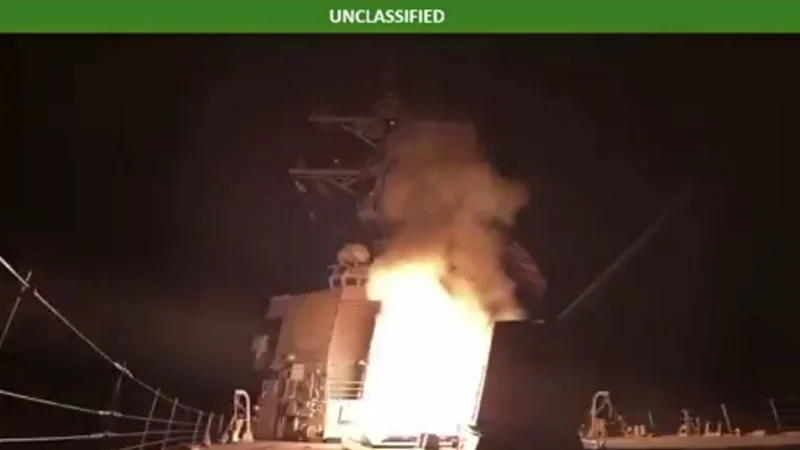
According to US Africa Command, the strike took place in Sokoto state and targeted known ISIS camps. The operation was conducted in coordination with Nigerian authorities and resulted in the deaths of multiple Islamic State militants.
A video released by the Pentagon showed a projectile launched from a warship, underscoring the precision-based nature of the strike. US defence officials said the operation focused on established militant locations rather than population centres.
Nigerian officials confirmed the strike as a joint counterterrorism operation.
How Nigeria Framed the Operation
Nigeria’s foreign minister Yusuf Maitama Tuggar described the strike as part of long-planned security cooperation with the United States. Speaking to the BBC, he emphasised that the operation targeted terrorists and was not linked to any religious agenda.
Tuggar stated that the strike relied on intelligence provided by Nigeria and did not rule out the possibility of future operations. Any further action, he said, would depend on decisions taken by leadership in both countries.
This framing reflects Nigeria’s effort to keep the operation within a counterterrorism, not ideological, context.
Trump’s Messaging and the Religious Narrative
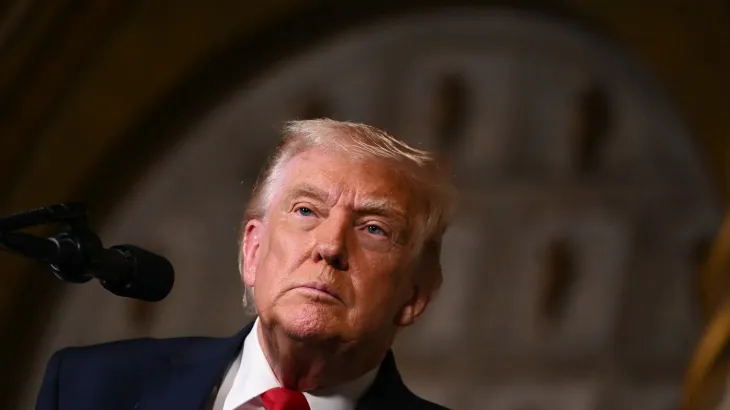
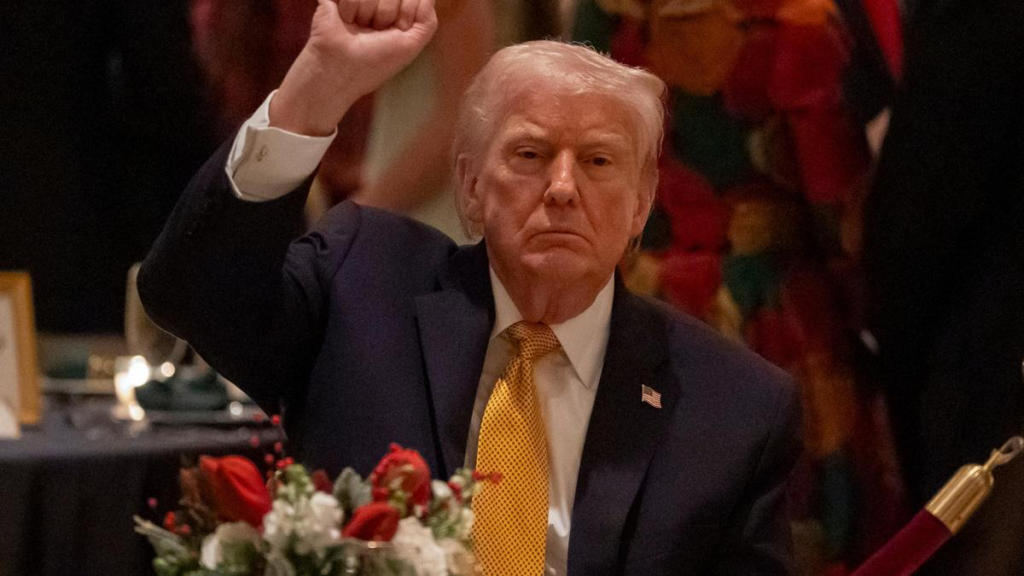
President Trump framed the US strike on ISIS in Nigeria through a religious lens, stating that militants had been targeting Christians in the region. He issued the announcement from Florida while spending Christmas Day at his Mar-a-Lago residence.
Trump has repeatedly warned in recent months that Christianity faces an existential threat in Nigeria. He has also publicly criticised Nigerian authorities for failing to stop violence affecting Christian communities.
However, Nigerian officials have pushed back against this framing, stressing that militant groups attack both Muslims and Christians and that the security situation is more complex.
Nigeria’s Internal Security Reality
Nigeria’s government has consistently maintained that militant violence cuts across religious lines. The country’s population is roughly divided between Muslims, primarily in the north, and Christians, mainly in the south.
On the same day as the US strike, Nigerian police reported a suspected suicide bombing at a mosque in the northeast that killed at least five people and injured dozens more. This incident reinforced the government’s claim that extremist violence affects all communities.
President Bola Tinubu reiterated his commitment to protecting religious freedom and safeguarding all Nigerians.
Why This Matters Now
The US strike on ISIS in Nigeria is significant for three reasons.
First, it represents a rare instance of direct US military action inside Nigeria, a country that has traditionally preferred intelligence support over visible foreign strikes.
Second, the operation follows months of reported US intelligence-gathering flights over Nigerian territory, suggesting a gradual escalation rather than a sudden intervention.
Third, it reflects Washington’s increasing willingness to project force in regions it views as potential breeding grounds for transnational terrorism.
A Broader Pattern in US Counterterrorism
The Nigeria strike fits into a wider pattern of US operations against Islamic State affiliates.
Just days earlier, the US carried out large-scale strikes against ISIS targets in Syria after an attack on American personnel. Together, these actions suggest a renewed emphasis on targeting Islamic State networks wherever intelligence allows.
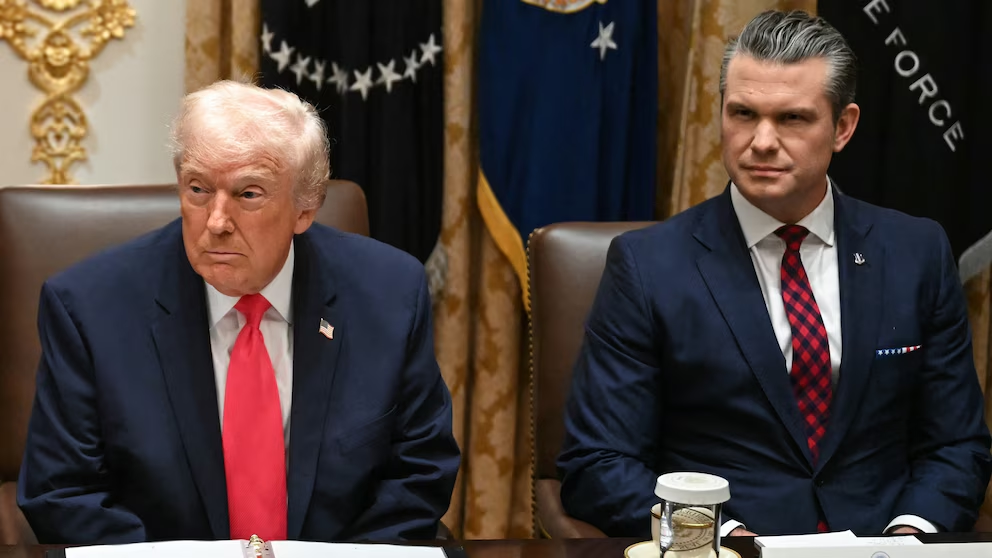
US Defence Secretary Pete Hegseth’s brief message following the Nigeria strike, stating “More to come…”, added to speculation that further operations may follow if conditions permit.
Key Details at a Glance
| Aspect | Information |
|---|---|
| Location | Sokoto state, northwest Nigeria |
| Target | Islamic State (ISIS) militants |
| Nature of strike | Joint US–Nigeria operation |
| Casualties | Multiple ISIS militants killed |
| Nigerian stance | Counterterrorism, not religious |
| US role | Precision strike with intelligence coordination |
Sovereignty and Strategic Balance
While Nigeria agreed to the strike, such operations raise questions about sovereignty and precedent.
Allowing foreign military action, even at a government’s request, can invite domestic criticism. It also sets expectations about future cooperation that may limit diplomatic flexibility.
Nigeria appears to be walking a careful line, accepting external support while asserting control over narrative and intent.
What Comes Next
Nigerian officials have indicated that future strikes are possible but not guaranteed. Any continuation will depend on intelligence assessments and political approval on both sides.
The US has made clear that it views economic, intelligence, and military tools as part of a single pressure strategy against militant groups. Whether Nigeria remains comfortable with deeper US involvement will shape the next phase.
For now, both governments are emphasising partnership rather than intervention.
Bigger Implications for West Africa
The US strike on ISIS in Nigeria could influence how other West African states engage with external powers.
As militant groups adapt and expand across borders, governments may increasingly turn to international partners for precision capabilities they lack. This raises broader questions about regional security autonomy and long-term stability.
The Nigeria case may become a reference point for future cooperation models.
Conclusion
The US strike on ISIS in Nigeria marks more than a tactical military action. It reflects shifting calculations in Washington and Abuja about how best to confront evolving militant threats.
While framed as a joint counterterrorism effort, the operation highlights deeper tensions around security, sovereignty, and narrative control. How both countries manage the aftermath will determine whether this moment remains an exception or becomes a new normal in regional security cooperation.
Frequently Asked Questions
Was the US strike carried out independently?
No. Nigerian officials confirmed it was a joint operation conducted with Nigerian intelligence support.
Did the strike target a specific religion?
Nigeria’s government stated the operation targeted terrorists, not any religious group.
Could there be more US strikes in Nigeria?
Officials did not rule it out, saying future actions depend on leadership decisions.
Why is this strike significant?
It signals deeper US military involvement in Nigeria’s counterterrorism efforts.
ALSO READ: US Visa Bans Europe Spark Major Clash Over Free Speech and Tech Rules
ALSO READ: Trump Changes White House Plaques, Calls Joe Biden ‘Worst President of America’
Pingback: Critical Pushback: China Sanctions US Defence Firms in 20 Move
Pingback: Calculated Pressure: Israel Pushing US Into Iran War 2026?