US Visa Bans Europe and a Growing Transatlantic Confrontation
Introduction
US visa bans Europe have triggered a sharp diplomatic backlash after Washington barred five European citizens involved in combating online hate and disinformation. The move, ordered under President Donald Trump’s administration, has been framed by the United States as a defence of free speech.
European leaders see it very differently. For Brussels, Paris, and Berlin, the bans represent an unprecedented intrusion into Europe’s right to regulate its own digital space. The dispute highlights a widening ideological and strategic rift between long-standing allies.

What the United States Did
On Tuesday, the United States imposed visa bans on five European citizens, accusing them of working to censor speech or unfairly target American technology companies.
Those affected include former European Commissioner Thierry Breton, a central architect of the EU’s Digital Services Act, as well as campaigners from Britain and Germany involved in countering digital hate and disinformation.
Washington argues that European digital regulations amount to censorship and disproportionately harm U.S. tech firms.
Why Europe Reacted Strongly
US visa bans Europe were met with immediate condemnation from EU institutions and national governments.
A European Commission spokesperson said the decision was strongly condemned and stressed that freedom of expression is a fundamental European right. The spokesperson warned that the EU could respond swiftly and decisively to what it described as unjustified measures.
European capitals framed the issue not as free speech, but as sovereignty.
France and Macron’s Response
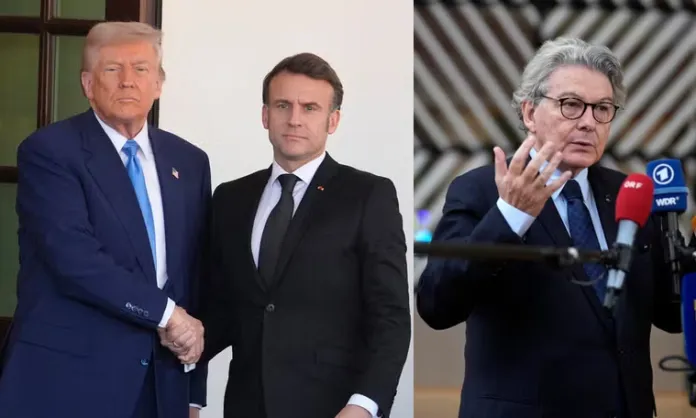
French President Emmanuel Macron took a personal stand, publicly thanking Thierry Breton for his work and reiterating France’s commitment to protecting Europe’s independence.
Macron has been vocal about the dangers of disinformation to democratic systems and views the Digital Services Act as a necessary safeguard rather than censorship.
His message was clear. Europe will not outsource decisions about its digital rules to Washington.
Germany Pushes Back
Germany described the visa bans on its activists as unacceptable. The justice ministry said the targeted individuals had full government support and emphasised that organisations like HateAid help victims of unlawful online abuse.
Berlin rejected the U.S. framing of censorship, stating that Germany and Europe decide their digital rules independently.
The statement underscored a broader European consensus that digital governance is a domestic competence.
Britain’s More Cautious Tone
Britain struck a more measured note but still defended its institutions. A government spokesperson said the UK remained committed to free speech while supporting laws that protect people from the most harmful online content.
The response reflects Britain’s delicate position outside the EU but aligned with Europe on digital safety norms.
Even so, the underlying disagreement with Washington remains.
The Digital Services Act at the Heart of the Dispute
The US visa bans Europe are inseparable from Washington’s opposition to the EU’s Digital Services Act.
The DSA requires large technology platforms to take stronger action against illegal content, including hate speech and child sexual abuse material. The Trump administration argues that these requirements restrict expression and unfairly single out American companies.
Tensions escalated earlier this month when the EU fined Elon Musk’s platform X for breaching content rules.
Why Washington Is Escalating
The visa bans are part of a broader shift in U.S. rhetoric toward Europe.
Recent U.S. policy documents and speeches by senior officials have criticised Europe as strategically weak, over-regulated, and politically constrained by what Washington calls censorship of nationalist and far-right voices.
This framing suggests that the dispute is about power and influence, not only speech norms.
Europe Reconsiders Its Dependence
US visa bans Europe come at a time when European leaders are already reassessing their reliance on the United States for defence, technology, and security.
Statements by U.S. officials warning of Europe’s “civilizational erasure” have shaken assumptions about transatlantic solidarity.
The bans reinforce arguments within Europe for greater digital and strategic autonomy.
Targeting Individuals as a Signal
By imposing visa bans on named individuals rather than institutions, Washington has personalised the conflict.
This approach sends a message that European regulators and activists could face direct consequences for policies that challenge U.S. interests.
For Europe, this raises concerns about intimidation rather than dialogue.
Why This Matters Now
US visa bans Europe mark a shift from policy disagreement to coercive diplomacy.
The clash touches core issues:
- Who sets the rules for the global internet
- How democracies balance free speech and harm prevention
- Whether alliances can survive deep value disagreements
The answers will shape future cooperation far beyond digital policy.
What Comes Next
The European Union has said it will seek clarification from Washington and has not ruled out countermeasures.
Further escalation could involve regulatory retaliation or legal challenges, especially if more individuals or companies are targeted.
Much depends on whether dialogue resumes or hardens into a prolonged standoff.
Conclusion
US visa bans Europe reveal a relationship under strain, where shared democratic language masks diverging political realities.
Europe insists it is defending democracy by regulating digital harm. Washington argues it is defending democracy by opposing regulation.
As both sides dig in, the deeper question emerges. Can the transatlantic alliance adapt to a world where values are no longer interpreted the same way?
Frequently Asked Questions
Why did the US impose visa bans on Europeans?
The U.S. accuses them of censoring speech or targeting American tech companies.
Who was most prominently affected?
Former EU commissioner Thierry Breton, an architect of the Digital Services Act.
How did Europe respond?
The EU, France, and Germany strongly condemned the decision.
What law is at the centre of the dispute?
The EU’s Digital Services Act regulating online content.
ALSO READ: Libyan Army Chief Plane Crash in Turkey Shakes Tripoli–Ankara Ties