
Why Trump Wants Greenland and Why National Security Is Central
Introduction
Trump wants Greenland, and he is no longer framing it as a speculative idea or a diplomatic curiosity. The US president has openly linked the Arctic island to American national security, citing growing Russian and Chinese activity in the region.
His remarks, followed by White House confirmation that even military options are being considered, have triggered alarm across Europe. Denmark has warned that any attempt to take Greenland would effectively end the NATO alliance as it exists today.
Greenland’s Strategic Geography
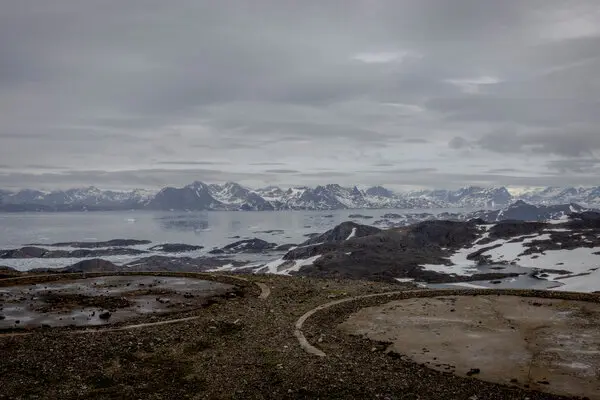
Greenland sits between the Arctic Ocean and the North Atlantic, positioned directly between the United States and Russia. This geography has made it strategically significant for decades, particularly during the Cold War.
The island lies along the shortest route for Russian ballistic missiles aimed at the continental United States. That reality explains why Washington has maintained a military presence there for generations, regardless of who occupied the White House.
When Trump says Greenland is “so strategic,” he is referencing geography as much as geopolitics.
The GIUK Gap and Arctic Control
One of the most critical features shaping why Trump wants Greenland is the GIUK gap — the naval corridor between Greenland, Iceland, and the United Kingdom.
This choke point connects the Arctic Ocean to the Atlantic and has long been central to monitoring Russian submarines. Control or influence over Greenland strengthens surveillance and deterrence capabilities in this corridor.
As Arctic ice melts and maritime access expands, the GIUK gap’s importance is only increasing.
Emerging Arctic Shipping Routes
Climate change has altered the strategic map. Rapid ice melt is opening new Arctic shipping routes that could dramatically shorten travel times between Asia and Europe.
Greenland sits near two such routes: the Northwest Passage and the Transpolar Sea Route. These routes could challenge the dominance of traditional chokepoints like the Suez Canal.
For Washington, this transforms Greenland from a remote outpost into a future maritime hub with commercial and security implications.
US Military Presence Already Exists
The United States already operates the Pituffik Space Base in northwestern Greenland, formerly known as Thule Air Base.
Around 150 US service members are stationed there today, down from approximately 6,000 during the Cold War. The base plays a critical role in early missile warning, space surveillance, and Arctic operations.
This existing footprint raises a central question: if access already exists, why does Trump want Greenland itself?
Missile Defence and the ‘Golden Dome’
One answer lies in missile defence.
Trump has repeatedly promoted the idea of a “Golden Dome” missile defence system designed to protect the United States from all missile threats. Greenland’s location makes it an ideal platform for missile interceptors and early warning systems.
As next-generation weapons evolve, proximity matters. Greenland offers forward positioning closer to Russia than the US mainland can provide.
From this perspective, Trump wants Greenland not just for defence today, but for the next several decades.
Critical Minerals and Economic Security
Beyond military considerations, Greenland holds vast untapped reserves of oil, gas, critical minerals, and rare earth elements.
These resources are essential for electric vehicles, wind turbines, energy storage systems, and defence technologies. China’s near-monopoly on rare earths has already been used as geopolitical leverage.
Control or influence over Greenland’s mineral wealth would reduce dependence on adversarial supply chains. This explains why Trump previously framed the issue as “economic security” before shifting to national security language.
European Alarm and NATO Fallout
Trump’s renewed push has unsettled European allies.
Denmark, which retains sovereignty over Greenland while granting it self-rule, has warned that a US takeover would fracture NATO. European leaders see the move as a violation of territorial integrity and alliance norms.
For Europe, the concern is not just Greenland, but the precedent of a NATO member threatening to annex another ally’s territory.
What Greenlanders Want
Public opinion polls show that Greenlanders overwhelmingly oppose US control. While many support eventual independence from Denmark, they do not favour becoming part of the United States.
This local resistance complicates Trump’s vision. Any move that ignores Greenlandic consent would deepen diplomatic and legitimacy challenges.
The island’s population of roughly 57,000 remains a central, often overlooked stakeholder.
Is Full Control Really Necessary?
Analysts question whether full sovereignty is required to meet US security needs.
The US already has military access through existing agreements with Denmark. During the Cold War, Washington expanded troop deployments without challenging Danish sovereignty.
Critics argue that Trump’s approach risks unnecessary confrontation when existing frameworks already serve strategic purposes.
Why This Matters Now
Trump wants Greenland at a moment when global power competition is shifting northward.
The Arctic is no longer a frozen buffer but a contested space involving Russia, China, and Western powers. Greenland sits at the intersection of defence, resources, shipping, and climate change.
How the US pursues its interests there will shape transatlantic relations and Arctic governance for years to come.
Conclusion
Why Trump wants Greenland is ultimately about control — of space, sea routes, resources, and future security architecture.
The question is not whether Greenland is strategically important. It clearly is. The real issue is whether attempting to acquire it strengthens American security or undermines the alliances that have sustained it.
As the Arctic opens and global competition intensifies, the Greenland question may become a defining test of how power is exercised in a changing world.
Frequently Asked Questions
Why does Trump say Greenland is vital for security?
Because of its location between the US and Russia, missile trajectories, Arctic shipping routes, and defence positioning.
Does the US already have a base in Greenland?
Yes, the Pituffik Space Base operates under a defence agreement with Denmark.
Do Greenlanders want to join the US?
No. Polls show opposition to US control, though many favour independence from Denmark.
Why is Europe alarmed?
Because any forced takeover would undermine NATO unity and international norms.
ALSO READ: US Quarantine of Venezuelan Oil Signals New Phase in Pressure on Maduro
ALSO READ: Israel Pushing Into Iran War Puts Trump’s America First Doctrine to the Test

Pingback: Critical Shift: Trump Says Venezuela Will Give Oil to U.S. 5 Signals
Pingback: Shocking Incident: ICE shooting Minneapolis 5 Shocking Facts
Pingback: Trump's Donroe Doctrine: White House Extends Monroe Doctrine Framework to the Arctic