
Executive Briefing (Update: July 2026)
When people search for countries currently at war 2026, the focus is often dominated by the headlines out of Washington, Tehran, Tel Aviv, and Moscow. However, the reality of modern global conflict is far more expansive.
- The Global Landscape: The world in 2026 is witnessing a severe spike in armed conflicts. From massive conventional wars between states to complex regional insurgencies, global security is increasingly fragile.
- The Middle East Escalation: The unprecedented direct military confrontation between the U.S., Israel, and Iran (including operations “Epic Fury” and “Roaring Lion”) has rapidly expanded the geopolitical threat matrix across West Asia.
- The Humanitarian Toll: Grinding conflicts in Sudan, the Democratic Republic of Congo (DRC), and Myanmar continue to displace millions, creating unprecedented humanitarian emergencies.
- New Fronts in 2026: The unprecedented U.S. military intervention in Venezuela (Operation Absolute Resolve) and the rapidly escalating aerial border war between Pakistan and the Afghan Taliban have violently disrupted the security architecture of Latin America and South Asia.
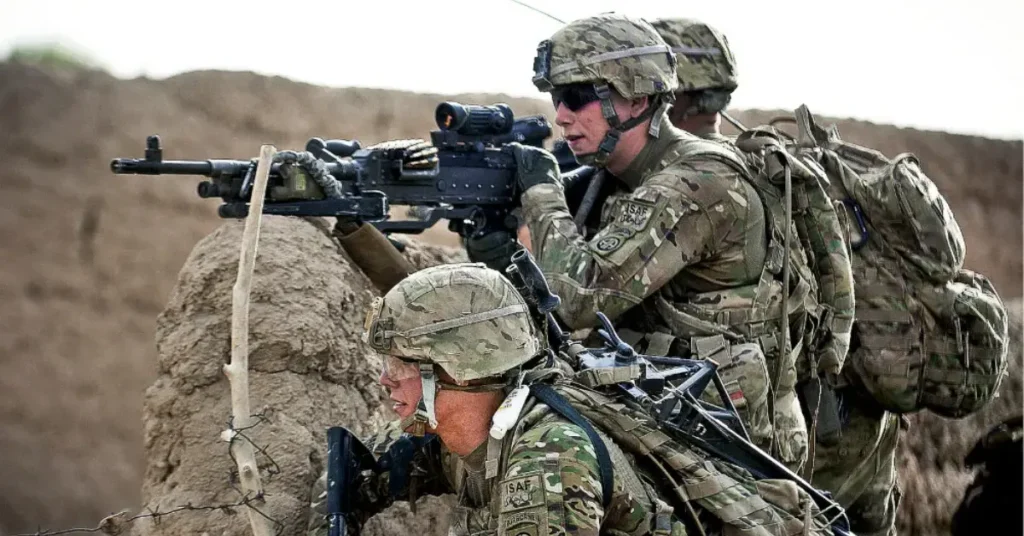
As we pass the mid-year mark of 2026, the global landscape is witnessing a severe spike in armed conflicts. From massive conventional wars between states to complex regional insurgencies, global security remains exceptionally fragile.
According to the latest 2026 data from international monitors like the Armed Conflict Location & Event Data Project (ACLED) and the International Crisis Group, the nature of warfare has shifted. We are seeing a dangerous convergence of conventional state-on-state wars, proxy conflicts, and widespread terrorist insurgencies.
Here is the definitive breakdown of the major ongoing conflicts defining the global geopolitical landscape in 2026.
The Primary Theaters of War: Major Ongoing Conflicts
These are the high-intensity conflicts involving advanced military assets, severe economic disruption, and massive casualty rates.
1. The Middle East / West Asia Regional War
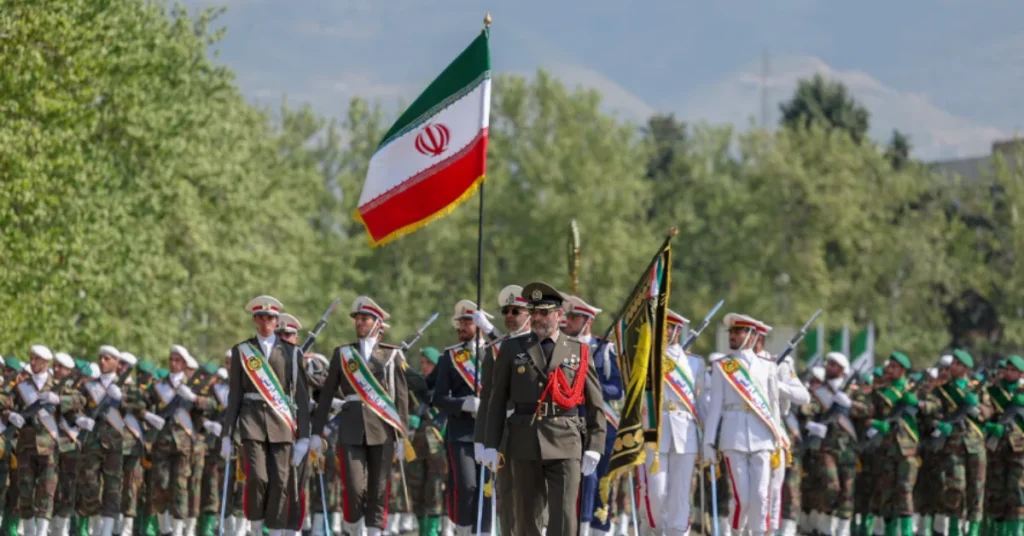
Following the massive U.S. and Israeli joint strikes (Operation Epic Fury) on Iranian infrastructure in late February, the region has erupted into a complex multi-front war. While direct, large-scale interstate kinetic strikes have given way to a fragile interim peace agreement brokered by Qatar and Pakistan, the conflict has shifted to an intense ground war in Lebanon and a maritime blockade. Mediators are currently racing against a mid-August deadline to cement a permanent ceasefire, though tensions remain critical over maritime transit rights.
- Primary Combatants: United States, Israel vs. Iran, Hezbollah, and the broader “Axis of Resistance.”
- Countries Directly Affected: Lebanon (currently experiencing a full-scale Israeli ground invasion in the south), Syria, Yemen, Iraq, and Gulf nations including the UAE, Kuwait, and Bahrain (which face ongoing security threats due to hosting U.S. operational bases).
- Global Impact: The closure of critical maritime chokepoints like the Strait of Hormuz threatens to severely disrupt global oil and gas shipments, risking worldwide economic recession.
2. The Russo-Ukrainian War
Now entering its fifth year, the war in Ukraine remains the largest conventional land war in Europe since World War II.
- Current Status: In the high-intensity summer fighting season of its fifth year, the conflict has solidified into a grinding, static war of attrition. Front lines across Kharkiv, Donetsk, and southern sectors are largely frozen into heavily fortified trench systems. Both sides are burning through ammunition at historic rates, relying heavily on localized drone reconnaissance, electronic warfare jamming networks, and deep strategic strikes against thermal and electrical infrastructure to disrupt backend logistics.
- Global Impact: Continued strain on global defense supply chains and European energy markets.
3. The Sudan Civil War
The internal power struggle in Sudan has created one of the world’s most severe, yet underreported, humanitarian disasters.
- Current Status: Months past its grim three-year anniversary, the war between the SAF and RSF has completely fractured Sudan’s statehood. Widespread institutional collapse, structural blockades of humanitarian aid corridors, and severe agricultural disruption have triggered catastrophic mass starvation, particularly across the Darfur region and Khartoum.
- Global Impact: The conflict has triggered a massive refugee crisis, spilling over into fragile neighboring nations like Chad and Egypt.
4. The U.S. Intervention in Venezuela (Operation Absolute Resolve)
The geopolitical landscape of Latin America was fundamentally altered at the beginning of the year. On January 3, 2026, the United States launched Operation Absolute Resolve, a major, unilateral military intervention in Venezuela.
Current Status: Following widespread airstrikes targeting Venezuelan military installations, U.S. Special Forces executed a direct raid in Caracas that resulted in the capture of President Nicolás Maduro. He has since been transferred to New York to face federal narco-terrorism charges.
Global Impact: The resulting power vacuum has plunged the country into a chaotic, fragmented conflict as loyalist military factions, opposition forces, and heavily armed cartels battle for territorial control amidst an ongoing U.S. security presence, severely destabilizing regional energy markets and migration routes.
5. The Pakistan-Afghanistan Border War (Aerial Attrition)
What began as a localized border dispute has escalated into an unprecedented cross-border war between the Afghan Taliban and the Pakistani military.
Current Status: Following major militant attacks inside Pakistan by the Tehreek-i-Taliban Pakistan (TTP) in early 2026, Islamabad declared open military retaliation. The conflict is currently characterized by intense, tit-for-tat aerial warfare. Pakistan has executed nearly 200 airstrikes and artillery barrages deep into Afghan territory to eliminate TTP safe havens.
Global Impact: In a surprising display of capability, the Afghan Taliban has retaliated by launching its own drone strikes into Pakistan’s Khyber Pakhtunkhwa and Balochistan provinces, creating a highly volatile, technology-driven border war that threatens the stability of nuclear-armed Pakistan.
The Global Conflict Matrix (2026 Data)
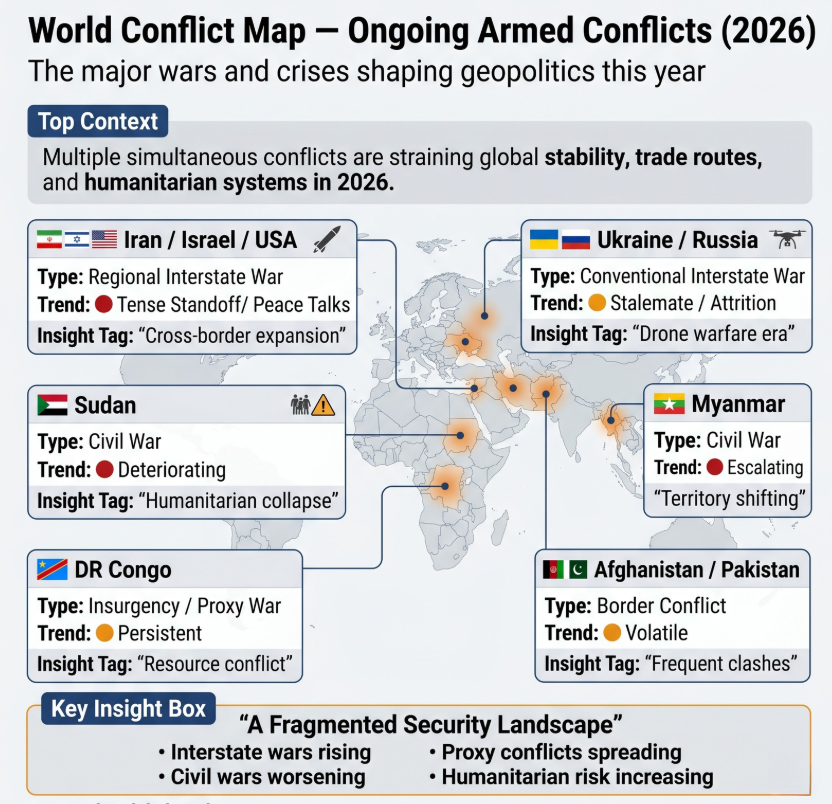
To understand the sheer scale of global instability, the following table categorizes the most severe conflicts by type and primary belligerents.
Countries Currently at War 2026
| Country / Region | Type of Conflict | Primary Belligerents | 2026 Status / Trend |
| Iran / Israel / USA | Regional War / Interstate | U.S., Israel, Iran, Proxy Militias | Tense standoff, indirect diplomatic talks alongside proxy skirmishes. |
| Ukraine / Russia | Conventional Interstate War | Ukraine (with Western aid) vs. Russia | Stalemate / Attrition, heavy use of AI & Drones. |
| Sudan | Civil War | SAF (Sudanese Armed Forces) vs. RSF | Deteriorating, severe humanitarian collapse. |
| Myanmar | Civil War | Military Junta vs. Ethnic Armed Organizations | Escalating, Junta losing territorial control. |
| Dem. Rep. of Congo (DRC) | Insurgency / Proxy War | DRC Military vs. M23 (Rwanda-backed) & ADF | Persistent, driven by resource competition. |
| Venezuela / USA | Foreign Intervention / Civil Conflict | U.S. Military vs. Loyalist Factions & Cartels | Highly volatile, power vacuum following the U.S. capture of Nicolás Maduro. |
| Afghan Taliban vs. Pakistani Military | Interstate Border War | Afghan Taliban vs. Pakistani Military | Escalating, characterized by unprecedented cross-border drone strikes and aerial bombardment. |
The “Hidden” Wars: Insurgencies and State Collapse
Beyond the major conventional wars, several nations are locked in grinding battles against terrorist insurgencies and drug cartels. While these conflicts rarely make front-page news, they account for tens of thousands of casualties annually.
The Sahel Crisis (Mali, Burkina Faso, Niger)
The African Sahel region has become the global epicenter of terrorism. Following a string of military coups, countries like Mali, Niger, and Burkina Faso have expelled Western counter-terrorism forces. In the resulting security vacuum, insurgencies linked to Al-Qaeda and ISIS have rapidly expanded their territorial control, threatening the stability of the entire West African coast.

Mexico’s Drug War
Operating with military-grade weaponry, powerful cartels (such as Sinaloa and CJNG) are engaged in a perpetual, hyper-violent conflict with the Mexican government and each other. The conflict is deeply tied to the global narcotics trade and causes thousands of civilian casualties and disappearances each year.
Conclusion: The Trajectory for 2026
The data for 2026 paints a grim picture of global security. The breakdown of traditional diplomatic mediation, the proliferation of cheap drone technology, and the willingness of major powers to engage in direct and proxy warfare mean that these conflicts are likely to endure. For policymakers and global markets, navigating this fragmented landscape requires constant vigilance and an understanding that regional conflicts are no longer contained within their own borders.
Sources:
ACLED – Global conflict monitoring data
International Crisis Group – Crisis Watch tracker
Reuters – Ongoing Sudan war enters fourth year
Reuters – Global market impacts from Iran conflict
Wikipedia – List of ongoing armed conflicts (overview reference only)
Frequently Asked Questions
How many countries are currently at war in 2026?
While it is difficult to pinpoint an exact number due to the fluid nature of insurgencies and border skirmishes, international conflict monitors currently track active, high-intensity armed conflicts in over 30 countries. The most severe fighting is concentrated in the Middle East, Eastern Europe, the African Sahel, and increasingly across the Pakistan-Afghanistan border and Latin America following the U.S. intervention in Venezuela.
Is the United States officially at war right now?
Under the U.S. Constitution, Congress has not issued a formal “Declaration of War.” However, the U.S. military is actively engaged in major kinetic combat operations—most notably “Operation Epic Fury” in the Middle East—alongside ongoing counter-terrorism operations in Syria, Iraq, and Somalia.
What is the deadliest conflict in the world today?
As of mid-2026, the multi-front Middle East regional war now encompassing a ground offensive in southern Lebanon and the brutal civil war in Sudan remain the most lethal conflicts in terms of active combat casualties and systemic civilian displacement.
Why is there so much war right now?
Security analysts attribute the 2026 spike in global conflict to a combination of factors: the breakdown of traditional U.S. deterrence, the rise of powerful proxy militias (like Hezbollah and the RSF in Sudan), fierce competition over resources, and the rapid proliferation of cheap, lethal drone technology that empowers smaller armed groups.
ALSO READ: How Long Will the US-Israel Iran War Last? The Sustainability and the Cost of War
ALSO READ: 2026 Middle East War Affected Countries: Every Country Involved & Why the Conflict is Spreading
Russia China trade relations 2026: Sanctions Evasion, Dual-Use Tech, and the Putin-Xi Summit
Russia China trade relations 2026: Sanctions Evasion, Dual-Use Tech, and the Putin-Xi Summit Executive Briefing…

What is Hantavirus Outbreak 2026: Symptoms, Vaccine Status, and the Climate Vector
What is Hantavirus Outbreak 2026: Symptoms, Vaccine Status, and the Climate Vector The Immediate Trigger:…

Starlink & SpaceX IPO 2026: Everything You Need to Know
Starlink & SpaceX IPO 2026: Everything You Need to Know The Valuation: According to Institutional…
What is OPEC? How the Oil Cartel Functions and Why It’s Fracturing in 2026
What is OPEC? How the Oil Cartel Functions and Why It’s Fracturing in 2026 The…
Why the UAE Quit OPEC and the Birth of the Petro-Rupee
Why the UAE Quit OPEC and the Birth of the Petro-Rupee The Rupture: The United…

Microsoft OpenAI Partnership Ends: Why Microsoft is Dropping OpenAI’s Exclusive License
Microsoft OpenAI Partnership Ends: Why Microsoft is Dropping OpenAI’s Exclusive License The Announcement: On April…

Ibrahim is the Founder and Lead Analyst at The Global Angle, an independent digital platform dedicated to factual geopolitical analysis and international affairs. Based in India, he combines an engineering background with a deep focus on global markets, diplomacy, and strategic security. Ibrahim leverages a data-driven, analytical approach to break down complex international conflicts and economic shifts, helping readers see beyond standard news narratives. When he isn’t researching global policy, he focuses on digital publishing, search engine optimization, and platform architecture.
Pingback: Church. We Are at War..! | SPIRIT WORD & CROSS
WHAT A JOKE SITE!
YOU MISSED SO MANY CONFLICTS!
THAILAND vs CAMBODIA
INDIA vs CHINA ON THE “Line of Actual Control”
and many more i’m not even going to list it,……..PFFFFFFFFFFFFFF.
Hmm… Consider: At some point, the planet would possibly not
end up being biased against the older folk. Some individuals may likely at some point no longer assume it could be OK to
tell you cracks related to some other person’s age or just ill health.
Yet somehow some of us are generally not at
this time there yet. A number of of all of our old folks can be sent by way of family to live
their own enduring hours in assisted living facilities. health topic is granted in some of the considerably more alternative assisted
living centers. These businesses sometimes have yoga stretches courses, artistry and designs, and also dance.
Honestly, presently there happen to have been situations specifically where elders found in rest
homes have fallen in love, and even have been held back from
spending time with the other person, upon the instructions of the folks operating the premises.
Which unfortunately simply just would seem to be very unkind and
even ignoble.
I just can’t believe anything we concern ourselves with
in life matters and is really worth the tension and several years
off our lifetimes. At all times invested in thinking about
the different things that people deal with every single moment is going to be really
important, as no other individual will deal with
your life for us. Personally I think that people young and old ought to be more
mentally stable. Knowledge is delightful, but a lot of what
we should might know about is so hypothetical.
Making a cup of tea is a yogic process that brings one
back again to the current second. We have to become
more in the here and now, while not being overwhelmed
by existence and the theatre we face each day.