Executive Briefing
- The Core Event: NCERT book controversy took a huge turn when The Supreme Court of India sparked a nationwide crackdown after a new Class 8 NCERT textbook mentioned “corruption in the judiciary.”
- The Primary Data Point: The government has successfully recalled over 2.24 lakh copies, but 38 books were sold to the public before the ban.
- The Hidden Impact: Chief Justice Surya Kant warned of a “planned conspiracy,” signaling that the court may now demand a say in how textbooks are written.

The Ministry of Education has issued an “unconditional” apology to end the NCERT book controversy that began earlier this week. Solicitor General Tushar Mehta told the Supreme Court that the material was an “error of judgment” and was never meant to insult the legal system.
However, the Court is not letting the matter drop.
Chief Justice Surya Kant stated that “heads must roll,” suggesting that the officials who wrote the book will face serious punishment.
NCERT book controversy: What caused the outrage?
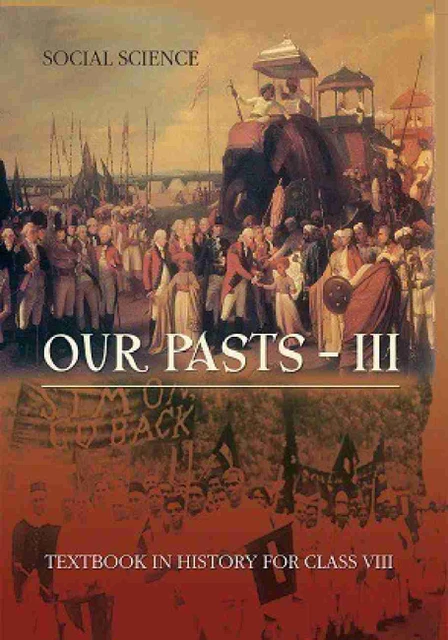
The trouble started with a new Social Science book for Class 8 titled “Exploring Society: India and Beyond.” Inside Chapter 4, which explains how the courts work, there was a section that discussed corruption within the judicial system. The Supreme Court took major offense, claiming this was a “well-planned conspiracy” to make the public lose trust in judges.
The NCERT has since withdrawn the book, claiming they hold the judiciary in the “highest esteem.”
| Inventory Status | Number of Copies |
| Total Books Printed | 2,25,000 |
| Books Recalled to Warehouse | 2,24,962 |
| Books Sold to the Public | 38 |
| Status of Chapter 4 | Ordered to be Deleted |
The Hunt for the “Missing” 38 Books
While the government stopped the distribution of nearly the entire print run, 38 copies were sold to the public on February 24, 2026.
The Ministry of Education is now reportedly using digital records to track down these specific buyers. They want to retrieve every single copy to ensure no student reads the controversial pages.
Why this matters for the future
This isn’t just about one book. This case shows that the Supreme Court is willing to step into the world of education.
In the future, the NCERT may have to be much more careful about criticizing any government institution. This could lead to “self-censorship,” where writers are too afraid to discuss real-world problems in school books.
Frequently Asked Questions
What was wrong with the NCERT Class 8 book?
The book contained a section on “corruption in the judiciary.” The Supreme Court argued this was inappropriate for 13-year-olds and was designed to defame the courts.
Is the NCERT book banned?
The specific edition of the Class 8 Social Science book (Vol II) has been put on “strict hold.” It is being edited to remove the controversial sections before being released again.
Who is responsible for the error?
The Supreme Court has issued “show cause” notices to the Director of the NCERT and the School Education Secretary to find out who approved the final draft.
ALSO READ: Bill Gates Confesses: The Truth Behind the Foundation Apology
ALSO READ: PM Modi Israel visit 2026 Defence Deal: Masterstroke or Geopolitical Gamble?
Russia China trade relations 2026: Sanctions Evasion, Dual-Use Tech, and the Putin-Xi Summit
Russia China trade relations 2026: Sanctions Evasion, Dual-Use Tech, and the Putin-Xi Summit Executive Briefing…
What is Hantavirus Outbreak 2026: Symptoms, Vaccine Status, and the Climate Vector
What is Hantavirus Outbreak 2026: Symptoms, Vaccine Status, and the Climate Vector The Immediate Trigger:…
Starlink & SpaceX IPO 2026: Everything You Need to Know
Starlink & SpaceX IPO 2026: Everything You Need to Know The Valuation: According to Institutional…
What is OPEC? How the Oil Cartel Functions and Why It’s Fracturing in 2026
What is OPEC? How the Oil Cartel Functions and Why It’s Fracturing in 2026 The…

Why the UAE Quit OPEC and the Birth of the Petro-Rupee
Why the UAE Quit OPEC and the Birth of the Petro-Rupee The Rupture: The United…

Microsoft OpenAI Partnership Ends: Why Microsoft is Dropping OpenAI’s Exclusive License
Microsoft OpenAI Partnership Ends: Why Microsoft is Dropping OpenAI’s Exclusive License The Announcement: On April…

Ibrahim is the Founder and Lead Analyst at The Global Angle, an independent digital platform dedicated to factual geopolitical analysis and international affairs. Based in India, he combines an engineering background with a deep focus on global markets, diplomacy, and strategic security. Ibrahim leverages a data-driven, analytical approach to break down complex international conflicts and economic shifts, helping readers see beyond standard news narratives. When he isn’t researching global policy, he focuses on digital publishing, search engine optimization, and platform architecture.