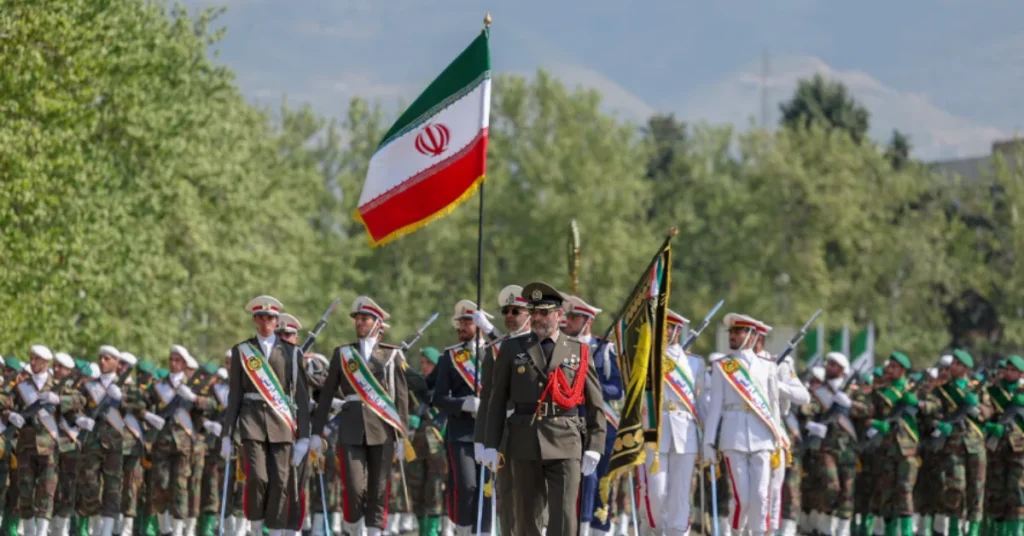
Executive Briefing (Update: March 12, 2026)
As the 2026 Middle East conflict reshapes the global geopolitical landscape, the international community is intensely tracking the battlefield data. With global oil prices spiking and commercial shipping paralyzed, the most urgent questions are: Who is winning the US Iran war 2026, what is the true cost for all three primary nations involved, and when will it end?
- The Tri-Nation Conflict: We are exactly two weeks into the massive joint offensive against Iran. While the U.S. leads Operation Epic Fury, Israel is simultaneously executing its own highly integrated campaign, Operation Roaring Lion.
- The Human Toll: The casualty gap is massive. While U.S. and Israeli military deaths remain low due to advanced air defense and stealth capabilities, Iranian military and civilian deaths have soared into the thousands.
- The Economic Drain: The Pentagon is burning roughly $1 billion per day, Israel is facing massive interceptor costs, and Iran is enduring the systemic destruction of its national infrastructure.
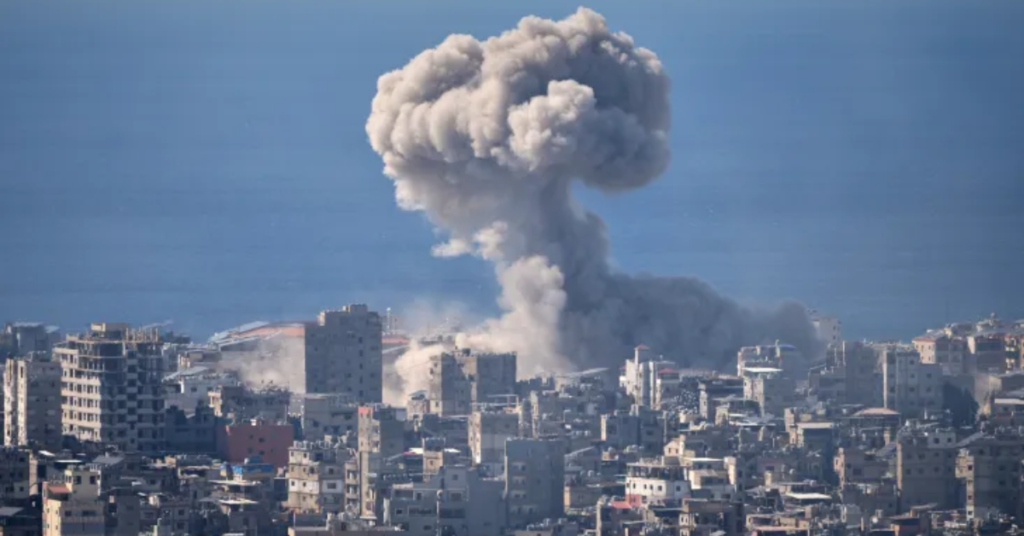
Here is the objective, data-driven summary of the conflict comparing the United States, Israel, and Iran as of mid-March 2026.
Summary of the War Up Till Now
The conflict officially began on the morning of February 28, 2026. Following months of failed nuclear negotiations and massive U.S. military build-ups, the United States and Israel launched a surprise, coordinated aerial bombardment.
- The Opening Salvo: The U.S. initiated the war with nearly 900 strikes in the first 12 hours, successfully assassinating Iranian Supreme Leader Ali Khamenei and wiping out the senior command of the Islamic Revolutionary Guard Corps (IRGC).
- The Naval & Air Annihilation: U.S. Central Command (CENTCOM) systematically dismantled the Iranian Navy to secure the Gulf, while Israeli F-35s focused on neutralizing advanced radar and nuclear research facilities deep underground.
- Iran’s Asymmetric Retaliation: Unable to win a conventional air war, Iran and its proxy networks (including Hezbollah) transitioned to asymmetric warfare. They launched hundreds of drones and ballistic missiles targeting U.S. military bases across the Gulf and civilian centers across Israel.
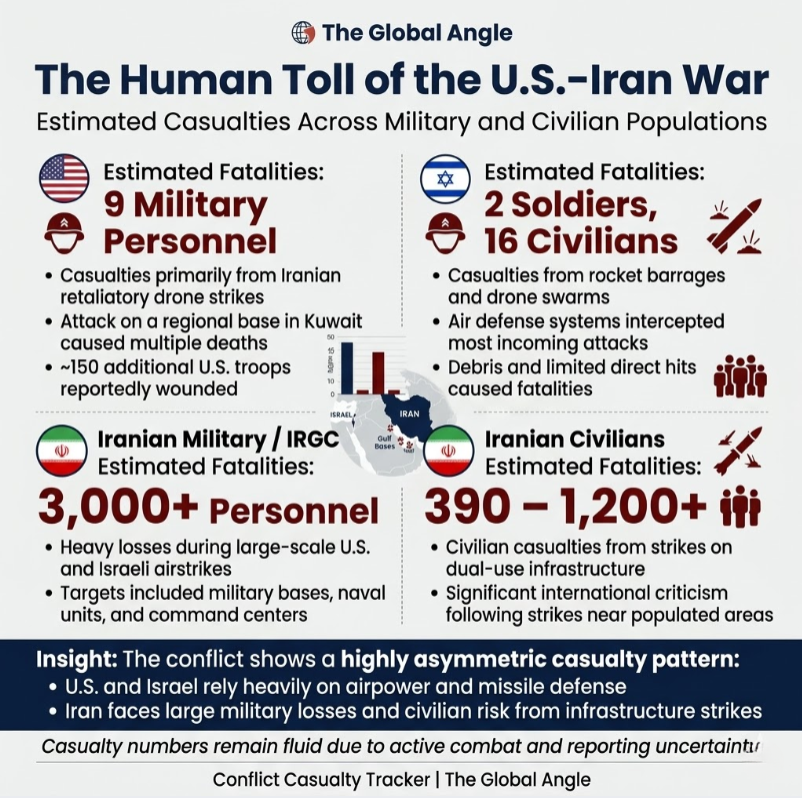
How Many Have Been Killed? (The Human Toll)
The reliance on high-altitude stealth bombers and standoff munitions by the U.S. and Israel has kept their casualty rates remarkably low. Conversely, the sheer volume of ordnance dropped on Iranian soil has led to a skyrocketing death toll.
Note: Casualty figures in active conflict zones vary wildly depending on the reporting source. The following table synthesizes official government reports and independent human rights monitors as of March 12, 2026.
| Faction / Nation | Estimated Fatalities | Context & Operational Details |
| United States | 9 Military Personnel | Deaths primarily resulting from retaliatory Iranian drone strikes on regional bases, including a strike in Kuwait that killed six Army reservists. Roughly 150 troops have been wounded (primarily traumatic brain injuries). |
| Israel | 2 Soldiers, 16 Civilians | Casualties sustained during intense rocket barrages and drone swarms launched by Iran and Hezbollah. Civil defense systems (Iron Dome, Arrow-3) have prevented mass casualties, but debris and direct hits have caused fatalities. |
| Iranian Military / IRGC | 3,000+ | Devastating losses during the opening days of bombardment, including the Supreme Leader, IRGC commanders, and massive naval personnel losses. |
| Iranian Civilians | 390 to 1,200+ | Severe collateral damage from strikes on dual-use infrastructure. This includes an internationally condemned U.S. strike near an IRGC naval base in Minab that tragically killed roughly 170 girls at an adjacent elementary school. |
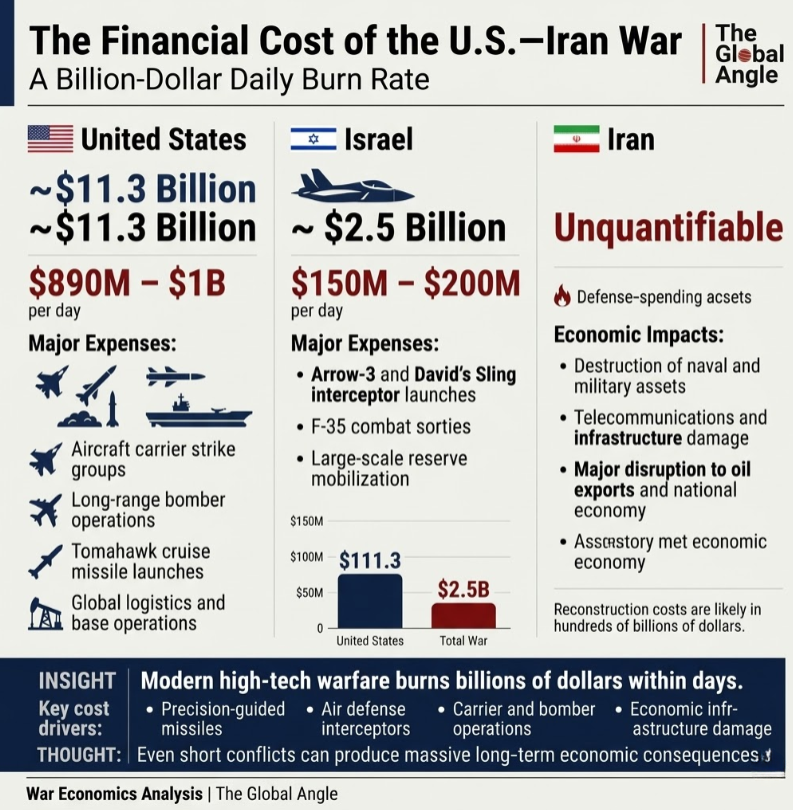
The Financial Costs: A Billion-Dollar Burn Rate
Modern warfare is exorbitantly expensive. While Iran is paying the price in destroyed national infrastructure, the United States and Israel are paying an astronomical financial cost to maintain their operational tempo and air defense shields.
| Belligerent | Estimated Financial Cost | Breakdown of Expenses |
| United States | ~$11.3 Billion | The daily burn rate is estimated between $890 million and $1 billion. This accounts for deploying carrier strike groups, stealth bomber sorties, and rapidly depleting multi-million-dollar Tomahawk missiles. |
| Israel | ~$2.5 Billion | The daily cost runs between $150 million and $200 million. Expenses are driven by the massive cost of launching Arrow-3 and David’s Sling interceptor missiles (often $2M+ per shot) against Iranian ballistics, F-35 sorties, and the economic strain of reserve mobilization. |
| Iran | Unquantifiable | The total destruction of their naval fleet, the systematic leveling of their telecommunications grid, and the paralysis of their oil export sector will take decades and hundreds of billions of dollars to rebuild. |
Who is Winning the US Iran War 2026: Is There Any Clear Winner?
Answering who is winning requires separating immediate military dominance from long-term strategic success across all three nations.
1. Tactical Dominance: The U.S. and Israel are Winning
From a purely military standpoint, Washington and Tel Aviv hold absolute supremacy. The Pentagon reports that Iranian ballistic missile capabilities have been degraded by 90%, and their naval threat has been neutralized. Israeli airspace remains largely secure despite the barrages, and the U.S. controls the skies over the Gulf.
2. Strategic Endurance: A Volatile Stalemate
However, the ultimate political goal—regime change—remains highly uncertain. A classified U.S. National Intelligence Council review reportedly concluded that the bombing campaign is unlikely to completely oust the clerical establishment. Iran’s Assembly of Experts quickly formed an interim leadership council.
Furthermore, Iran is succeeding in its primary defensive strategy: economic disruption. By firing cheap drones that force the U.S. and Israel to use expensive interceptors, and by threatening the Strait of Hormuz, Iran is successfully destabilizing global energy markets. The U.S. and Israel have won the kinetic battles, but the overarching war of attrition remains unresolved.
When Can This War End?
The timeline for an end to the conflict is currently fractured.
President Donald Trump recently stated that the U.S. military objectives are “pretty much complete” and hinted at the possibility of negotiations, while simultaneously demanding “unconditional surrender.” Conversely, U.S. Defense Secretary Pete Hegseth warned that strikes could continue at high intensity for weeks. Meanwhile, Israel maintains that its operations will not cease until the northern border with Lebanon is fully secured from Hezbollah’s involvement.
For the war to officially end, one of two scenarios must unfold:
- Diplomatic Off-Ramp: The U.S. and Israel halt their bombardment in exchange for verifiable, permanent concessions regarding Iran’s nuclear program and the dismantling of proxy networks.
- Economic Exhaustion: The global pressure of $100+ oil prices and disrupted maritime shipping forces international allies to compel a ceasefire.
Until a political agreement is reached, the heavy bombardment and asymmetric retaliations are expected to continue.
Frequently Asked Questions (2026 US-Iran War)
Who is winning the US-Iran war?
Militarily, the United States and Israel are winning by maintaining absolute tactical dominance, controlling the airspace, and systematically degrading Iran’s naval and ballistic missile capabilities. Strategically, however, the conflict is currently a volatile stalemate. Iran has successfully transitioned to asymmetric warfare, using drone swarms to disrupt global energy markets and inflict massive economic costs on the West, while its interim leadership remains intact.
How many people have died in the 2026 US-Iran conflict?
As of mid-March 2026, the casualty gap is stark. The United States has reported 9 military fatalities, and Israel has reported roughly 18 combined military and civilian deaths, largely mitigated by advanced air defense systems. Conversely, Iranian casualties are devastatingly high, with estimates exceeding 3,000 military and Islamic Revolutionary Guard Corps (IRGC) personnel, alongside over 1,200 civilian deaths due to infrastructure strikes.
How much is the US spending on the war with Iran?
The financial cost of the war is astronomical. Defense analysts estimate that the United States is burning through roughly $1 billion per day to sustain Operation Epic Fury. In the first two weeks alone, the U.S. has spent over $11 billion on carrier strike group deployments, stealth bomber sorties, and the rapid depletion of multi-million-dollar interceptor and Tomahawk missiles.
When will the 2026 Middle East war end?
There is no definitive timeline for the war’s conclusion. U.S. military leadership has warned that high-intensity strikes could continue for weeks. The conflict will likely only end through a negotiated diplomatic off-ramp involving the dismantling of Iran’s nuclear program and proxy networks, or through global economic exhaustion forcing a ceasefire due to skyrocketing oil prices and paralyzed maritime shipping.
ALSO READ: Global Oil Price Hike 2026: Petrol Prices & Strategic Reserves by Country
ALSO READ: Can Trump Be Impeached In Midterm Elections 2026? Odds, Stats, and the Process Explained
Russia China trade relations 2026: Sanctions Evasion, Dual-Use Tech, and the Putin-Xi Summit
Russia China trade relations 2026: Sanctions Evasion, Dual-Use Tech, and the Putin-Xi Summit Executive Briefing…

What is Hantavirus Outbreak 2026: Symptoms, Vaccine Status, and the Climate Vector
What is Hantavirus Outbreak 2026: Symptoms, Vaccine Status, and the Climate Vector The Immediate Trigger:…

Starlink & SpaceX IPO 2026: Everything You Need to Know
Starlink & SpaceX IPO 2026: Everything You Need to Know The Valuation: According to Institutional…
What is OPEC? How the Oil Cartel Functions and Why It’s Fracturing in 2026
What is OPEC? How the Oil Cartel Functions and Why It’s Fracturing in 2026 The…

Why the UAE Quit OPEC and the Birth of the Petro-Rupee
Why the UAE Quit OPEC and the Birth of the Petro-Rupee The Rupture: The United…

Microsoft OpenAI Partnership Ends: Why Microsoft is Dropping OpenAI’s Exclusive License
Microsoft OpenAI Partnership Ends: Why Microsoft is Dropping OpenAI’s Exclusive License The Announcement: On April…

Ibrahim is the Founder and Lead Analyst at The Global Angle, an independent digital platform dedicated to factual geopolitical analysis and international affairs. Based in India, he combines an engineering background with a deep focus on global markets, diplomacy, and strategic security. Ibrahim leverages a data-driven, analytical approach to break down complex international conflicts and economic shifts, helping readers see beyond standard news narratives. When he isn’t researching global policy, he focuses on digital publishing, search engine optimization, and platform architecture.