Key Takeaways
- Midterm elections determine control of the U.S. Congress, affecting all 435 House seats and approximately one-third of the Senate.
- These elections occur precisely two years into a president’s four-year term, serving as a critical barometer of the administration’s performance.
- The outcome often leads to “divided government,” where the president’s party loses its majority in one or both legislative chambers.
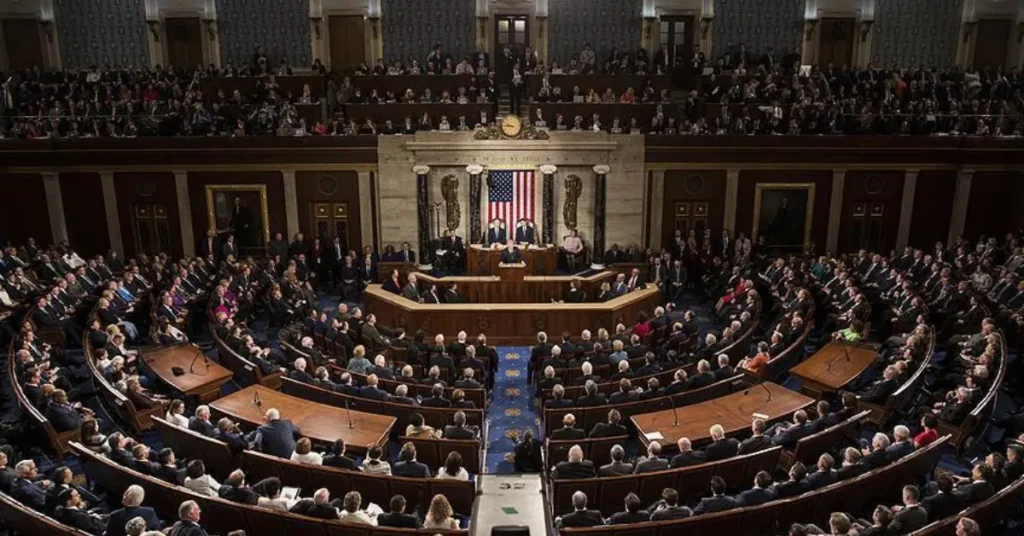
U.S. midterm elections are less about choosing a new government and more about testing the one already in power. Held halfway through a president’s term, they often reshape Congress—and with it, the direction of U.S. policy for the next two years.
Unlike parliamentary systems where governments can fall mid-term, the U.S. system remains fixed. Instead, voters use midterm elections to shift power inside Congress, often limiting what a president can achieve.
In the 2026 midterm cycle, early primary elections have already shown divisions within both major parties, particularly around economic policy and foreign affairs.
The Congressional Composition: House vs. Senate
The primary focus of any midterm is the United States Congress, the legislative branch of government. Because the two chambers have different term lengths, the “math” of a midterm election differs for each.
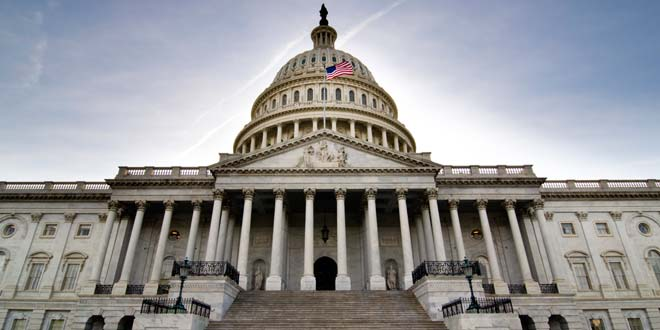
The House of Representatives
Every single one of the 435 seats in the House is up for election every two years. Representatives serve short terms to remain “most sensitive” to the public will. Each seat represents a specific geographic district with roughly 760,000 residents. If a party holds a slim majority, just a few flipped seats can change who holds the Speaker’s gavel and, consequently, who controls which bills even reach the floor for a vote.
The United States Senate
Senators serve six-year terms, which are staggered into three “classes.” Consequently, only about one-third of the 100 Senate seats (usually 33 or 34) are contested during a midterm. This design was intended by the Framers of the Constitution to provide a “cooling” effect, preventing the entire legislature from being swept away by a single emotional political movement. In 2026, 35 seats will be contested—33 regularly scheduled and two special elections to fill vacancies in Ohio and Florida.
Why the President’s Party Loses
One of the most consistent patterns in American politics is that the president’s party almost always loses seats during the midterms. Since World War II, the incumbent’s party has lost an average of 26 seats in the House and four in the Senate.
This phenomenon, often called the “Midterm Curse,” occurs because the coalition that elected the president often becomes less motivated (the “surge and decline” theory), while the opposition party becomes highly energized. Historically, only two presidents since 1934—Franklin D. Roosevelt in 1934 and George W. Bush in 2002—have seen their party gain seats in both chambers during a midterm.
How midterms actually change power
The path to a midterm victory is a two-step process. Before the general election in November, states hold Primary Elections.
- The Primaries: These occur between March and September. Members of the same party compete against each other to become the official nominee.
- The General Election: The winners of the Democratic and Republican primaries (along with third-party or independent candidates) face off on Election Day.
| Feature | House of Representatives | U.S. Senate |
| Total Seats | 435 | 100 |
| Term Length | 2 Years | 6 Years |
| Seats up in Midterms | 100% (All 435) | ~33% (Class-dependent) |
| Representation | Local Districts | Entire State |
| Key Power | Tax/Revenue Bills | Treaty Approval/Appointments |

Why Midterm Elections Matter
Midterm elections often determine whether a president can pass laws or faces legislative gridlock. Historically, the president’s party tends to lose seats, which can lead to a divided government and slow down major policy decisions.
Beyond Congress: State and Local Impact
While the national media focuses on Washington, midterms are equally critical for state-level governance. In 2026, 36 states will hold Gubernatorial Elections to choose their governors. Because governors oversee state-level election laws, healthcare implementation, and education budgets, these races have a direct impact on the daily lives of citizens. Additionally, thousands of state legislative seats, attorneys general, and secretaries of state are on the ballot.
Why The World Watches U.S. Midterms
For international observers, the U.S. midterms are a signal of future stability. If a president loses both the House and Senate, they enter a state often called “Lame Duck” status. In this scenario, passing domestic legislation becomes nearly impossible, often forcing the president to pivot almost exclusively toward Foreign Policy—an area where the executive branch maintains more unilateral authority.
In the next five years, the results of the 2026 midterms will determine if the U.S. continues its current trajectory on trade tariffs and military alliances or if a gridlocked Congress will force a period of American introspection.
Will the 2026 midterms follow the historical trend of punishing the incumbent, or will modern political polarization break the “Midterm Curse”?
What This Means
For global observers, U.S. midterm elections are not just domestic events. Changes in Congress can directly influence foreign policy, trade agreements, and military decisions, making these elections highly relevant beyond the United States.
Sources:
Reuters – Early developments in the 2026 U.S. midterm elections
Encyclopaedia Britannica – Midterm Elections Overview
USA.gov – U.S. Election Process (Midterms & Congress)
U.S. House of Representatives – Election Information
U.S. Senate – Election and Terms Explanation
Frequently Asked Questions
Can the President be removed from office during a midterm?
For global observers, U.S. midterm elections are not just domestic events. Changes in Congress can directly influence foreign policy, trade agreements, and military decisions, making these elections highly relevant beyond the United States.
Why do midterms have lower voter turnout than presidential years?
Historically, many voters perceive the “top of the ticket” (the President) as more important. While presidential elections often see 60% turnout, midterms frequently hover around 40-50%, though this has been rising in recent cycles due to increased political engagement.
ALSO READ: The Architecture of Deterrence: Analyzing Iran Military Power 2026
ALSO READ: India Union Budget 2026: A Blueprint for Infrastructure and Fiscal Stability
Russia China trade relations 2026: Sanctions Evasion, Dual-Use Tech, and the Putin-Xi Summit
Russia China trade relations 2026: Sanctions Evasion, Dual-Use Tech, and the Putin-Xi Summit Executive Briefing…

What is Hantavirus Outbreak 2026: Symptoms, Vaccine Status, and the Climate Vector
What is Hantavirus Outbreak 2026: Symptoms, Vaccine Status, and the Climate Vector The Immediate Trigger:…

Starlink & SpaceX IPO 2026: Everything You Need to Know
Starlink & SpaceX IPO 2026: Everything You Need to Know The Valuation: According to Institutional…
What is OPEC? How the Oil Cartel Functions and Why It’s Fracturing in 2026
What is OPEC? How the Oil Cartel Functions and Why It’s Fracturing in 2026 The…

Why the UAE Quit OPEC and the Birth of the Petro-Rupee
Why the UAE Quit OPEC and the Birth of the Petro-Rupee The Rupture: The United…

Microsoft OpenAI Partnership Ends: Why Microsoft is Dropping OpenAI’s Exclusive License
Microsoft OpenAI Partnership Ends: Why Microsoft is Dropping OpenAI’s Exclusive License The Announcement: On April…

Ibrahim is the Founder and Lead Analyst at The Global Angle, an independent digital platform dedicated to factual geopolitical analysis and international affairs. Based in India, he combines an engineering background with a deep focus on global markets, diplomacy, and strategic security. Ibrahim leverages a data-driven, analytical approach to break down complex international conflicts and economic shifts, helping readers see beyond standard news narratives. When he isn’t researching global policy, he focuses on digital publishing, search engine optimization, and platform architecture.